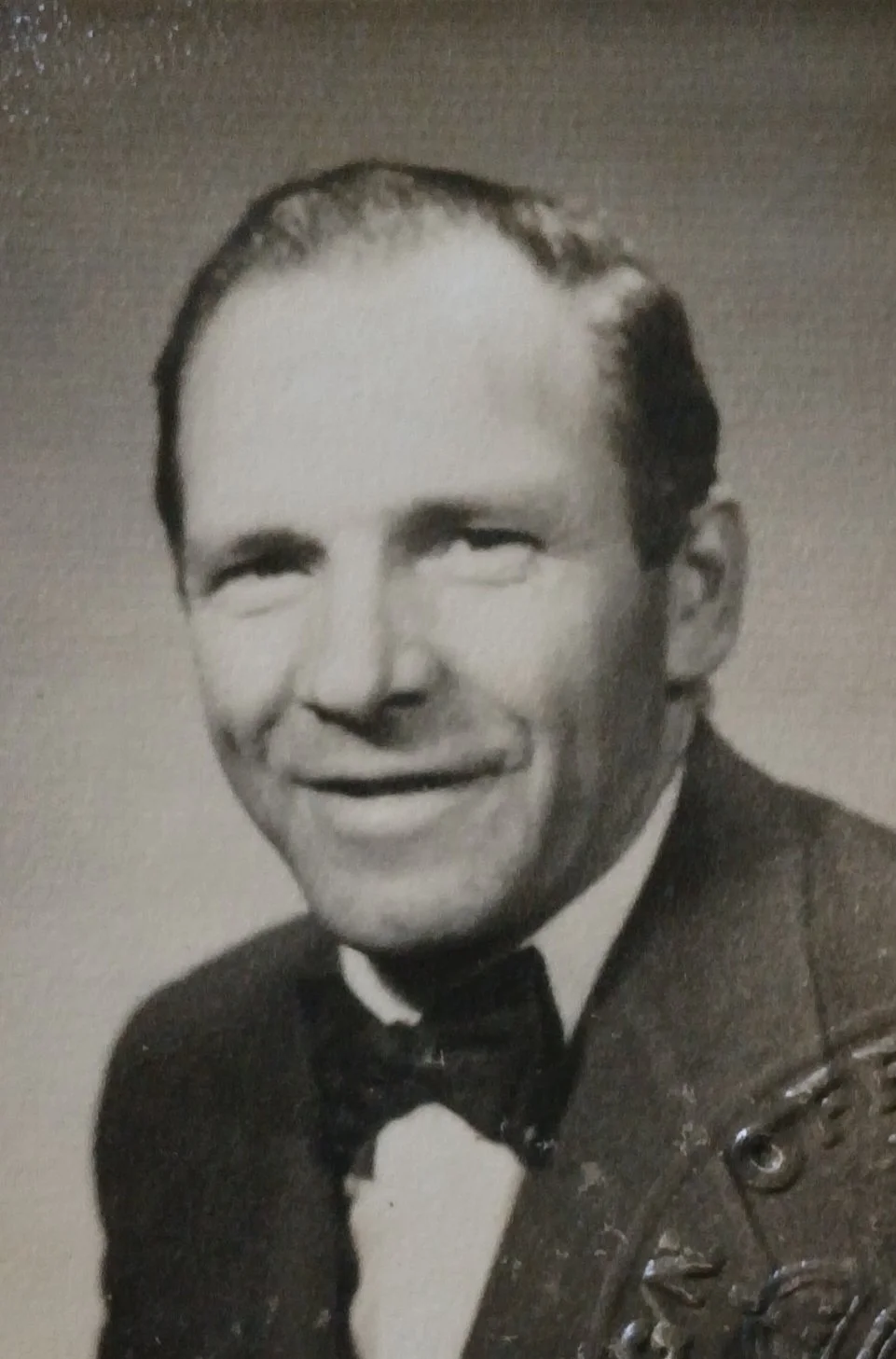
Harry’s name was on my grandma’s marriage certificate, and on my mum’s birth certificate, so he had to be my grandad, right?
We knew nothing about him. The family rumour was that he’d joined the Navy and jumped ship in the Bahamas, abandoning my grandma and my mum. He wasn’t flavour of the month. I’d wanted to learn more about him; my mum’s paternal roots, my Irish roots!
Research highlights
Meeting our Flanagan ‘cousins’ in Liverpool
Finding Harry’s father’s ‘death at sea’ certificate. It was the first time I’d used this part of the Ancestry platform and it wasn’t straightforward. The result was the actual coordinates where he died (of malaria)
The photograph of his mother
Finding the daughter of a man Harry sailed to Australia with (on LinkedIn), and discovering that her mother had Harry’s passport in a box in the attic
Seeing myself looking back at me from a Flangagn wedding photograph (below). We think the woman in the top right corner might be my grandma since she’s standing next to Harry (not 100% sure though)
Finding the merchant navy cards of his uncles with photos
Harry Patrick Flanagan from Toxteth
Emigration from Ireland - ‘coffin ships’
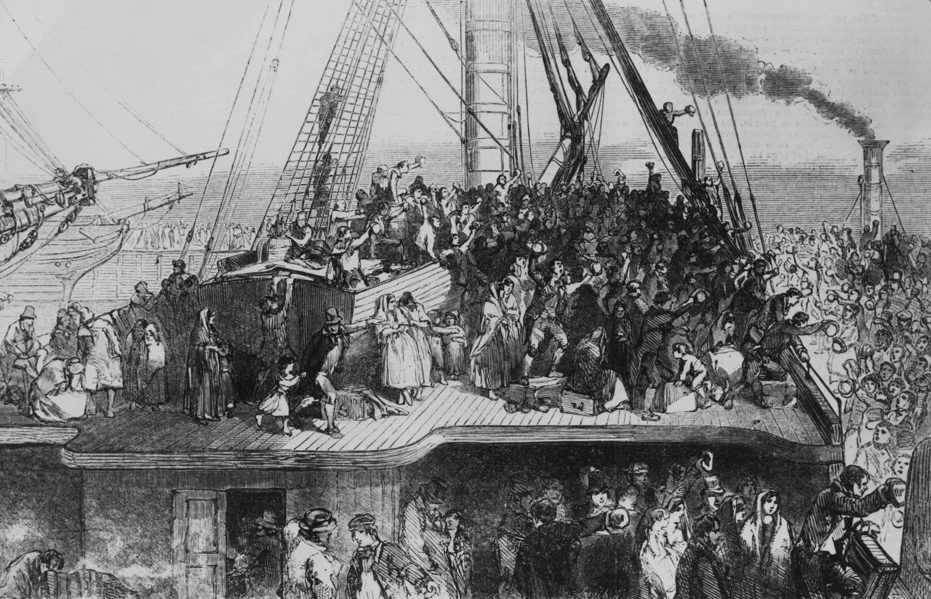
"Only the poorest of the emigrants remained in Liverpool, almost 250,000 of them, either in the city or the industrial towns of the hinterland; the vast majority travelled onwards across the Atlantic"
The above extract and photo is from this account of the famine on Ireland’s media outlet RTE. The panicked flood: emigration and the Great Famine
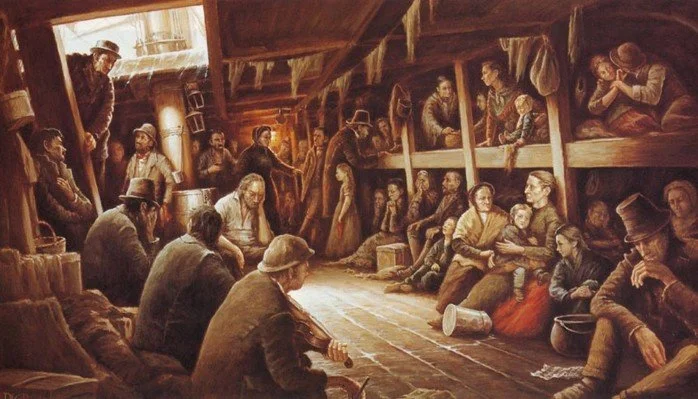
Harry’s background
Searching for Harry began as most searches do - looking for a birth certificate. There were a few Henry Flanagans but thankfully we had my grandma’s marriage certificate which gave the name of Harry’s father, Walter (a more unsual name).
Once we had that, we were able to find Walter in census records which gave us the other members of Harry’s family over the years, including his mother, also of Irish descent, Mary Dougherty. Walter was living just a street away from the Dogherty family when he met Mary.
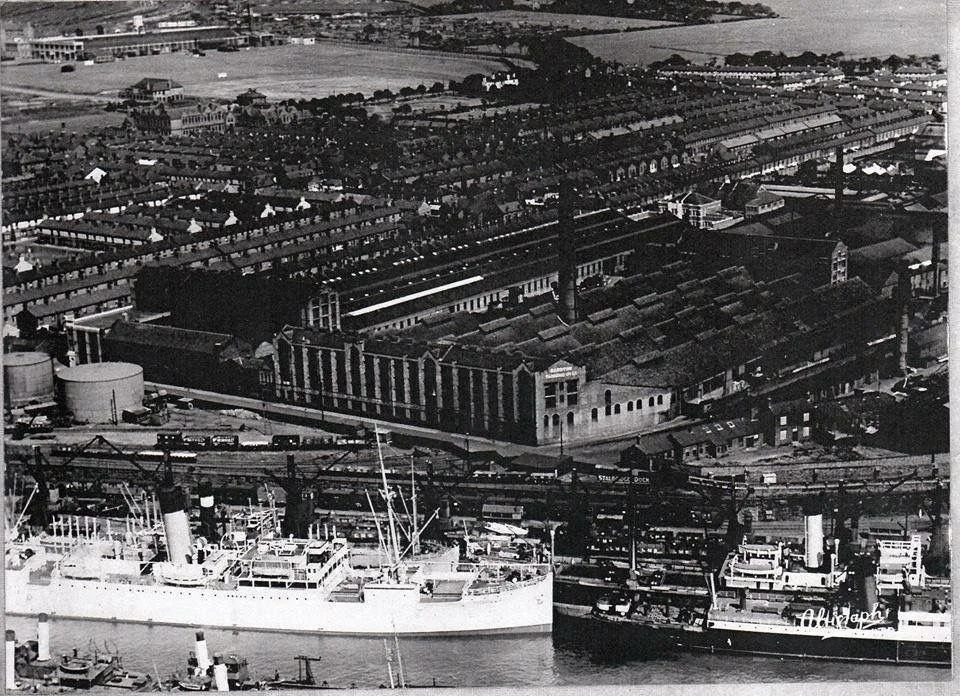
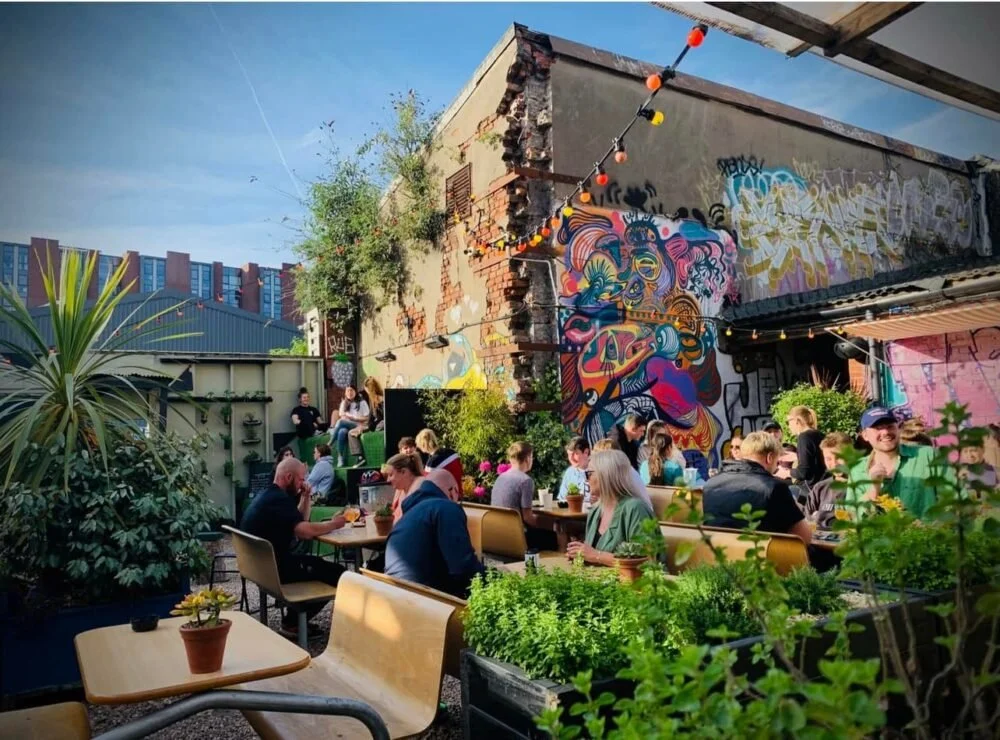
The family lived in the area close to the docks (now the Baltic Triangle, a trendy area of bars and clubs) to the north of Toxteth. At the time the area was mostly warehouses and rows of streets that led lattice-like down to the docks (see aerial view photo).
Historically, this area was inhabited by Irish emigrants who were fleeing the famine. Families stayed close to the docks with the hope of an onward passage to New York, but many ended up settling there and putting down roots.
The first of ‘our’ Flanagans, Harry’s paternal great grandfather, arrived with his family from Dromore in 1847, a couple of years into the famine.
They joined a small Irish community which had become well established by 1860.
Conditions in homes would have been cramped to say the least with extended families living in dark filthy cellars in court housing where disease spread quickly.
(Incidentally, it was while I was researching the Flanagan ancestors that I found this remarkable study/website of Irish surnames - a gold mine for anyone researching their northern Irish ancestors! Northern Irish Research.)
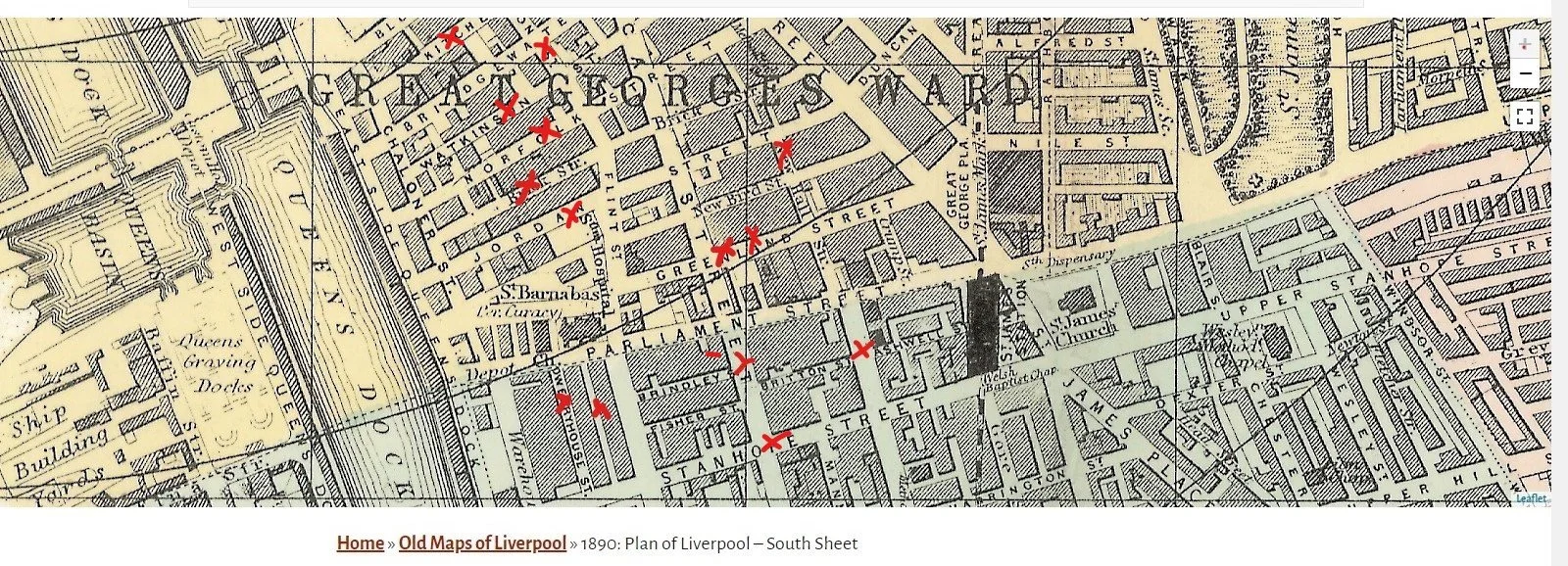
Streets to call home
The Flanagans didn’t stray far from Queen’s Dock
From all the birth certificates, marriage certificates, death certificates and census records over generations of Flanagans, I found the streets they lived on - including ‘tenement’ court housing - and plotted them on a historic streetmap (pictured here).
Many of these streets have been demolished, but it’s still possible to wander around and imagine how it would have once been.
Harry’s family in Liverpool
Harry’s father, grandfathers, and most of his uncles worked their entire lives as Dock Labourers or Coal Trimmers/Firemen/Stokers on the steam ships. As an example, one of his grandads - also Henry Flanagan - was a ‘Salt Heaver’ on the 1871 census when he was 21, and was still a Dock Labourer in the 1921 census when he was 71.
One of his great uncles became a mariner as soon as he left school, and died at 31 when he was stabbed to death on a ship in the port of Marseilles in 1877. It certainly painted a picture.
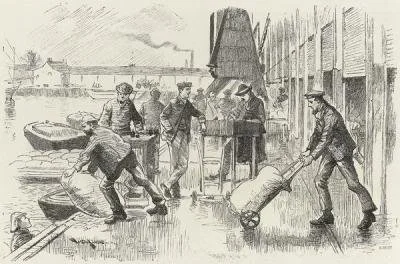
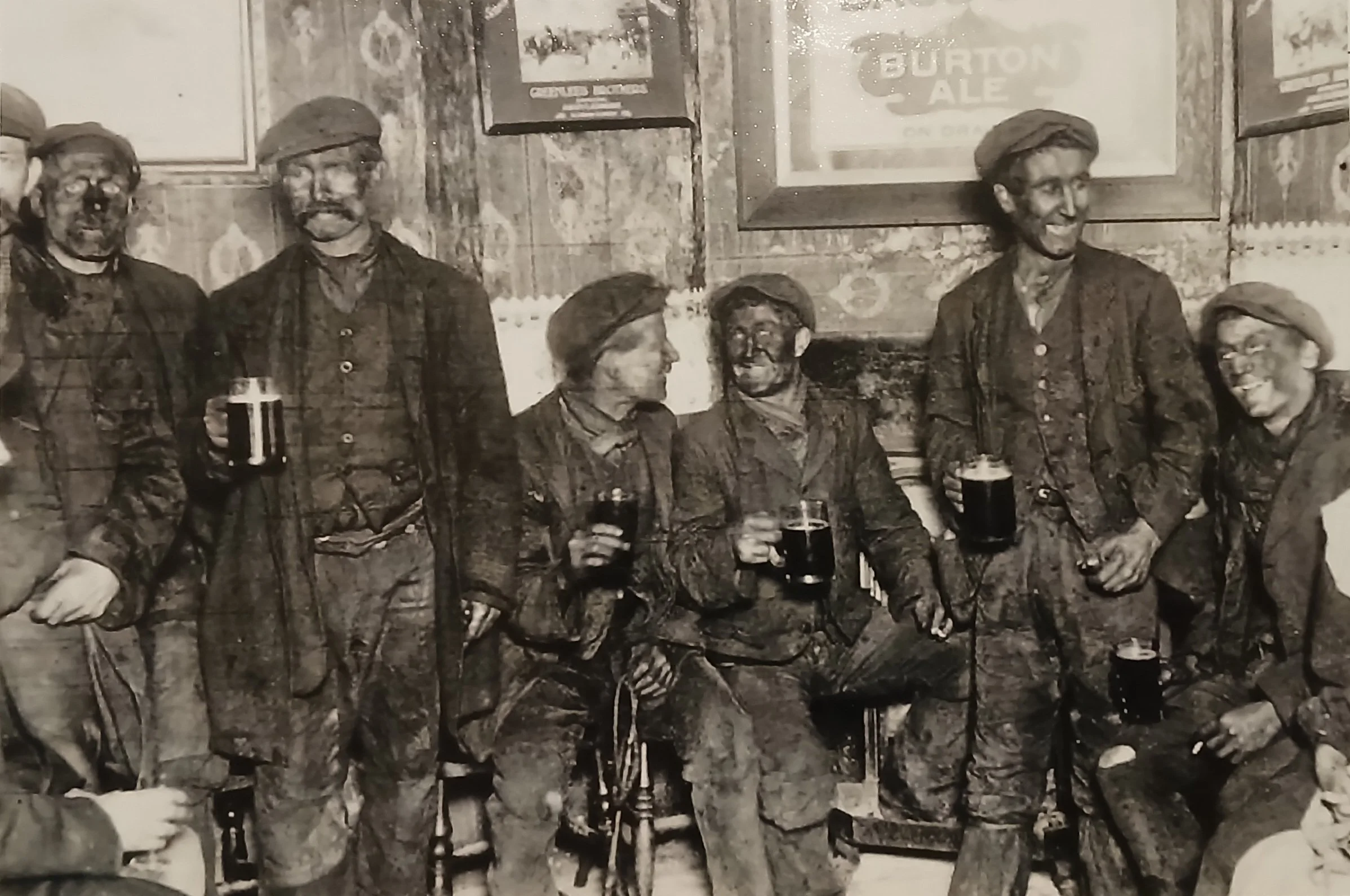
The men who worked the furnaces were known as ‘The Black Gangs’ for obvious reasons (see image). There’s also a photo here of a Liverpool crew shovelling coal. Coal needed to be organised (or ‘trimmed’) before given to the stoker, hence the term ‘Trimmer’.
Harry’s sisters and aunts worked in factories (eg machinists, another in a cigar factory, another at the football pools).
Harry’s dad - Walter Henry Flanagan
Walter was one of ten siblings. He worked as a Trimmer all his life, like his brothers, working in the bowels of big steam ships on long voyages to New York or Africa or South America. It would have been exhausting, dangerous and back-breaking work. Here is a photo of the Hydaspes which was one of the ships Walter worked on. He would have been away for long periods of time, seemingly fathering a child on each return home! He had nine children, Harry was the last. I found the merchant navy cards of his brothers but never Walter’s so I don’t know what he looked like.
Walter died at sea off the coast of India at just 46. He died from malaria, a common fate of Trimmers who travelled to exotic locations. Others often died from exhaustion or accidents. It was merciless. Finding his death certificate was difficult, but it taught me a lot about the marine register.
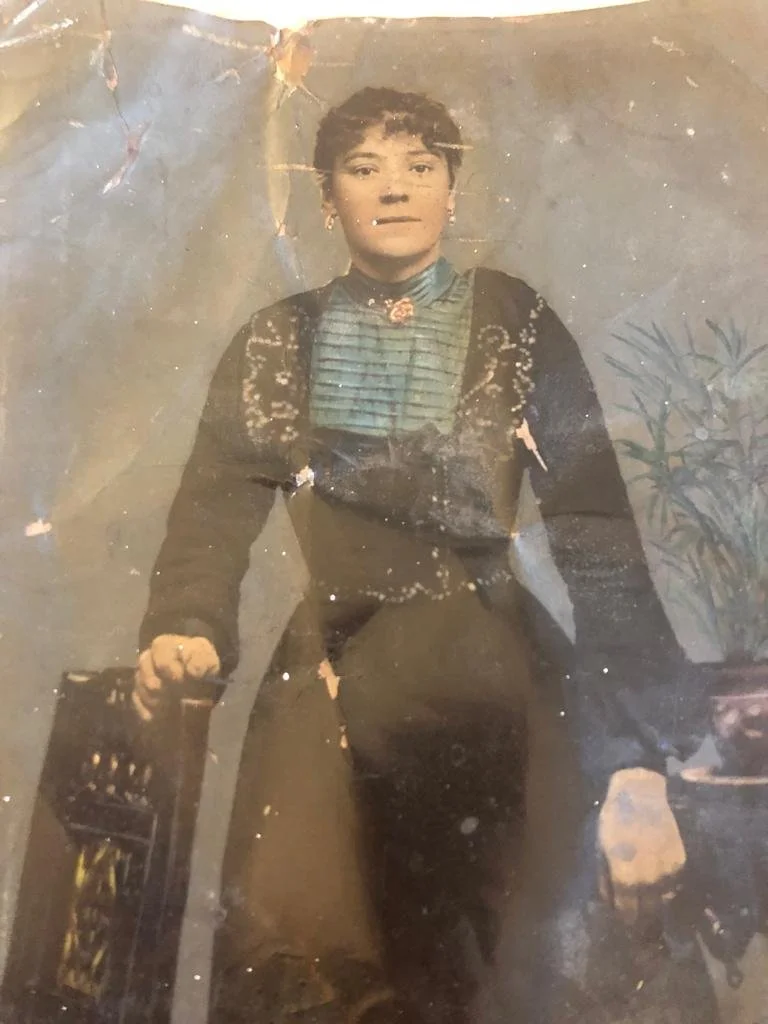
Harry’s mum - Mary Anne Dougherty
This amazing photograph (courtesy of Janette McGovern) surfaced at a family gathering after a Flanagan funeral and was given to us by one of our new-found cousins. Full story about them later, but in the meantime, what a photo. That dress!
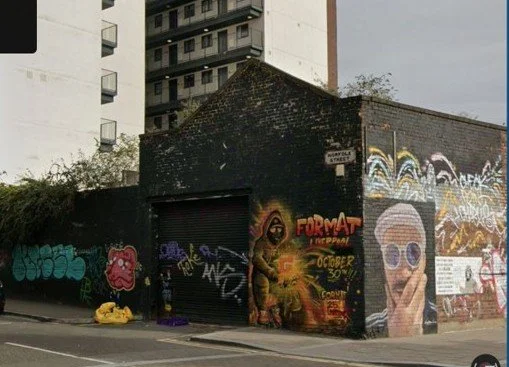
The photo below is Norfolk Street now, within a stone’s throw from St Vincent de Paul Church and Queen’s Dock.
Mary had nine children with Walter.
She died of pneumonia when Harry (her youngest) was just four and she herself was aged only 35.
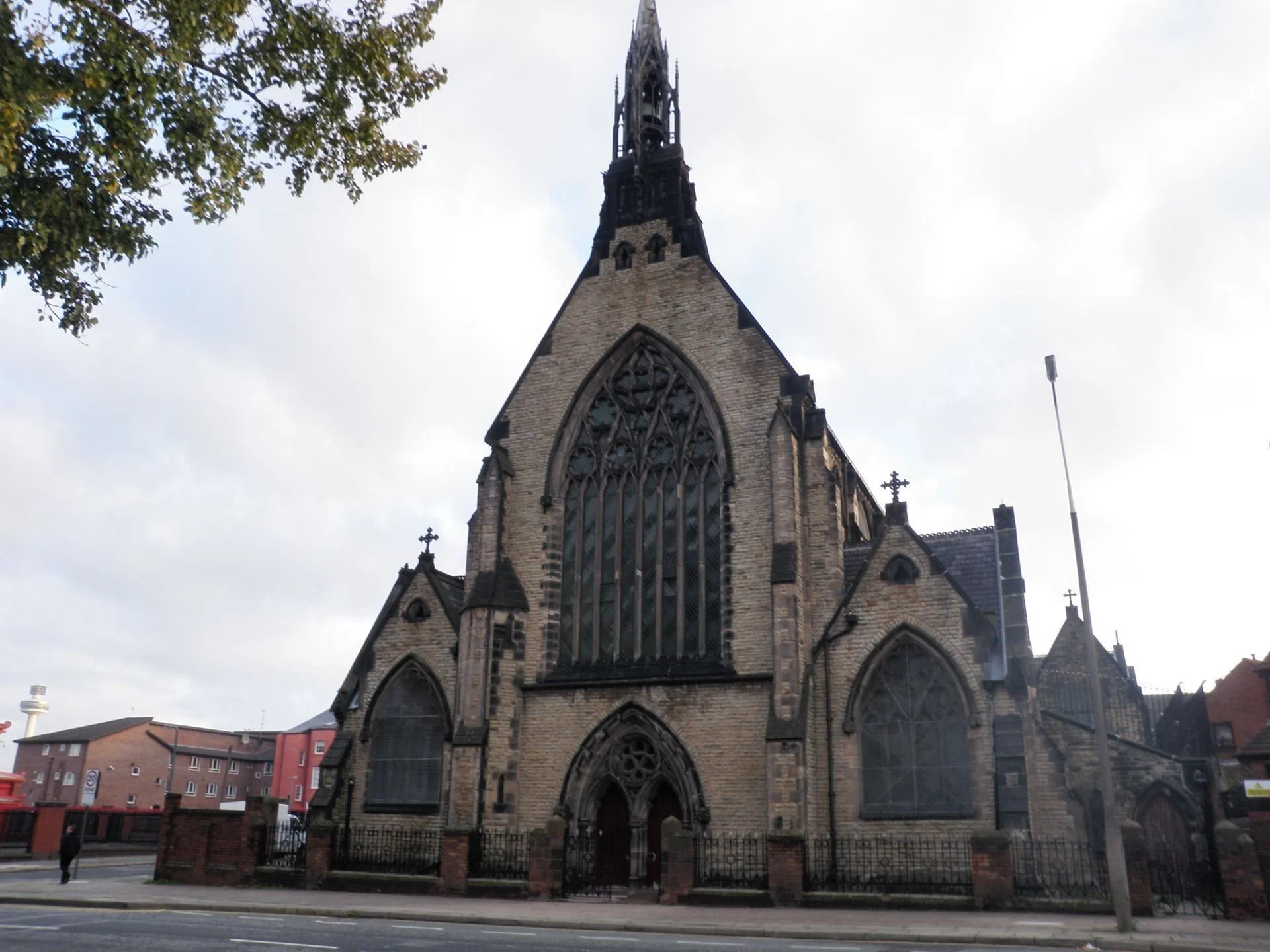
St Vincent de Paul Church
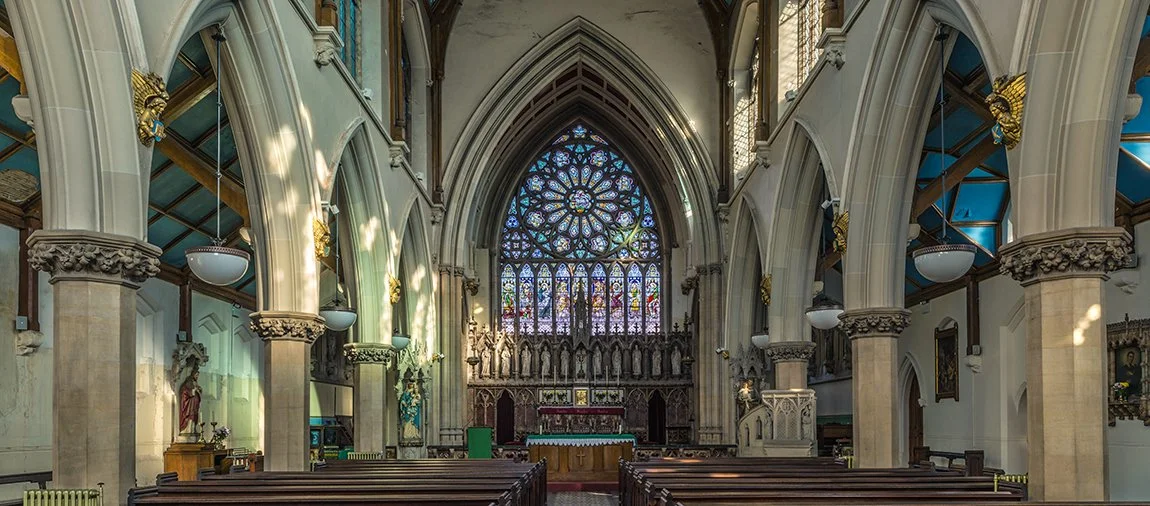
I spent a lot of time in the parish records of this church, they had all been digitalised on the Ancestry platform. I learnt pretty quickly that Roman Catholic records are in Latin (it’s why it took me a while to find Harry’s baptism record - he was baptised Henricus, and his father, Walter, was Gualterii). I also learnt that you can often find useful little gems on parish records. Like on the marriage record shown here. Little reminders of whose daughter someone is, or which parish someone has moved from. Gold dust for family historians, and information that you wouldn’t find on official indexes.
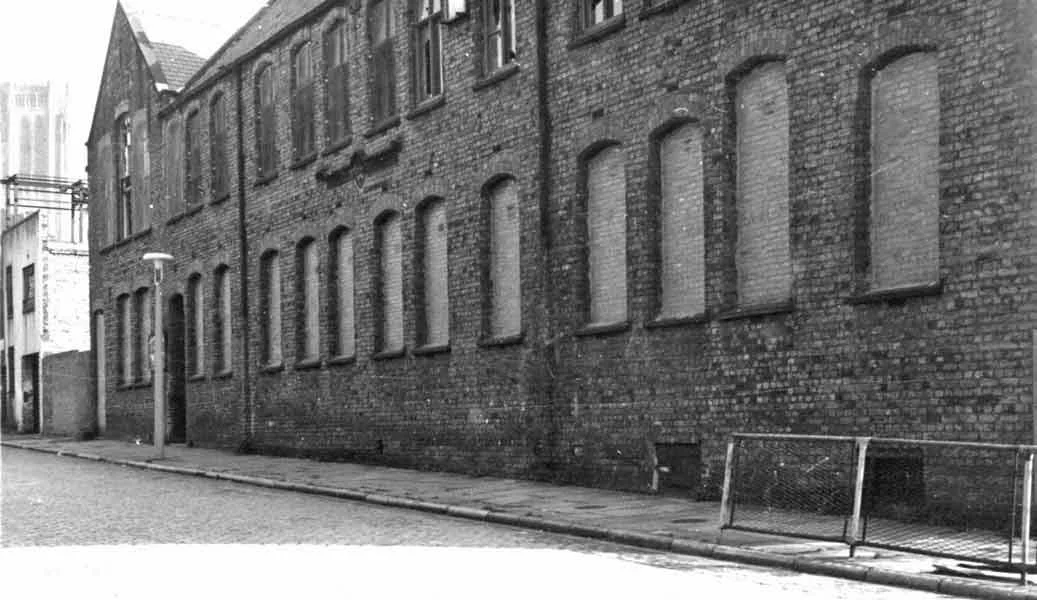
St Vincent de Paul Roman Catholic School
All boarded up by the 1960s. It could be that all the Flanagan children went here at some point.
What happened to Harry after Walter and Mary died?
Harry was only four when his mother died from pneumonia at just 35 , and twelve when his father died. I found one of Harry’s sisters on the register for St Druid’s Catholic Orphanage for Girls when she was seven (just after Walter died), so it could be presumed that Harry went to a similar institution for boys but I haven’t found him anywhere ….yet.
Ford Catholic Cemetery
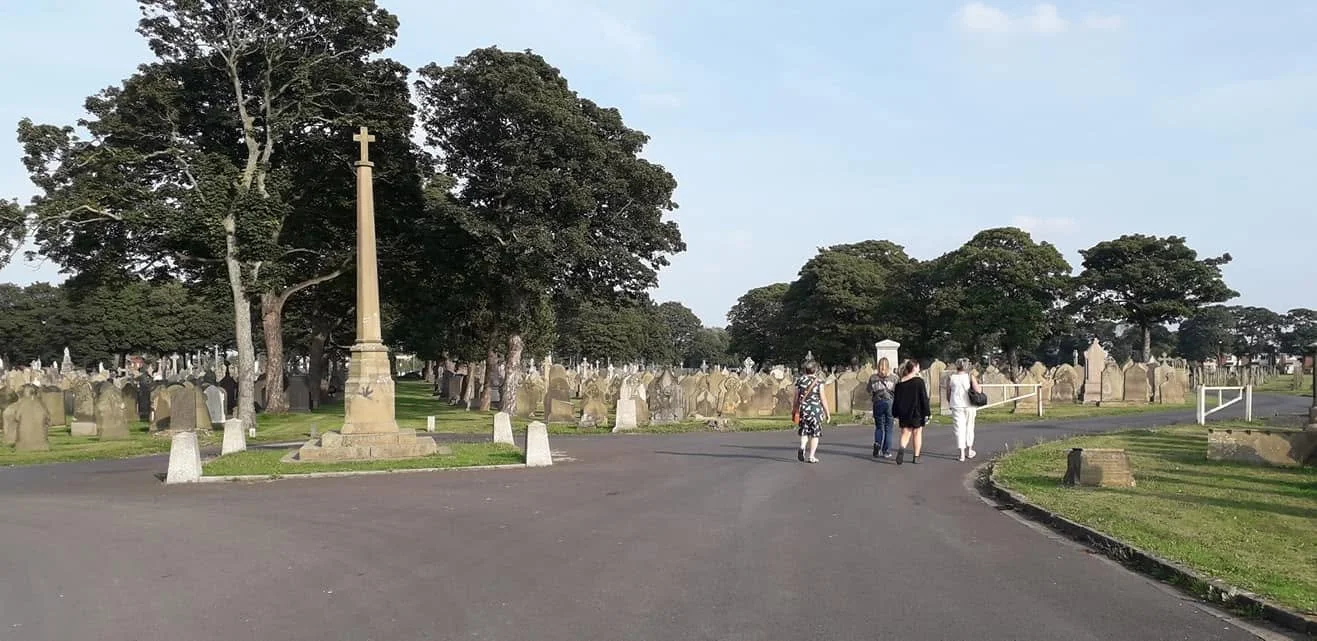
The biggest Catholic cemetery in Liverpool is Ford Cemetery on the outskirts of Liverpool. It’s where most of the Flanagan ancestors are buried, most in a far corner, in the communal ground, in unmarked graves. True to the times, infants who’d died were often put in the same coffins as adults of the same (extended) family who’d died around the same time. We visited the cemetery with our new-found cousins (more later).
I carried out an audit, just to see how many of ‘our’ Flanagans were buried there, and to reinforce my burning question - where was Harry?! I couldn’t even find where/when he’d died, let alone where he was buried.
Harry’s marriage to my grandma
This was one of the few concrete facts I had at the start.
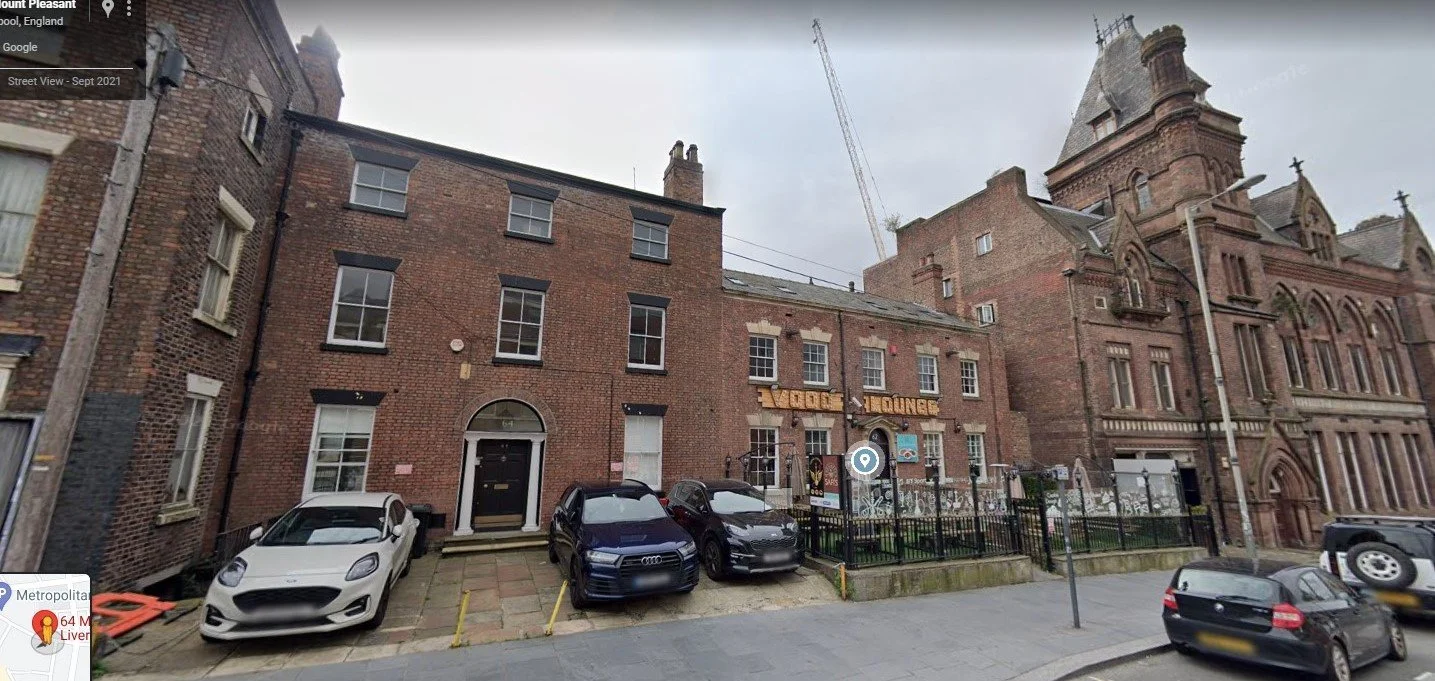
They married in March 1939 in the Register Office at Mount Pleasant (the red-brick building pictured - now closed).
It’s nice to imagine them standing at that entrance.
My grandma was seven months pregnant at the time. It’s likely that St Vincent de Paul church refused to marry them. Her pregnancy is also possibly the reason they didn’t have family as witnesses (as the rest of the Flanagan family did).
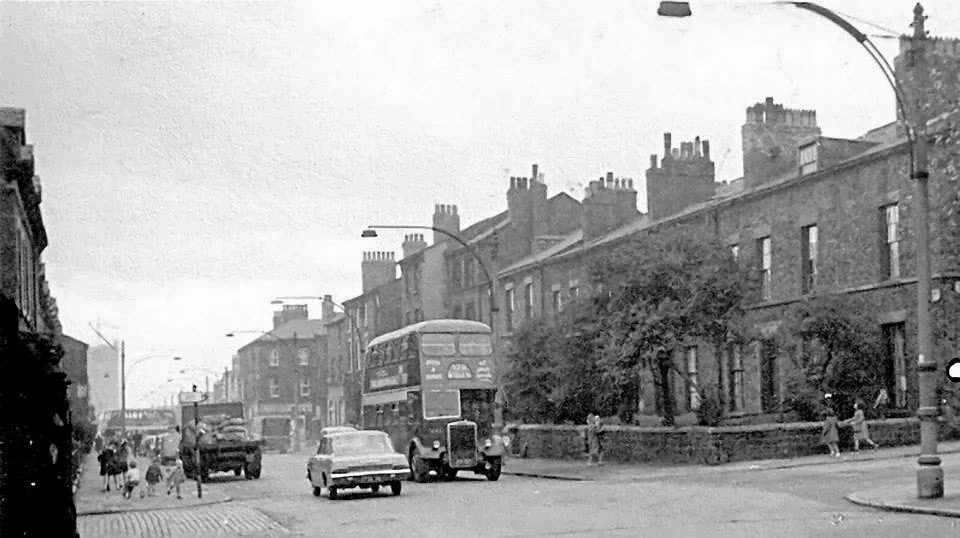
On the marriage certificate, Harry’s occupation is ‘Hotel Waiter’ and his address is Marmeduke Street (pictured here in 1937). When I looked at the address in the 1939 Register, I discovered that the witnesses on the marriage certificate were a couple who also lived in the same house as Harry - in a room across the hall from his. I did track down one of their children, now an old man, but he didn’t respond to my letter.
Harry’s RAF years
It was a busy few months for Harry. He married my grandma in March 1939, my mum was born in May 1939, and in September 1939 when war broke out, he signed up to the RAF. I’m not sure my grandma ever saw him again.
Thankfully I had all Harry’s RAF documents. My sister had sent off for them a long time ago, and had even been given an explanation for the entries on his record.
Once we’d recovered from the fact that he was only 5’2”, we discovered that he’d travelled all over the world, working first as a Batman (‘looking after an Officer’), then as an AC2 (2nd Class Aircraftman) rising to AC1 for good behaviour. He was ground support. He’d have helped maintain aircrafts, helped move equipment, support aircraft fitters. After training, first he was based at the Dorval airbase in Canada (pictured) where they were training pilots on the new US bomber planes. He would have been there when a Liberator plane famously crashed with a full training crew on board.
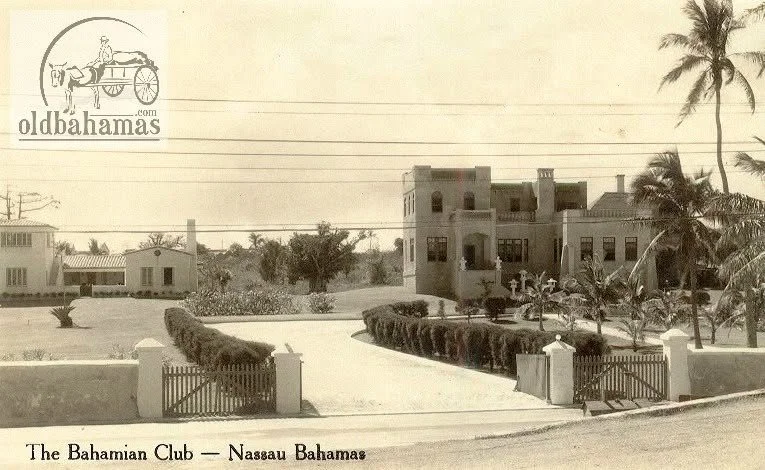
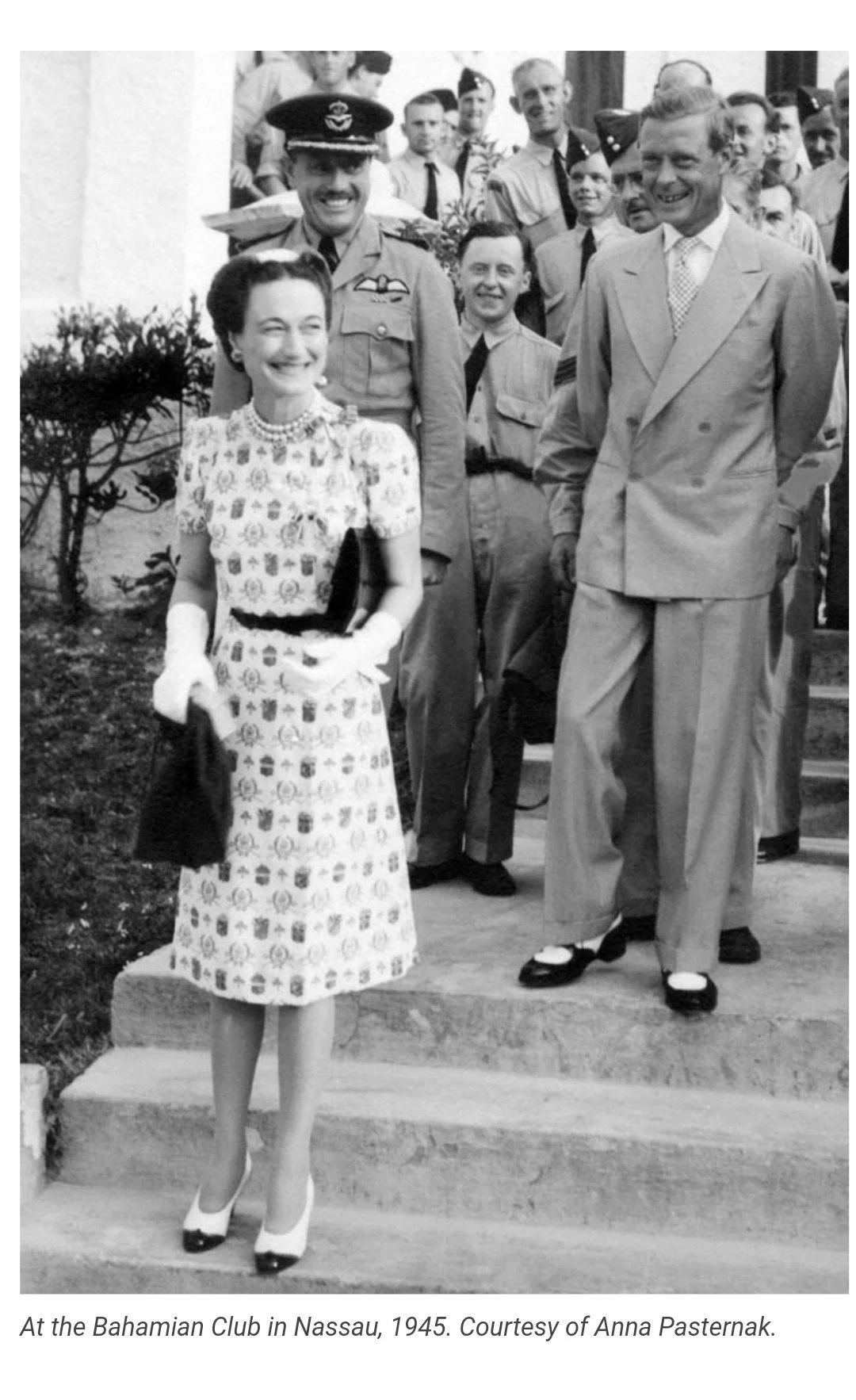
Then he was stationed in Nassau, in the Bahamas. During Harry’s time there, The Duke of Windsor was Governer of the Bahamas. His wife - Wallis Simpson - made the exclusive Bahamian Club available to RAF units to relax in their downtime. It even had its own casino and private beach. He remained with the RAF in Nassau even after the war had ended, when the base served as a military hospital for wounded soldiers.
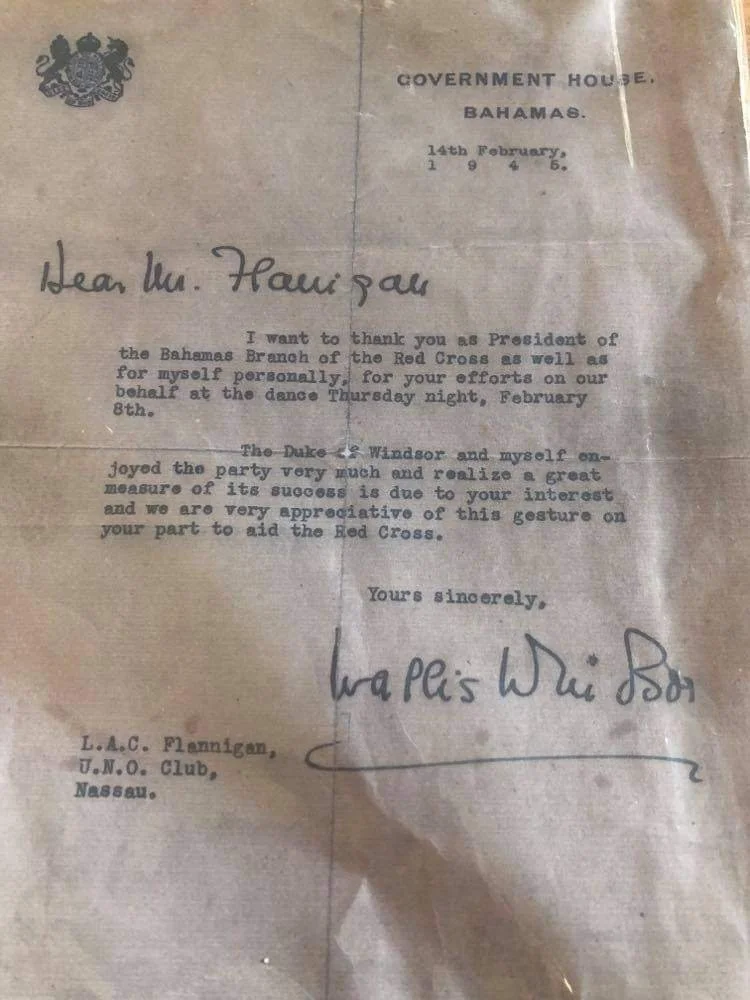
It was the descendants of one of Harry’s brothers who told us about the rumour of Harry working for Mrs simpson when he was in the Bahamas. Amongst family memorablia was a letter (pictured) from the Duchess to Harry, thanking him for his work at a Red Cross event.
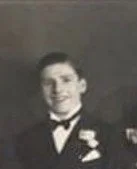
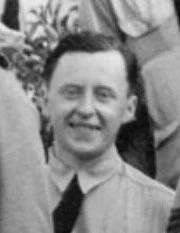
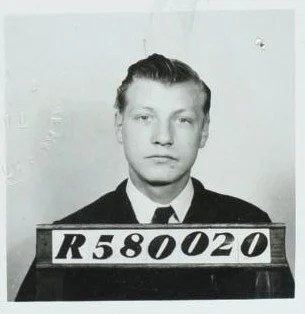
It was at this time that my son decided to do a random search on Google for RAF and Mrs Simpson, and that’s when we found this photo of the Duchess with some RAF crew. It was from 1945, exactly when Harry was there. The cute little dude in the middle may well be Harry but we’re not 100% sure. The height would fit! We think there’s a similarity with the Harry in the Flanagan wedding photo (close-ups here for comparison). In the first picture he was 18, in the second 31. What do you think?!
I did contact Anna Pasternak (the journalist who provided this photo, and who has written profusely about Wallis Simpson). I was hoping the photo might have been one of a series, and there may be others. She responded and was very interested. I shared the copy of the letter with her for her collection. She’d found the photo in a charity shop so she couldn’t help there, but she did say that she’d keep Harry’s name on her radar.
Ships’ manifests showed Harry travelling back and forth to Nassau even after his service ended, so the Bahamas rumours had been true, but he’d completed his RAF service with merit! He obviously made good friends in Nassau, we even found a postcard from him sent from Nassau in 1949.
Harry and the Bahamas
The rumour was that Harry had ‘jumped ship’ at Nassau when in the Navy. We now know that he was in the RAF and that he was posted to Nassau.
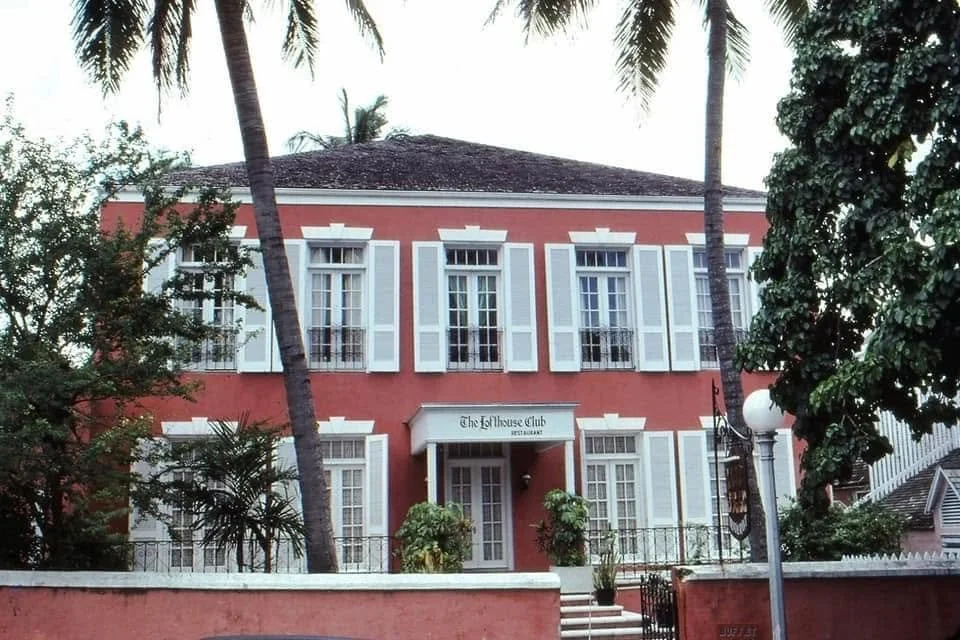
But his connection to Nassau was more than that. I found him on ships’ manifests going back and forth to the Bahamas as late as the early fifties. At one point, he gives a ‘destination address’ as the “Mrs Kennedy, Lofthouse”, Nassau”. I found the wife of the grandson of ‘Mrs Kennedy’ on the Ancestry platform, she put me in touch with her mother-in-law, the 90-year-old daughter of Mrs Kennedy. Through email I learnt about the place. It was owned by Cornelius Ryan, the Irish American journalist and writer who wrote A Bridge Too Far. A photo of the house is below. Apparently it had a guest house attached. Harry obviously worked there in some capacity.
The postcards
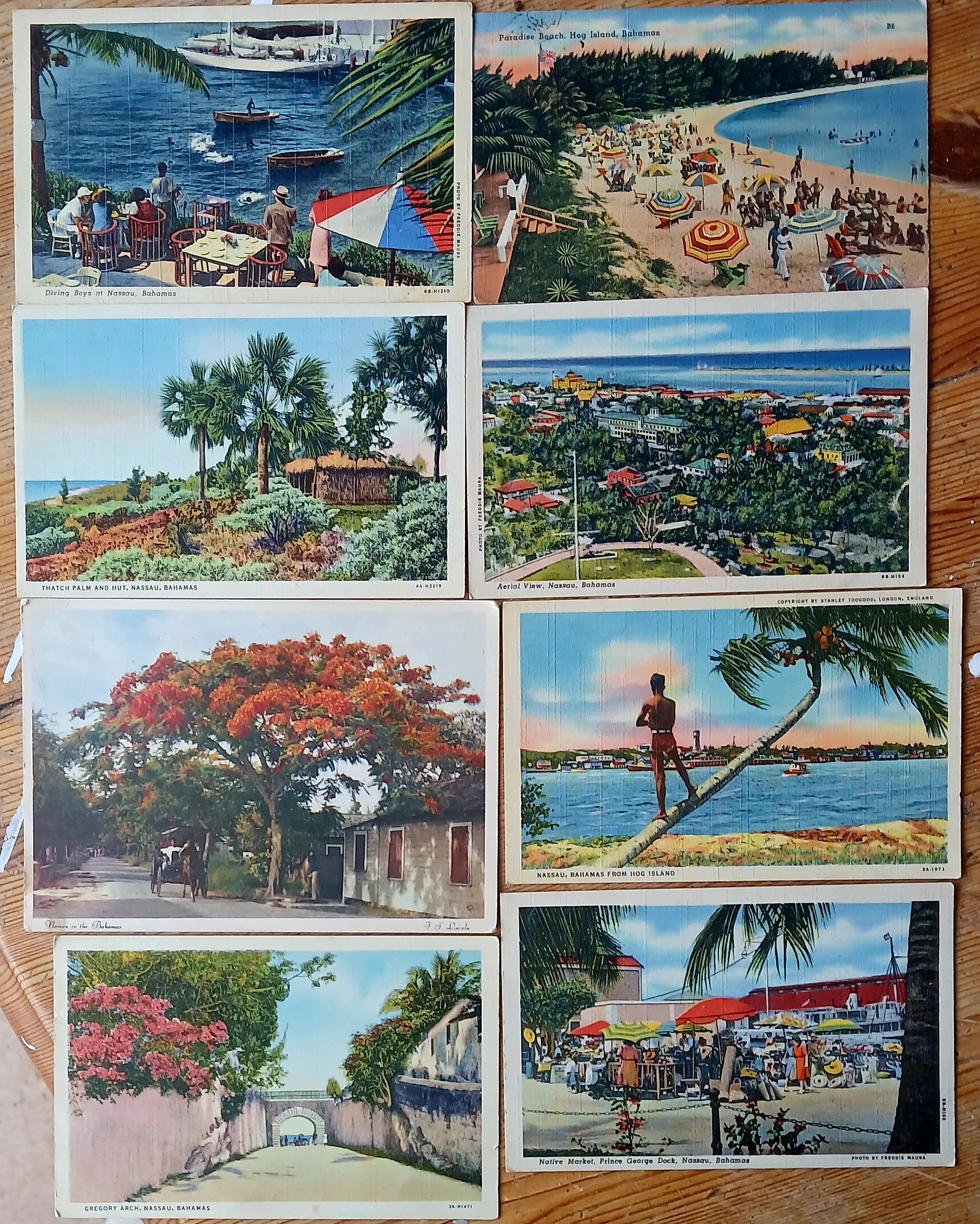
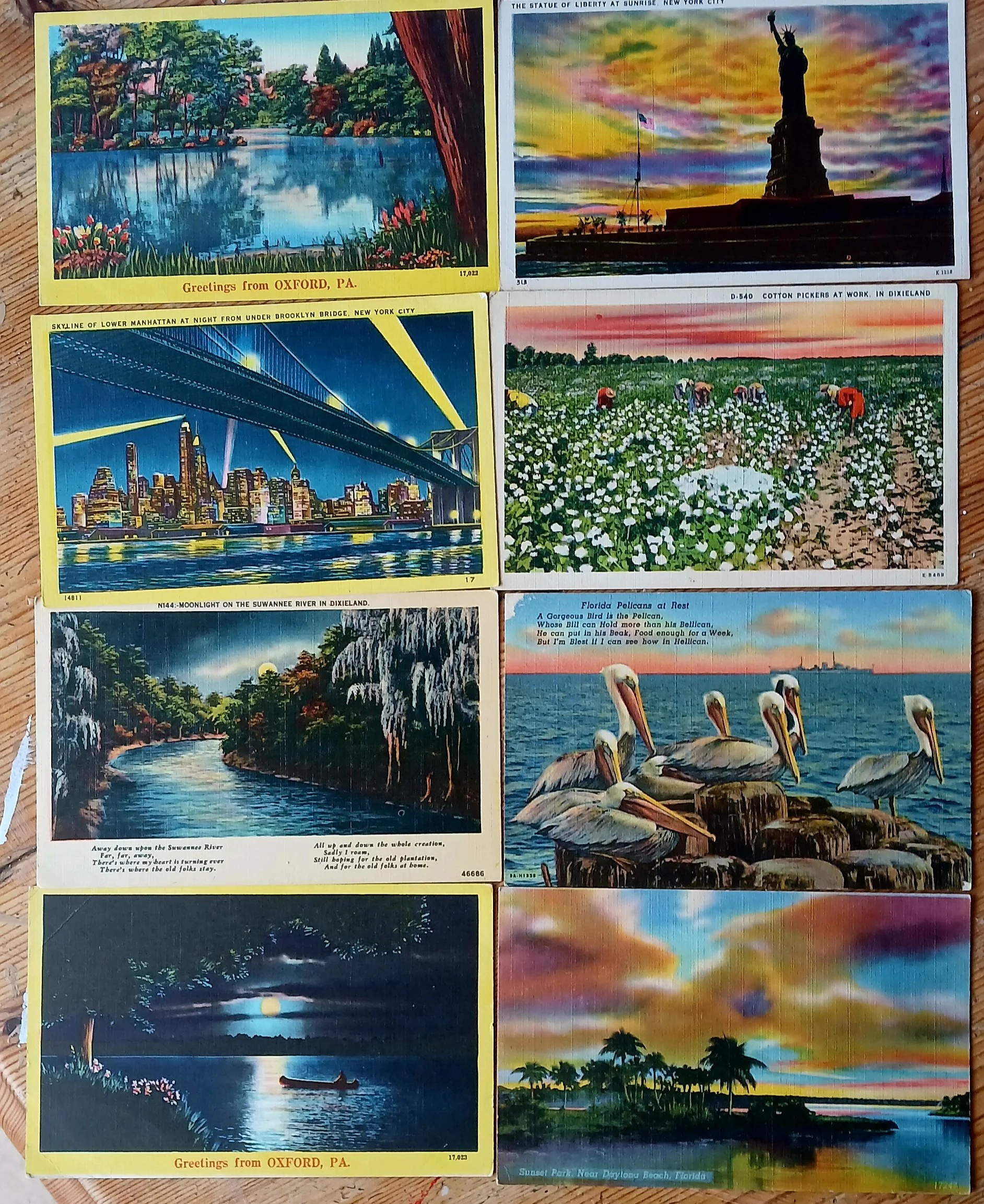
Amongst my mum’s things, we found a pile of (around 60+) postcards. Sadly, most of them had nothing on the back, but one (the one sent from the Bahamas in 1949) said “one for your collection”. Here are a selection from Nassau. They’re beautiful postcards.
It seems Harry had a bit of a love affair with the place and no wonder.
After the war - travel!
This is where Harry’s collection of postcards became really helpful, his itinerary documented in pictures, a real treasure trove! He obviously wasn’t much of a writer, and we think a lot of them might have been sent in bulk from on board a ship, or from the hotels he stayed in, perhaps with a note. But apart from the one from the Bahamas, the others were blank. But some of them are works of art, I’ve included a few here, the colours are beautiful.
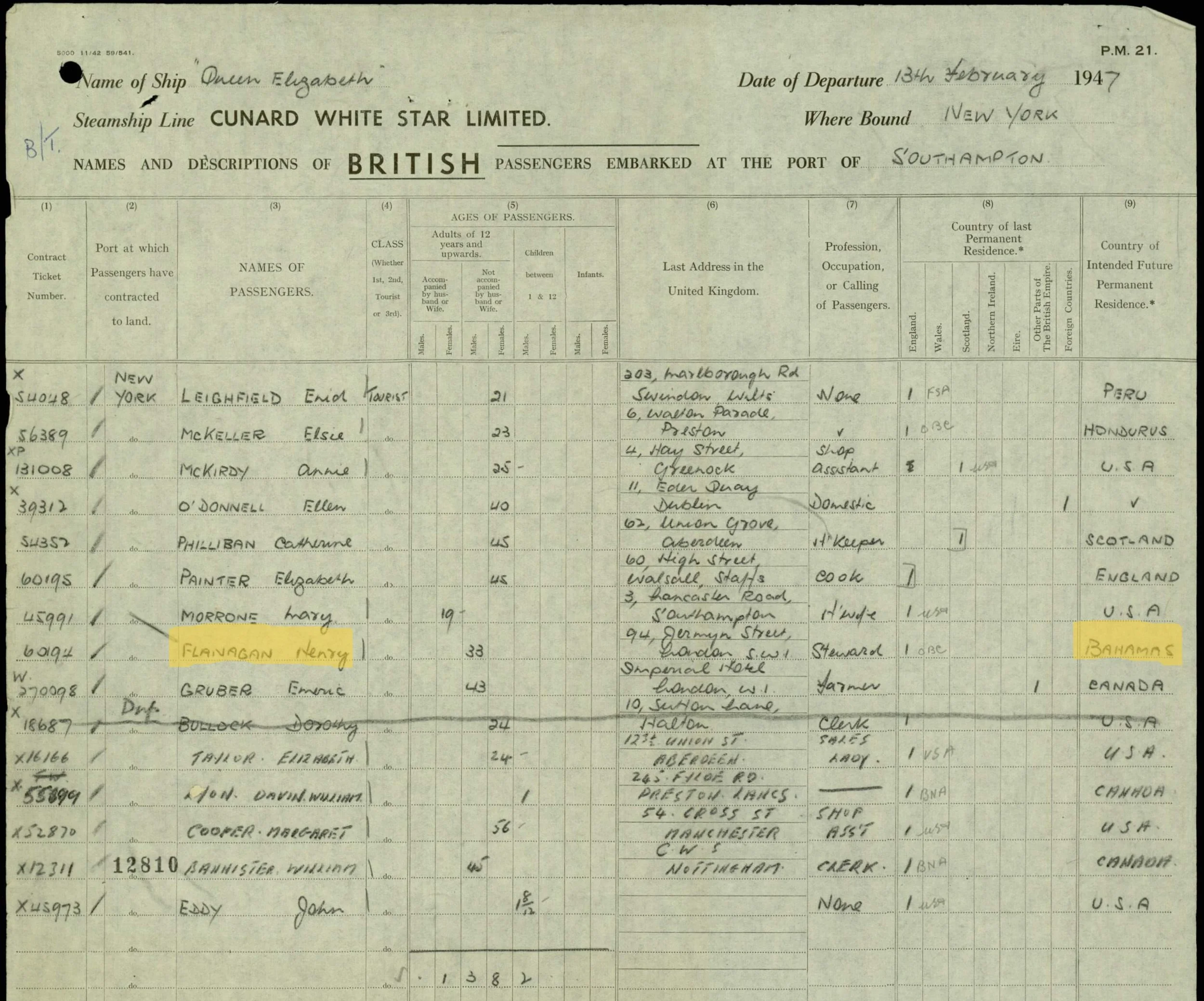
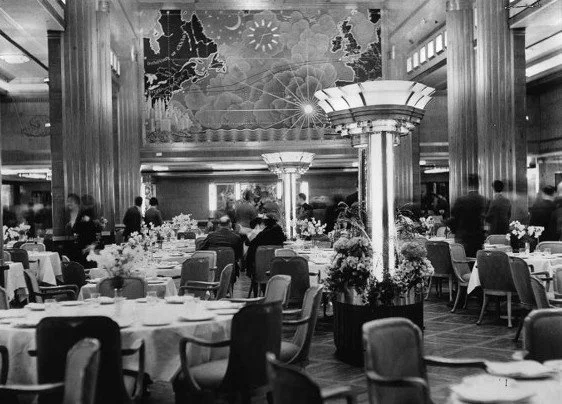
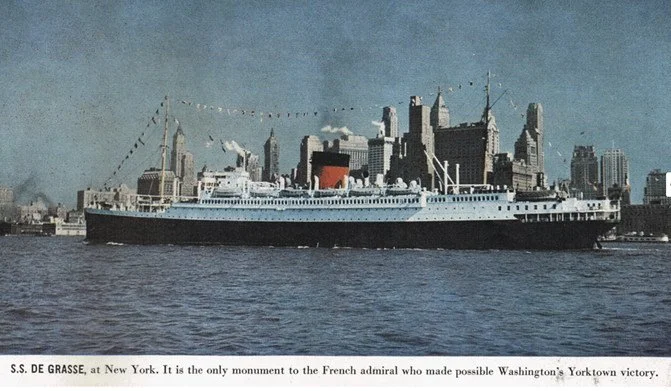
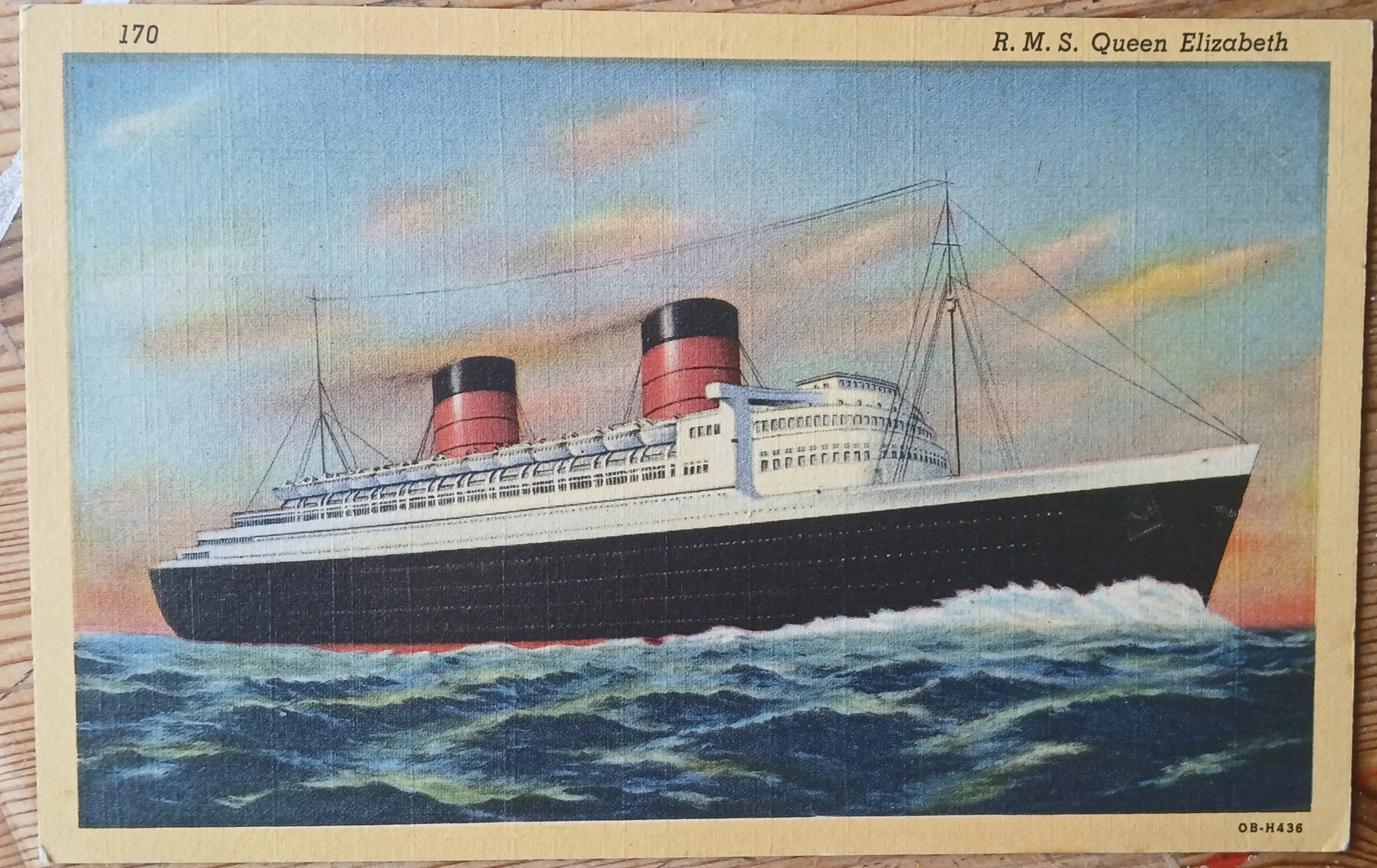
Knowing he’d spent so much time overseas, it was at this point that I decided to upgrade my Ancestry subscription to Worldwide Membership. I found Harry on a few ships’ manifests working as a steward. Perhaps he worked his way around the world. I even found him on RMS Queen Elizabeth and HMS Queen Mary. I also found him as a steward on the SS De Grasse and the SS America which both journeyed back and forth to New York. From the postcards, I got the impression he spent a lot of time in New York.
Cunard Yanks
In the 1950s, working class men who worked as stewards on the Cunard shipping line - back and forth from Liverpool to New York - became known as the Cunard Yanks because of the way they started dressing and the music they liked. They brought jeans and tailored suits and American slang. I reckon Harry was one!
Harry’s ‘home’ address
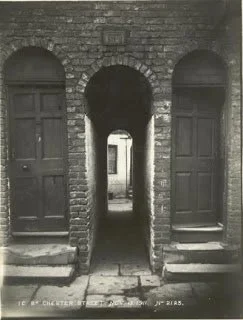
Harry often listed his UK address as Back Chester Street, Liverpool (where his sister still lived), and I also found him at that address in electoral rolls. That was obviously the ‘home’ he returned to in between trips.
But where was he after 1952?!
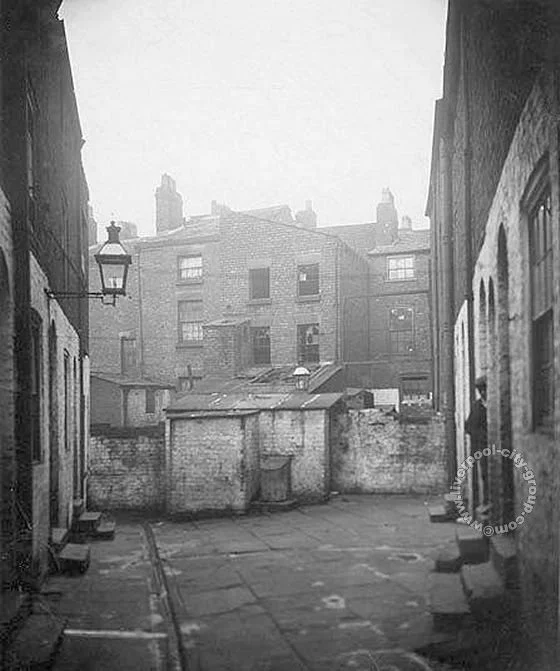
Research was flowing nicely at this point. But I still didn’t know what became of Harry, and why he wasn’t buried at Ford Cemetery (or anywhere). As mentioned, the last place I have an offical citing of him at this point is Back Chester Street (pictured here in the 1950s). To create more housing for the growing population around the docks, rows of houses were split, to have a front house (with the front door onto the street), and a back house, with its front door onto a courtyard. Alley ways were knocked through for access. These pictures are of Back Chester Street (and the passage that led to it in the 1950s), a far cry from the exotic places Harry had been visiting.
But he seemed to disappear after 1952 .
I decided to try and work back, and focused on trying to find a death certificate. I found two possibilities: one was a gravestone in Australia that I’d found on findagrave.com which I thought couldn’t possibly be him, because there’d never been any links or rumours with Australia. The other was a man who’d died in Peckham in the 1990s. I ordered the certificate, and it was very sad; it was a man who’d died by himself in a bedsit under a bridge. There was nothing to prove either way whether it was ‘our’ Harry or not. I’d desperately hoped it wasn’t him.
Finding our people
It was about this time in the research that my sister found Harry in the family tree of one of his great nieces. That’s the nice thing about the Ancestry platform, if you find a person in someone else’s tree, you can tap into their research too. She tentatively made contact, and so began a wonderful friendship. We were long lost family. These Flanagans hadn’t ever known what happened to Harry and they welcomed us with open arms. They invited us – me, my sister, my aunt (who carries the Flanagan surname) and my daughter – to go and meet them in Liverpool, and to finally discover more about this enigmatic man Harry, my grandad.
It was an exciting moment.
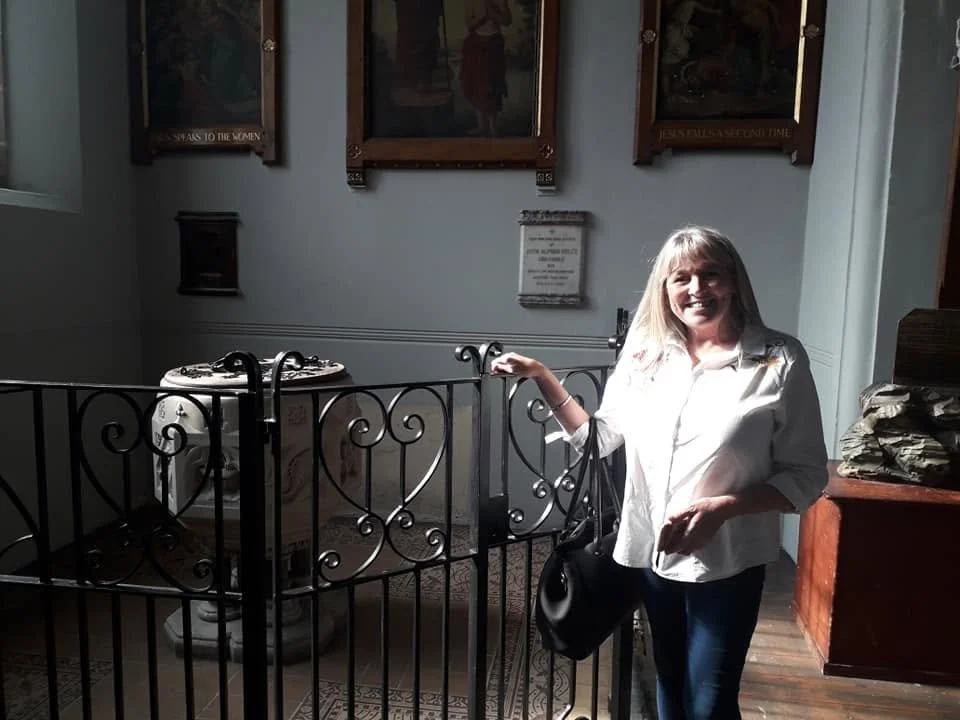
My sister and I always felt starved of cousins (our dad was an only child) and we hadn’t realised how anchor-less we’d felt before ‘finding our people’. We were welcomed into this remarkable family with true Liverpudlian hospitality. We met second cousins and third cousins, we visited ancestors’ graveyards, we wandered round the streets – now the Baltic Triangle - where our grandad and his family had grown up. We even saw the remains of what would have been an internal wall of one of their houses on Greenland Street (pictured). It was quite emotional, knowing they’d walked those streets, possibly sat at a table against that wall. We visited the stunning Vincent de Paul Church where the font where Harry was baptised was exactly as it would have been. We drank and we danced in their local pub, a proper welcome to the fold..
A Flanagan wedding
Our new cousins showed us this fantastic photo (credit Janette McGovern) of the wedding of their grandma (one of Harry’s sisters). It enabled us to put a few faces to names.
Harry is standing on the back row, second from the end on the right (he must be standing on something to reach the height of the others on his row!).
But it was the lady in the top right corner, standing next to Harry, that got us scratching our heads. She’d always been an ‘unknown’ to our cousins. For me, it was like looking at myself looking back at me.
Could this lady be our grandma? The dates would fit, and the likeness (I think) is uncanny.
Harry’s sexuality
Our new-found cousins didn’t know much about Harry either. All his other siblings/aunts/uncles had put down roots in Liverpool. Harry was the only one who’d chosen a different path.
I tapped into the memories of his one surviving nephew, the only living person who’d actually met him when Harry had been a young boy. He vaguely knew that Harry had married and that they’d had a child (my mum) but he didn’t know what became of them.
He told me about Harry’s love for ‘the finer things in life’ and how incongruous this was with everything else going on around the docks where he lived and the circles his family moved in. He said that Harry would bring beautiful gifts back from New York, and dress up and go to smart cocktail bars with his sisters and wear silk scarves.
He said that there’d always been the suspicion that Harry was gay, and that Harry had married my grandma not only so that she would avoid the social stigma of being an unwed mother, but as a cover for him. My grandma had already lost two babies - one died and one was taken from her for adoption - and the chances are that my mum would have been taken from her too had she not married Harry.
My grandma was seven months pregnant when they married, so if my mum wasn’t his (which we know she wasn’t), it was both a very kind gesture to marry her, and a convenient one.
Spoiler - Harry never married again, and he didn’t have any children of his own. He died as a single man living in a men’s boarding house in Cairns, something that perhaps corroborates the theory. It’s a theory that would certainly make sense of things.
The Australia link and THAT PASSPORT STORY
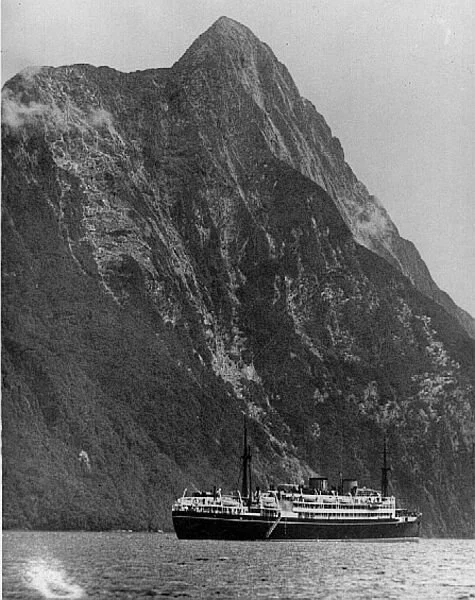
It had been around this time that one of our new-found cousins in Liverpool had found Harry on a passenger ship, going to Australia, then New Zealand (see photo of the ship he sailed on approaching New Zealand) then back to Australia. Looking closely, I saw that there was another lad’s name next to Harry’s on all journeys.
I researched the lad (even found his photo with his Merchant Navy number) as I thought he might be critical to our story. We might find descendants, or he could even still be alive (he’d been much younger than Harry). Thankfully he had an unusual name.
First I cold-called from online directory enquries, all those with that surname living in Liverpool. I had some nice chats, but none that led anywhere.
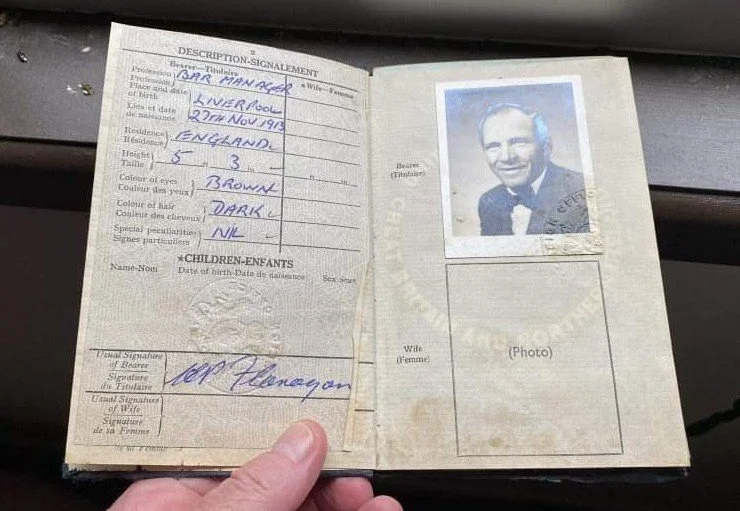
Then I did some sleuthing on the socials and eventually found the man’s daughter - a New Zealander – on LinkedIn. It was she who told me that her dad (who’d run away from an orphanage) and Harry had gone to New Zealand to set up a shoe repair business on Ponsonby Road in Aukland. Then they went to Australia but they argued.
Apparently Harry had stolen a lot of money from her dad (Harry, you rogue), and her dad had stolen Harry’s passport. He’d kept the passport, and it had ended up stashed away in her mum’s attic.
I offered a belated apology from my family to theirs (better late than never), and they sent me his passport in the post. I couldn’t quite believe I was holding it, and that we now had a photograph of him when he was older (he looked like Frank Sinatra).
The moral of this exercise was that leaving no stone unturned can pay off if you’re patient and persistent!
Harry’s last days
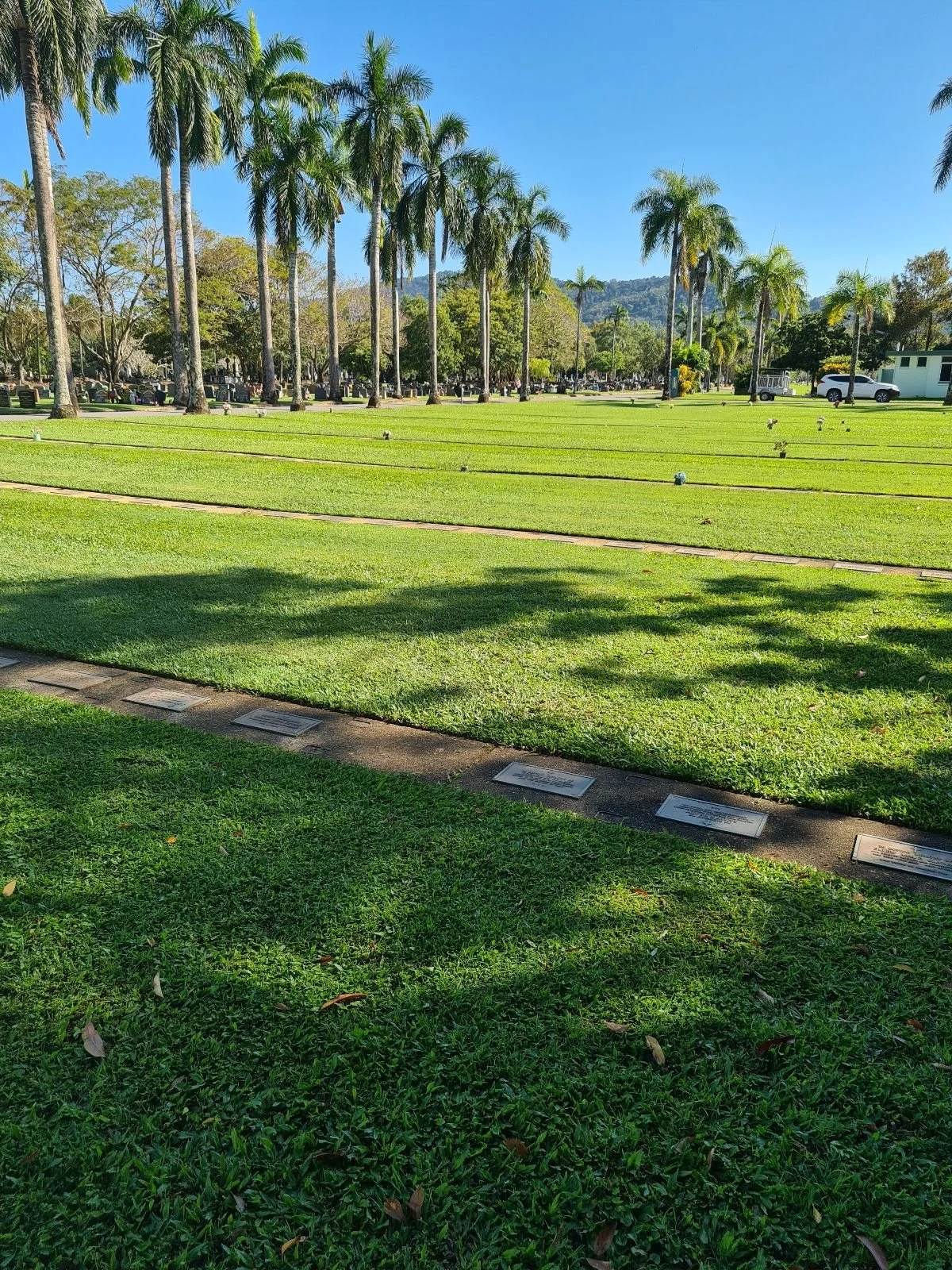
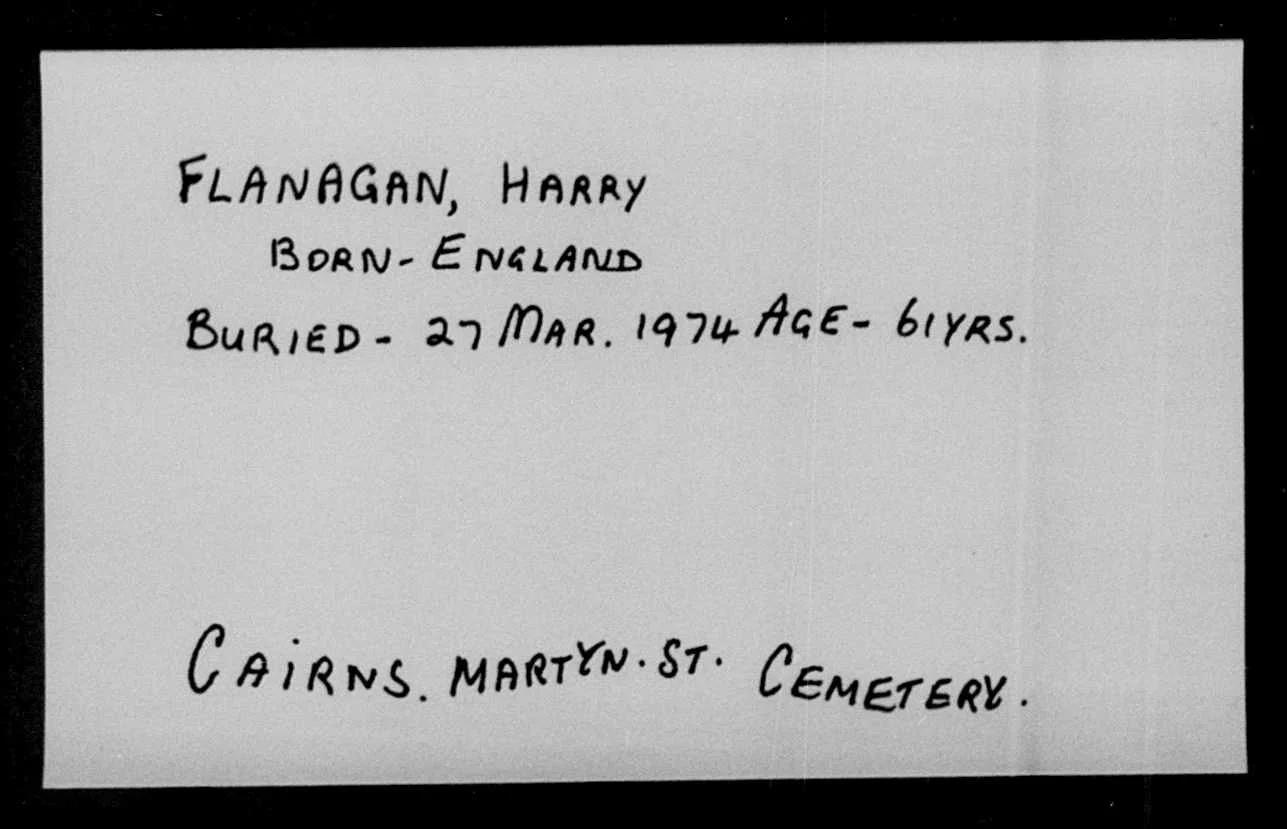
Once I knew he’d gone to Australia, I revisted the burial I’d found in Cairns months previously and realised that it was probably him. His death certificate led me to a last address - a gentlemen’s boarding house on the Esplanades in Cairns, right at the edge of the ocean. His boarding house is pictured here - photo credit to the Centre for the Government of Queensland). I also found an index card (pictured) which told me where he was buried (St Martyn’s Cemetery, Cairns) and I found the plot from cemetery records. It’s a beautiful spot (pictured).
His death record showed that his funeral was held in St Monica’s Cathedral in Cairns. The rumour amongst his family was that he’d left all his money to the church but I’ve yet to find evidence of that (research is ongoing!).
The man pictured here is Father Lizzio, the Priest who gave Harry his last rites. I researched his life too because he was such an amazing man and he deserves a mention. But that’s another story for another day.
But then it all went wrong - ruined by DNA
We had Harry’s life from cradle to grave, and had been reunited with his blood line, our Irish roots, it was an emotional journey. But the feeling disappeared when one of our cousins from our newfound Flanagan family submitted their DNA to the Ancestry platform, and we reeled at the result: “This person is not a DNA match.” To have our cousins snatched away from like that, having just found them, was a cruel twist of fate!
We weren’t related after all.
Despite having seen my DNA breakdown, with only 3% Irish ethnicity, it hadn’t occured to me that Harry couldn’t possibly be my biological grandad. He was of strong Irish heritage, and my mum (because she’d known no better), always told me and my sister that we were a quarter Irish! You believe what you’ve grown up to believe, and when you see something in black and white you don’t doubt it.
You can find out how I found the identity of my real biological grandad in ‘Finding my maternal grandad’.
In the meantime, on paper Harry is still - and always will be - my grandad, and Liverpool-Irish will always be a part of me (just not in my DNA).