Mary Elizabeth Smith - my great grandma
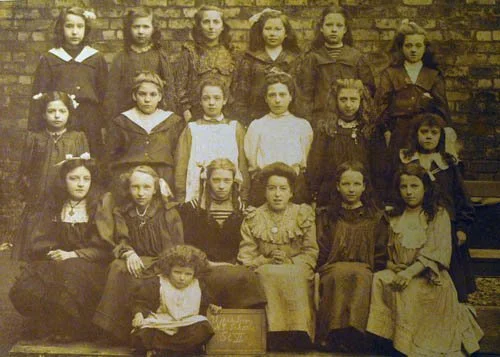
I don’t know if my great grandma is in this photo. I haven’t been able to find one of her elsewhere. But this is a class from a school which was on the street she was living at the time it was taken. Who knows!
It had been a long and painful process finding my grandma’s birth certificate, but when I did, I discovered my great grandma’s name, and that she was living in Birkenhead, not Liverpool as expected.
(A little aside. My great grandma’s mother was also Mary Elizabeth. I assume my great grandma did not go by ‘Mary’ but by her middle name, as was custom. Maybe Betty? Or Betsy or Lizzie or Eliza? I wish I knew).
Research highlights
Meeting Ron, the grandson of my great grandma’s brother
Finding the cancelled wedding Banns and the man my great grandma nearly married
Discovering she’d had a daughter before she had my grandma (with the same man
Finding a subsequent marriage to another man, and their descendants
Researching Mary Elizabeth Smiths
Without knowing how old she was, I was looking for a Mary Elizabeth Smith either in the 1871, 1881, 1891 or 1901 census (the 1921 census wasn’t out yet) for Birkenhead in Cheshire and in Liverpool. (I learnt the hard way that Birkenhead wasn’t in Lancashire, even though you can see it from Pier Head in Liverpool).
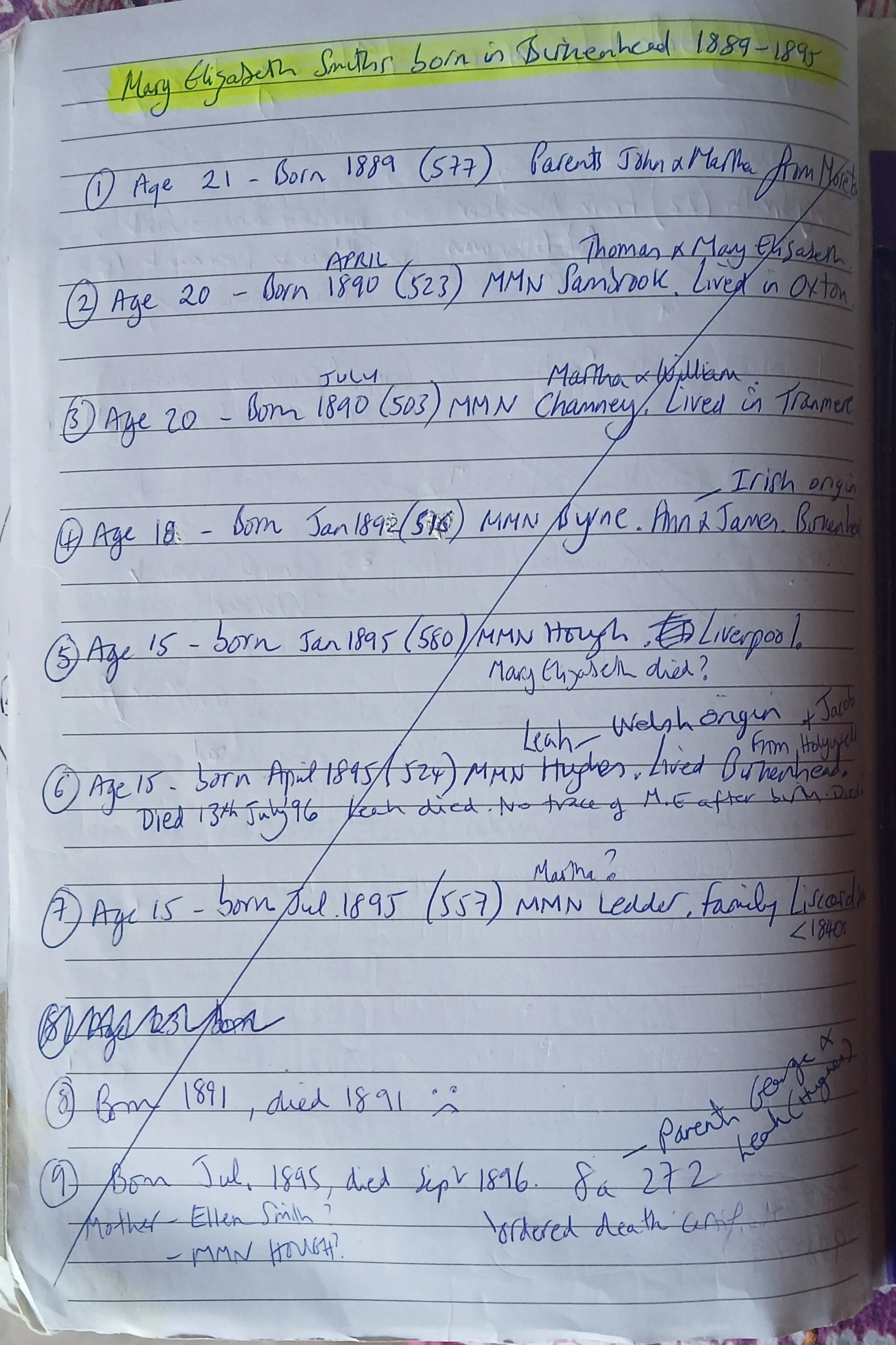
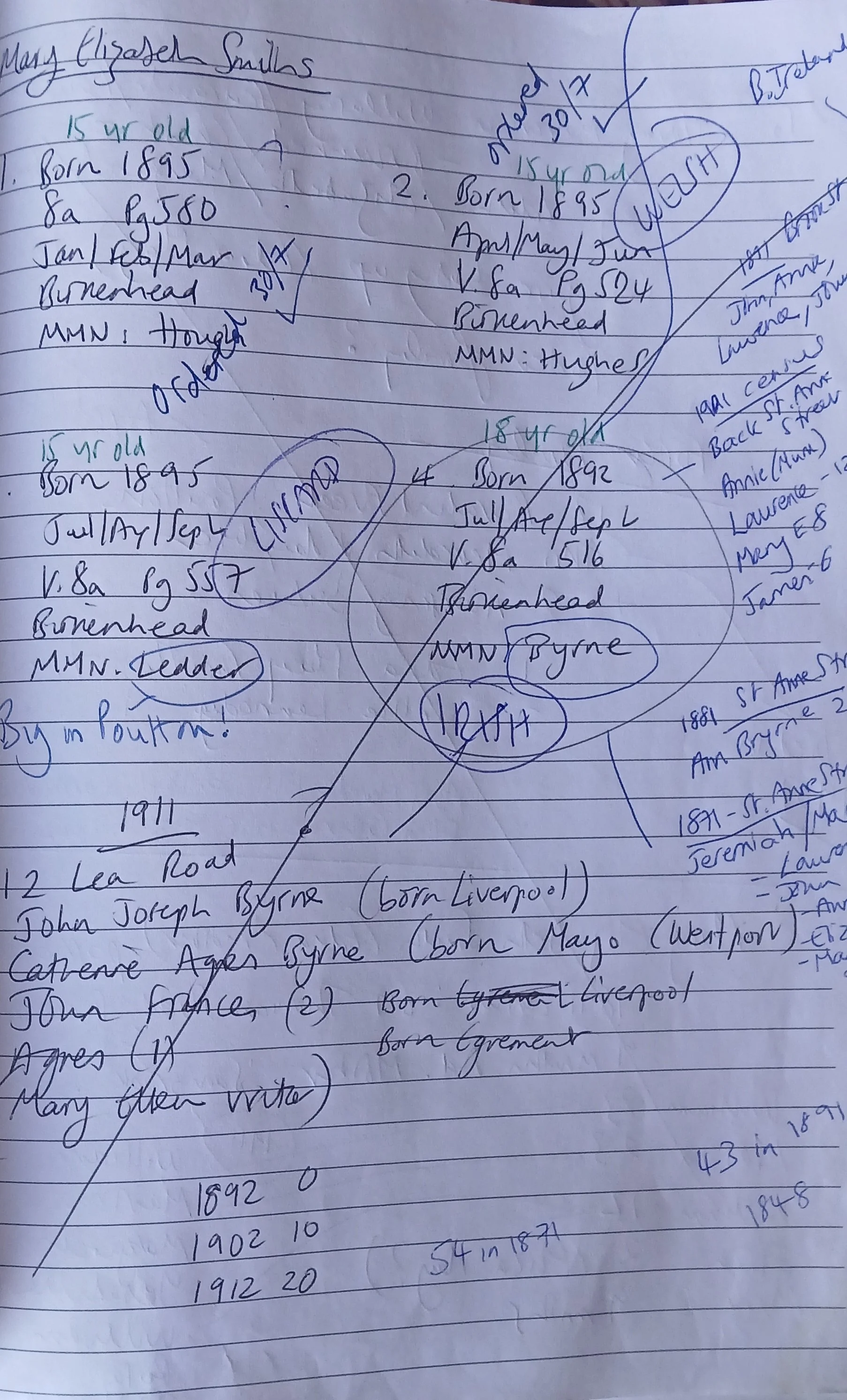
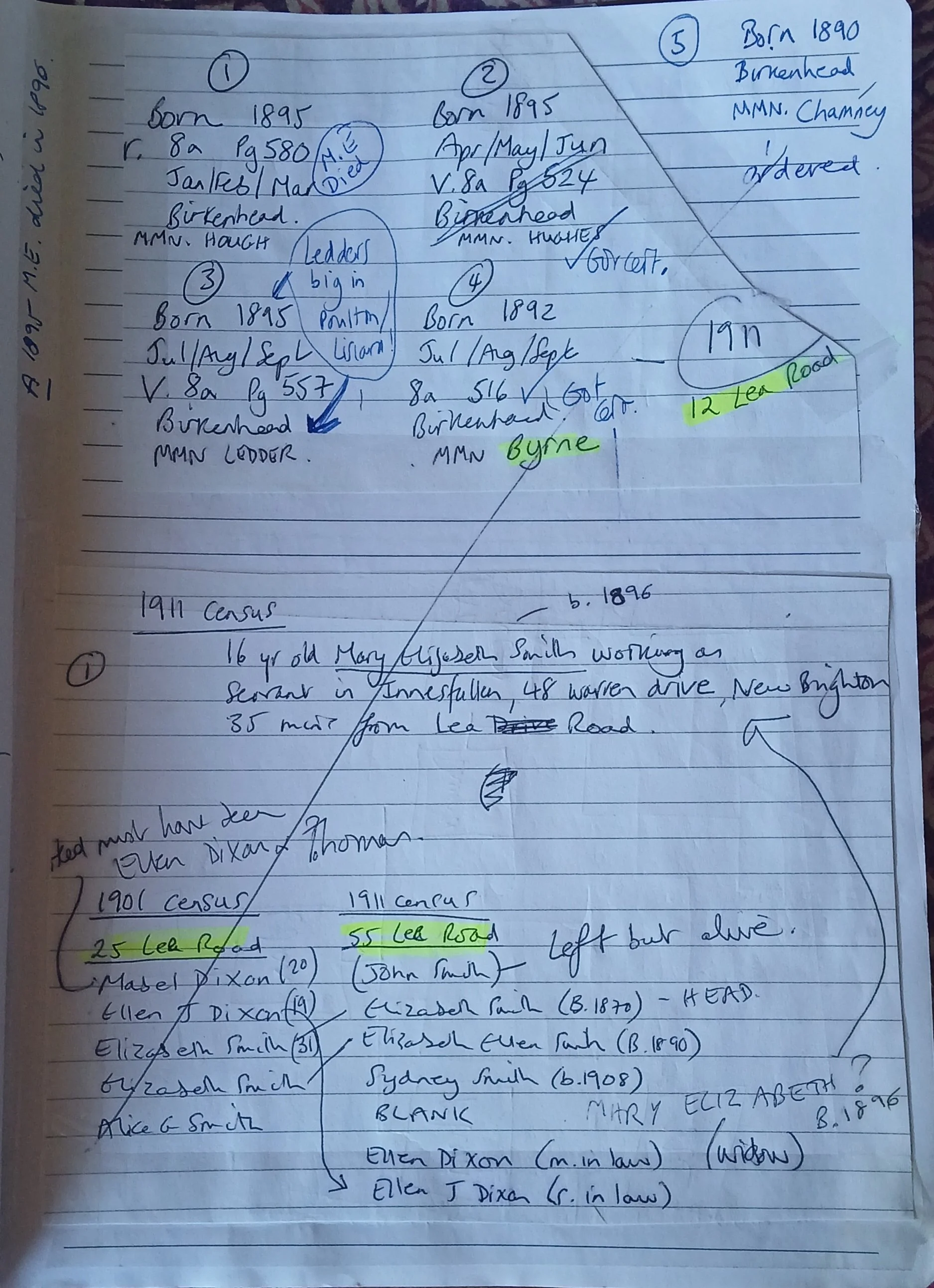
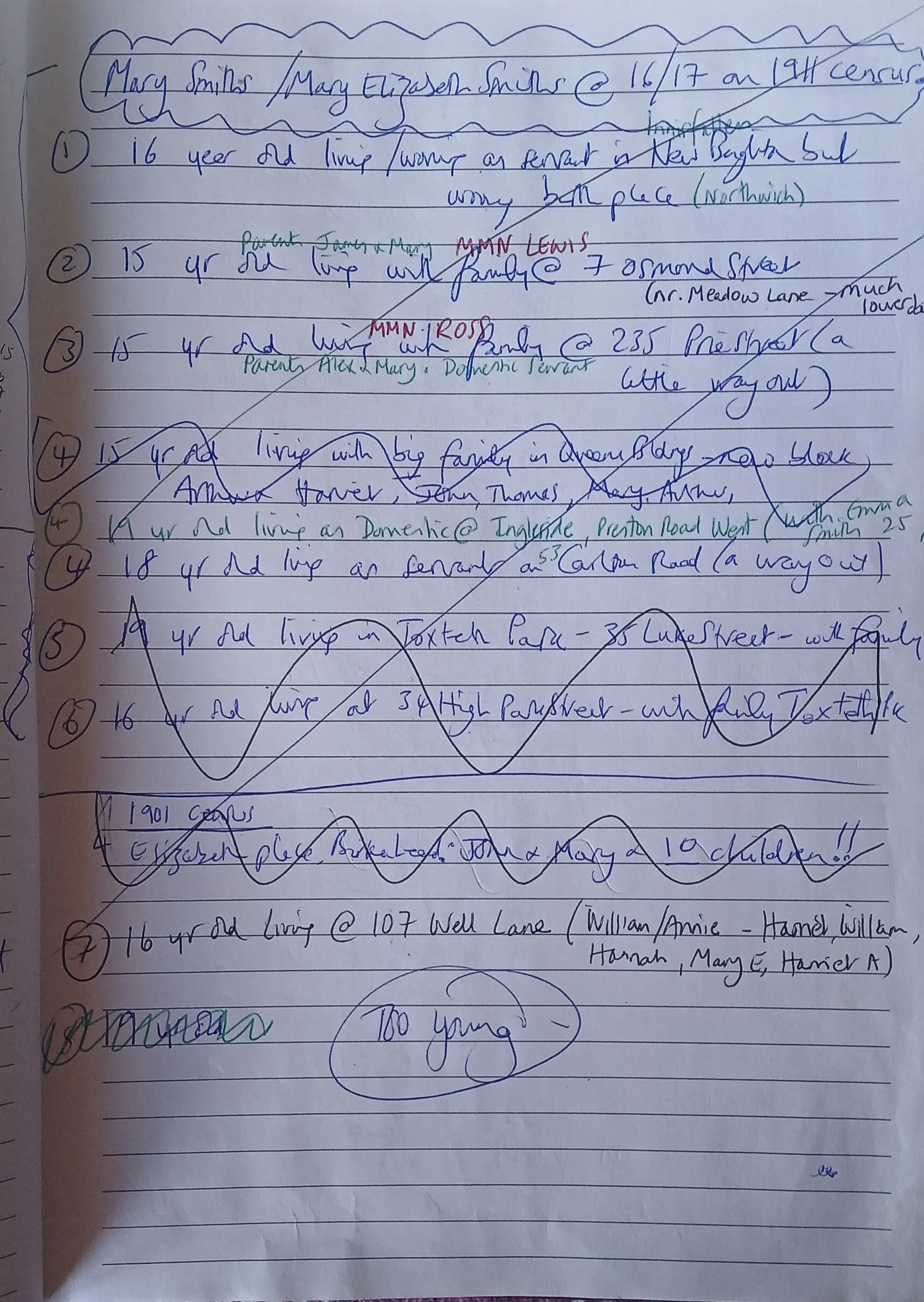
With each possible ‘siting’ I then tried to follow the life of that Mary Elizabeth Smith to see if I could find her in later censuses, marriages, even deaths, to cross-reference and either rule her out or put her on the shortlist pile. These images show a snapshot of that process, starting with methodical research and descending into the scribblings of a woman who’s becoming slightly unhinged.
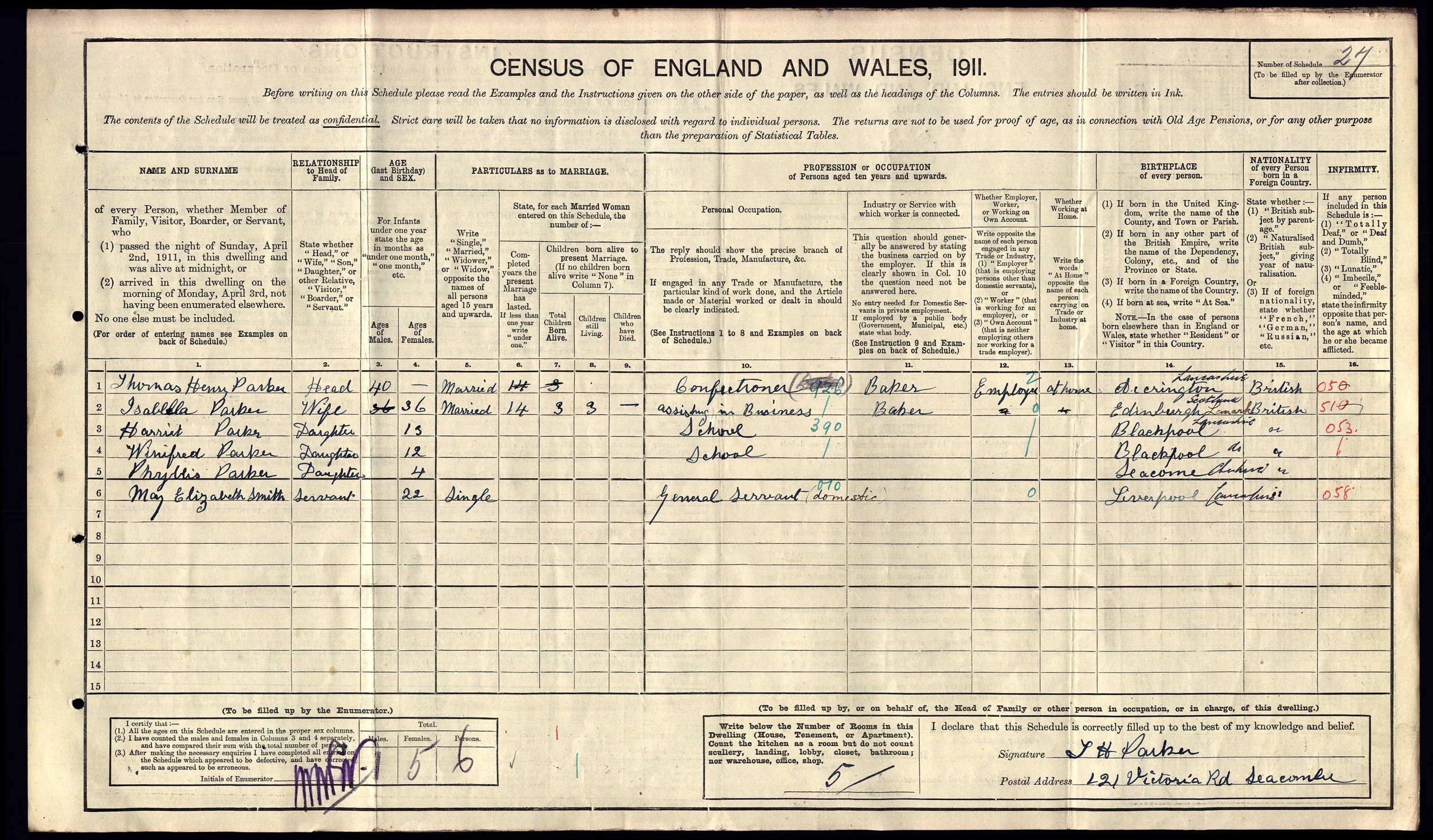
This process worked though, and you’ll see from one of the images that I did end up with a shortlist of Mary Elizabeth Smiths who would have been roughly the right age in the 1911 census. It included a girl who was working as a Servant in a shop in Liscard, Birkenhead. It turned out that this was my great grandma although I didn’t know it at the time.
Researching the address on the birth certificate
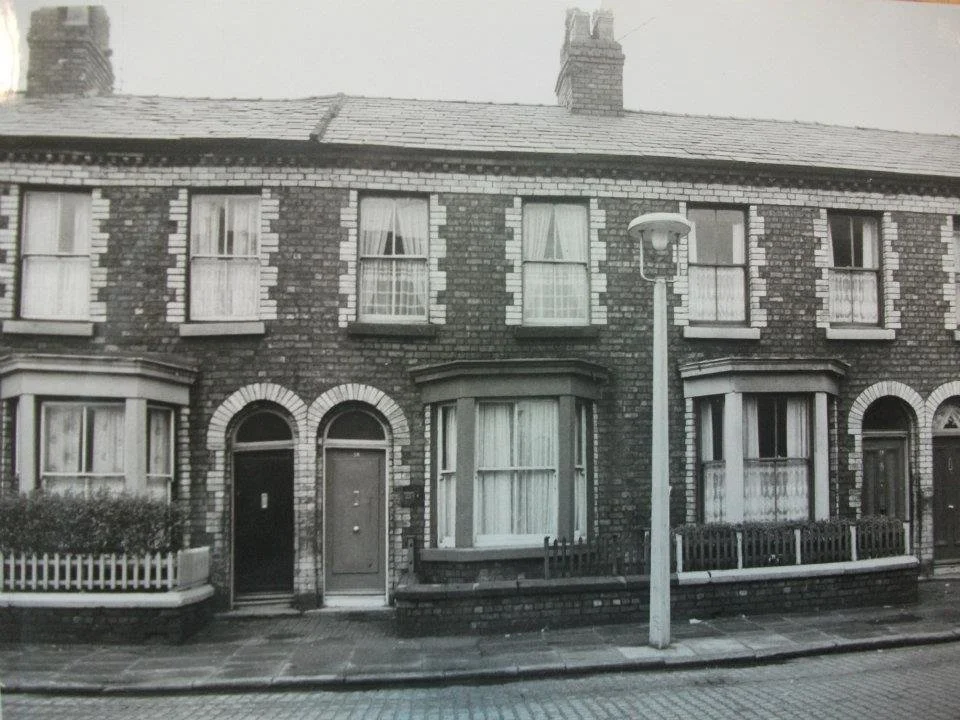
Alongside my search into Mary Elizabeth Smiths, I investigated the address where my grandma was born in 1910 - Lea Road, Wallasey. The road is still standing so I was able to see the actual house which was nice - the place my grandma was born.
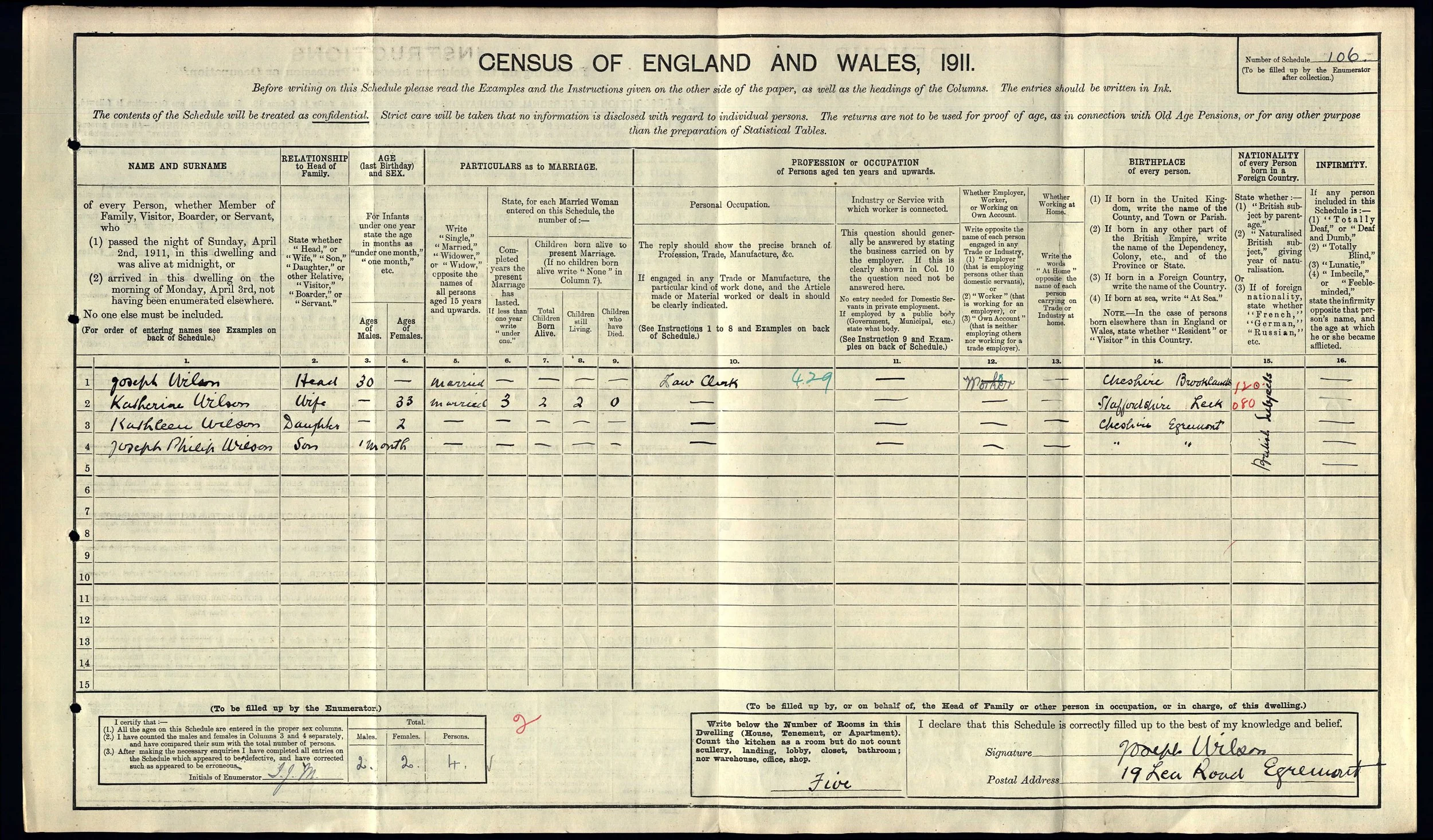
In the 1911 census I discovered the Wilson family living there. The father (Joseph) was a law clerk. But would they have been there in 1910? I discovered they’d had two children - one born before 1910 and one after, so I decided to order their birth certificates to see the addresses. Both were at the same address on Lea Road, showing that the family would definitely have been living there when my grandma was born. How did my great grandma end up being there?
Researching the wife of the family (Katherine), I found her in the Directory of Midwives. I’m wondering whether Mary Elizabeth heard about Katherine through the grapevine and went there purely to give birth. Or maybe it was an arrangement through a hospital. Either way, I came to the conclusion that the Wilsons were a red herring and they weren’t going to help me!
(As an aside, when researching the Wilsons I discovered that, tragically, one of their babies died at two of smallpox, and two years later the father was killed in action in Gallipoli in WW1. Katherine and her daughters ended up emigrating to Pennsylvania - there’s another novel there!).
So, I knew my great grandma’s name and where she was living in 1910 but nothing else. It was pretty slow progress.
Message on Gedmatch
It was around this time that I had a message from Gedmatch, an online service with DNA and genealogy tools for comparing autosomal DNA. It was from a man called Ron Smith and we were a 136cM match, meaning we shared great, great grandparents.
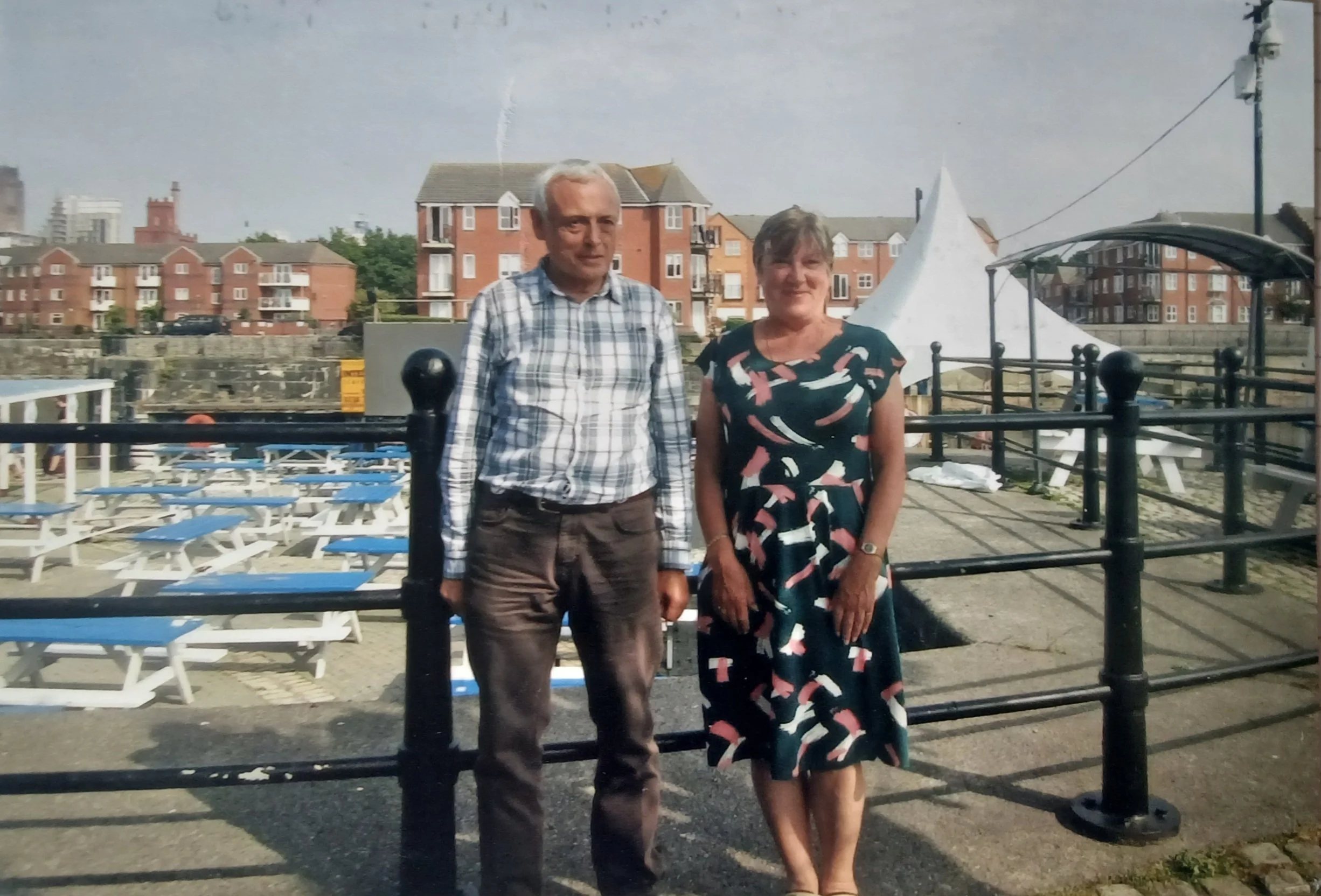
After a few messages, we established that he had a great aunt called Mary Elizabeth Smith in his tree. She had to be ‘ours’. We arranged to meet up in Liverpool, and became friends. This photo is Ron with my aunt (her grandma was his grandad’s sister).
Ron knew nothing about Mary Elizabeth (not even that she’d had a child), but he did know a lot about her family. A LOT! He gave me his immediate family tree (pictured). I still knew nothing about my great grandma’s life, but at least I now knew where she belonged in terms of ancestry. It’s so exciting when a whole branch suddenly opens up like this. With Ron’s groundwork, I was able to trace Mary’s (and therefore my) maternal roots right back to the 1700s to a small village near Aberdeen.
Meanwhile, with my great grandma’s date of birth (she was born in 1888) and her mother’s name (also Mary Elizabeth!!) I was then able to order her birth certificate, find her baptism, and get more clues! It’s like a treasure hunt at this point.
Mary Elizabeth’s family
Her immediate family was comparatively small and she just had two siblings. The family lived in Toxteth. Mary’s dad was a mariner and was away a lot while Mary’s mother ran the home.
It was a tragic story for both her parents, as told here.
Her mother - Mary Elizabeth Yoxall
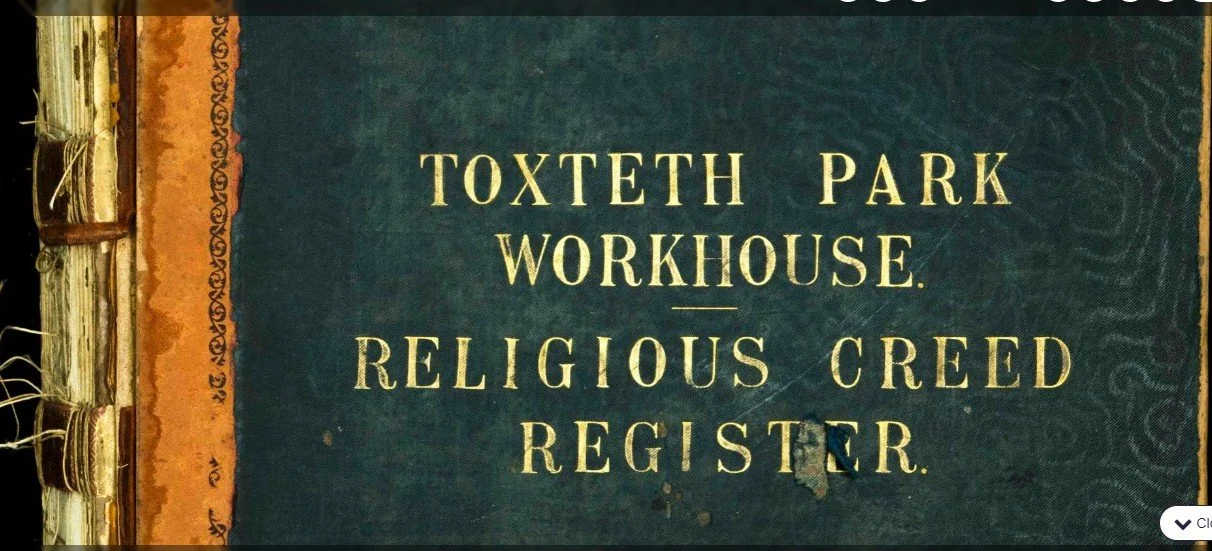
Mary’s mother was one of ten siblings, though five didn’t survive (as was commonplace). She was a Milliner (hat-maker, maybe the decorative trimmings, or flat caps) before she met Mary’s dad. Sadly she died of ‘insanity’ at 46 in the Toxteth Workhouse (probably dementia? Or some other mental health disorder?). On the workhouse records, her occupation was listed as Charwoman. Her husband was dead, and she was admitted by Mary, my great grandma. She’s buried at the Toxteth Cemetery in the same plot as her parents.
It was my first foray into workhouse records, it wasn’t the most joyful of reads. Fantastic insight into the times though.
Her father - George Milne Smith - my Scottish roots
My DNA indicates Scottish ethnicity on my mother’s side and we’d often wondered where they came from. This was our answer.
George was from a village called Old Machar just outside Aberdeen. His ancestors were railway men and blacksmiths but he became a Mariner. He followed one of his sisters to Liverpool when he was about sixteen, to an area known as ‘Holy Land’ where the streets are named after prophets. He lived on Isaac Street and Mary’s mother lived on Moses Street! The couple moved to Toxteth when they married. George was away for most of the time on long steam ship voyages and he progressed through the ranks from 2nd Engineer to 3rd Engineer.
Tragically, he died at sea of exhaustion at 42 off the coast of Africa on the SS Ethiopia (pictured). The record of deaths at sea (also pictured) makes for very grim reading (scalding, VD, suicide, drowning, broken back, congestion of the brain).
Her brother - George
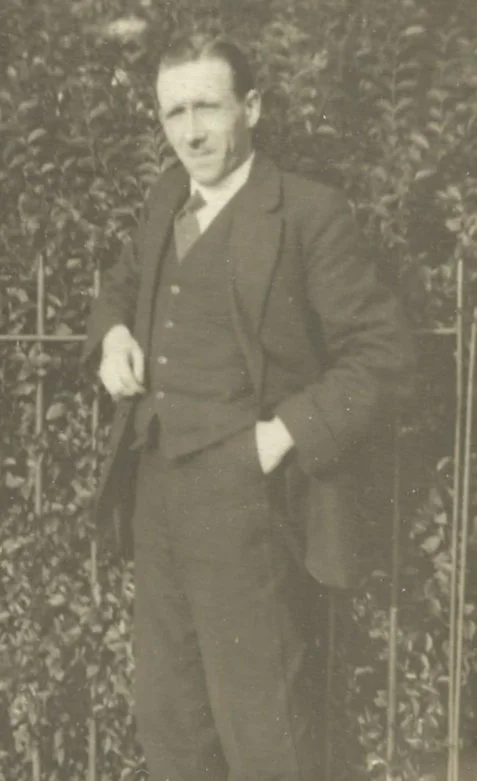
Named after his father, George became an Invoice Clerk at the Railway. He married Minnie, and they lived together in Sefton Park. They had three sons, George, Ronald (father of my Gedmatch match) and John. Tragically John died at just one year old. George himself died of TB aged 30. His sister Mary would die later the same year, also of TB but more of that later.
This photo was shared by Ron, his grandson.
Her sister - Louisa
Louisa was named after a maternal aunt. I still haven’t found a photograph of her unfortunately. I did find a living descendant of one of her brothers-in-law. He’s sure there’s one somewhere and is always on the lookout for me!
I know that Louisa was a ‘Private Domestic’. I found her working in one of the grand mansions in Woolton in the 1921 census. I then found this great picture of Woolton from when it was its own separate village. On the same census, another servant was called Margaret Rawlinson, and later I discovered that Louisa married Margaret’s brother, Bert. A nice little disccovery. They had no children.
Louisa died suddenly aged 50.
Mary Elizabeth’s growing up years in Toxteth
The family lived in the Parish of St Bede, in the streets near to Toxteth Cemetery (Cedar Grove, Aspen Grove then Maple Grove - all are still standing). It was a short walk from the fashionable Sefton Park. Pictured is a postcard of the park from the time.
I can’t find Mary or either of her siblings in any school records, but this school (Aspen Grove School - photo courtesy Liverpool Schools) was on their street when they were the age to attend. This is what Mary and Louisa would have worn. Incidentally, I found a fantastic Facebook group - Merseyside School days - with hundreds of class photos like this one dating back to late 1800s.
With a father who was a 3rd Engineer the family would have had a good income when he was alive and life would have been comfortable. When their father died at sea, they would have fallen into poverty and it would have been a big shock to the system for them all. The fact that Mary’s mother becomes a ‘Charwoman’ (workhouse records) after ‘living off her own means’ (1891 census) shows the shift in status.
The discovery
It was around this time, when I was researching possible marriages for Mary, that I stumbled across this cancellation of Banns from 1908. This was 2 years before my grandma was born - an almost marriage - to a man called John Charles Rouse. It was possibly the most exciting/intriguing record I’ve ever found, and a reminder to look at parish Banns records, not just marriage registrations.
This discovery led me to connecting with the Rouse family and learning about my great grandad (more about that in Finding my maternal great grandad) but in the meantime there were some big questions.
For starters, why didn’t the marriage go ahead?
Just months before the marriage was called off, Mary’s mother was admitted to the Toxteth Workhouse for ‘insanity’ and died shortly aftwards. It was Mary who admitted her mother. Not only must this have been upsetting for Mary and her siblings, but it would also have created a stigma around their family. I wonder if this might have been one of the reasons the marriage was called off. Just too much scandal for the Rouse family?
More revelations - another child
Discoveries were coming thick and fast. While investigating the non-marriage, I was looking for possible children (other than my grandma). I found a baptism record (also from 1908) for Ethel Gertrude Rouse Smith whose mother was M.E Smith.
There was no father’s name and the word ‘illegitimate’ was written in the margin in pencil, but the baby’s middle name - Rouse - was a bit of a give-away. It was clear my great grandma wanted everyone to know who the father was. Ethel was born days before the final wedding Banns were read. The final straw for the Rouses?
Ethel’s baptism record showed the address for the mother as Maple Grove. So I knew this was my great grandma’s baby and John Charles Rouse was the father.
But was he also the father of my grandma? And how would I find out?
I found Ethel’s grandaughter through the Ancestry site, and she agreed to submit her DNA. It was pretty conclusive! Here’s a photograph of Ethel and my mum. I love seeing the bloodline coming through. Ethel would have been my mum’s auntie.
So what happened to Mary after she had Ethel, after the engagement was called off.
Another address
Ethel’s birth certificate was interesting. Firstly because it named John Charles Rouse as the father (showing that it was only the church that hadn’t wanted his name recorded, not Jack himself), but also because while the address at time of birth was Maple Grove (same as the baptism), the address at time of registration (a month and a half later) was Alt Street. In the 1911 census I’d found Mary Elizabeth’s sister Louisa living at the same address. I’ve researched others who lived in the house around that time - and their descendants - but haven’t come up with anything significant yet. I’m guessing that they could no longer afford to stay in the family home on Maple Street, and all siblings had found friends to stay with.
I wonder if Mary Elizabeth was still living here when she conceived my grandma with Jack Rouse. He was still working as an Assistant Warehouseman in the docks. Were they living as a little family of three - with Ethel too - just not living together? Or had they split up, and just got together again as a one-off?
Either way, Mary ended up leaving Liverpool for Birkenhead over the water to give birth to my grandma and start a new life. She never went back to Liverpool.
1911 census - snapshot
This was the situation according to the 1911 census:
Mary Elizabeth was living as a servant in a shop in Liscard
Ethel, her first daughter aged three, was being looked after by another servant girl on Chestnut Grove in Liverpool (20 mins walk from Jack Rouse)
Edna (my grandma - aged eleven months) was recorded as a ‘nursing baby’ with a Welsh mother and daughter in a very slummy area of Birkenhead (records said the area was unfit for habitation at the time and it was not long after demolished). Incidentallly ‘Nursing baby’ meant they were looking after her until she was taken in by someone. Research into the Welsh mother and daughter showed that several family members died of aloholism and were in and out of prison. This must have been a last resort solution for my great gradma, she must have been desperate. (And what a start in life for my grandma). Where were her silings/aunts/uncles? Or the Rouses? Why was she left with no choice??
Mary Elizabeth gave Ethel ‘Rouse’ as a middle name, but she hadn’t done the same with my grandma. And this time there was no father named on the birth certificate. What changed?? Did John Rouse even know he had a second child?
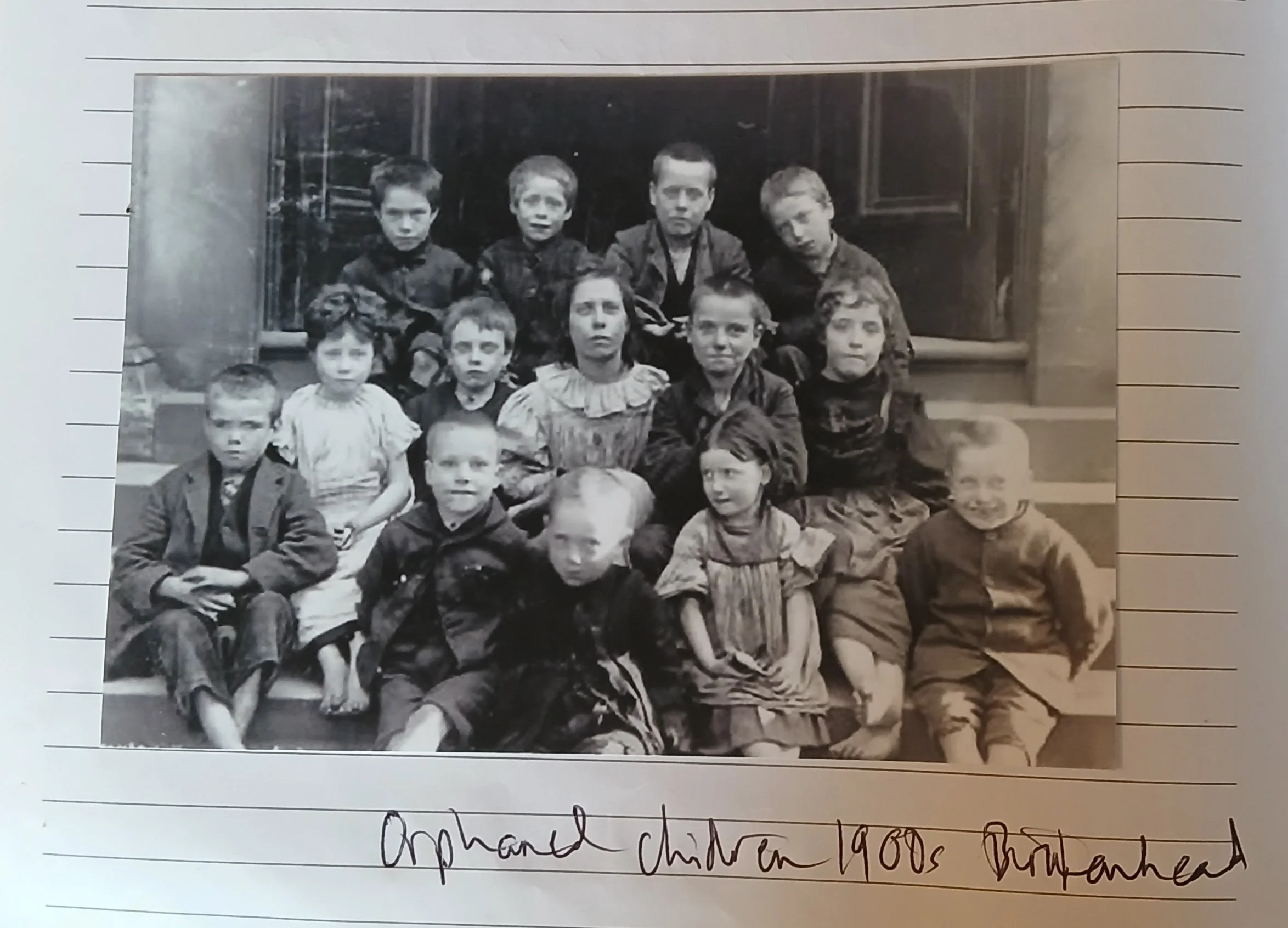
Mary Elizabeth seemed to be going it alone in Birkenhead. This photo was taken on the steps of a mission in Birkenhead at exactly the time my great grandma was there, a sign of the times. I sometimes wonder if my grandma would have been better off in a mission.
My great grandma’s life in Wallasey
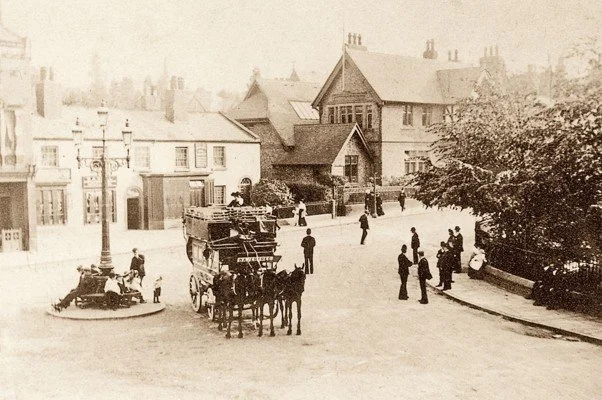
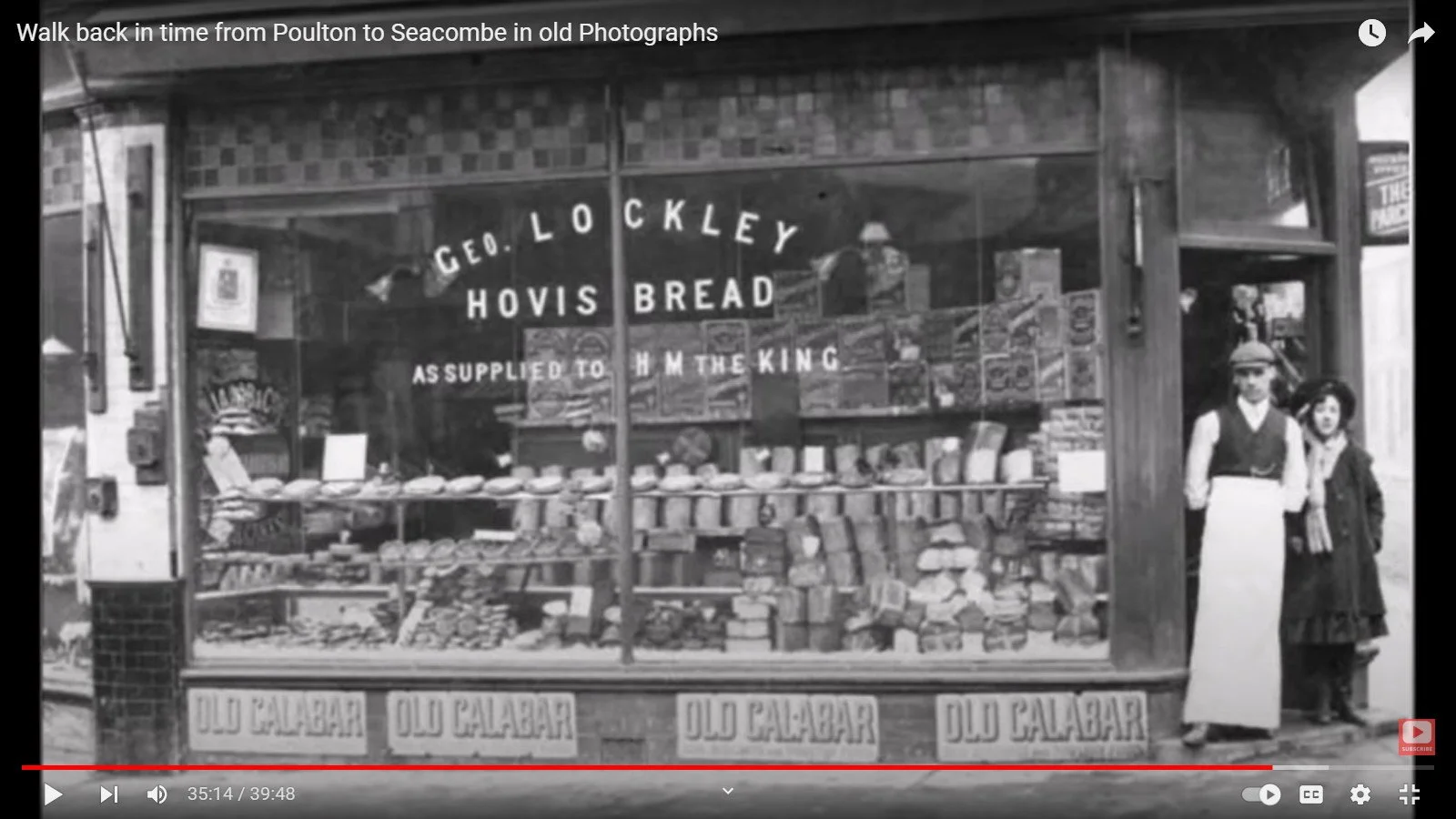
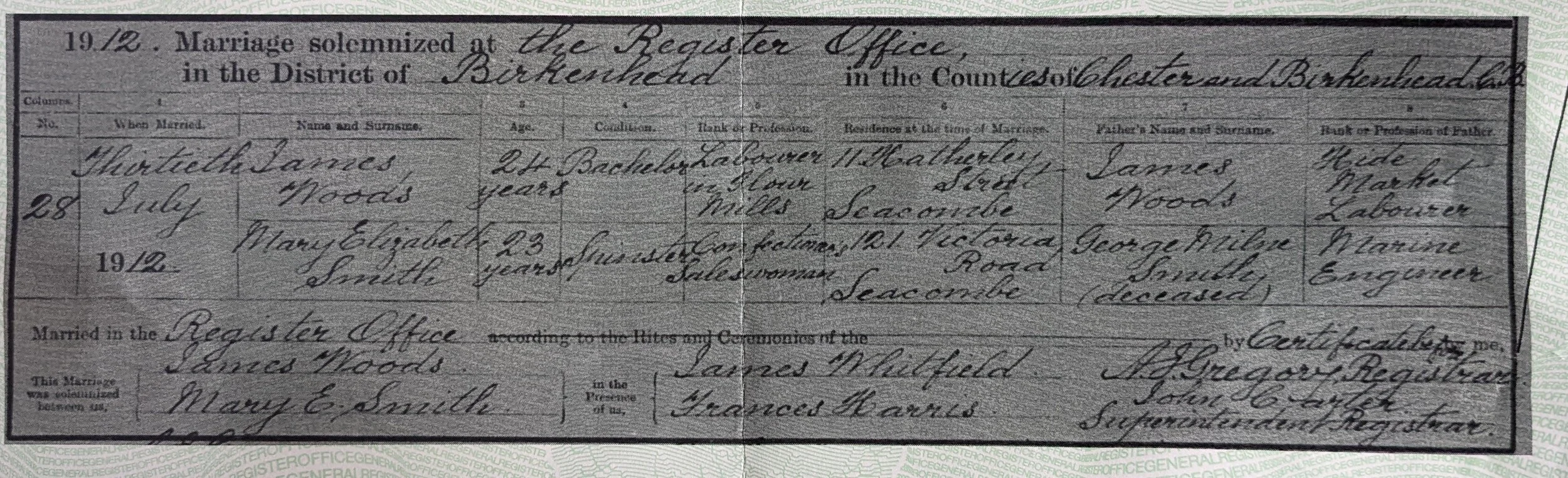
It was fun researching Liscard/Wallasey at the time Mary Elizabeth would have been living there. The shop I found her working at in the 1911 census was a bakery at 121 Victoria Road (now Borough Road), so I was even able to find out exactly where it would have been and what the street would have been like (photo courtesy Merseyside Films - Walk Back in Time). The bakery was run by the Parker family, the father Scouse, the mother Scottish. It would have been nice for Mary to have the Scottish link. She started as ‘General Servant/Domestic’ (from 1911 census). A year later she was promoted to ‘Confectionary Saleswoman’ (from her marriage certificate (spoiler alert), so she was obviously good with customers, and capable.
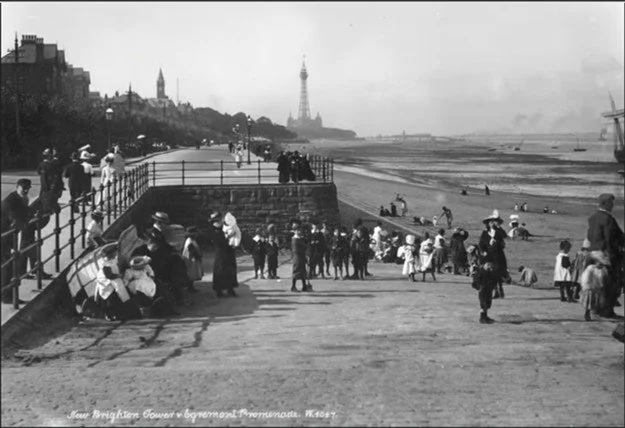
It was a very fashionable area, close to the beach at New Brighton, close to Egremont Promenade (pictured). She’d given up my grandma for adoption at this point, but Ethel (her first daughter) was still in her life (another spoiler alert). I wonder if she ever took Ethel for a walk along the Promenade.
However, as nice an area as it was, war broke out and there would have been regular reports in the local paper of Wallasey men being killed The Great War Forum. I wonder if she ever thought about Jack Rouse? I wonder if she knew he’d enlisted. That he was serving in the Salonica Campaign and that Jack’s brother was at the Western Front.
I found these amazing websites Nostalgic Memories of Wallasey’s Local History and Wirral History which gave me lots of insight.
My grandma’s baptism certificate
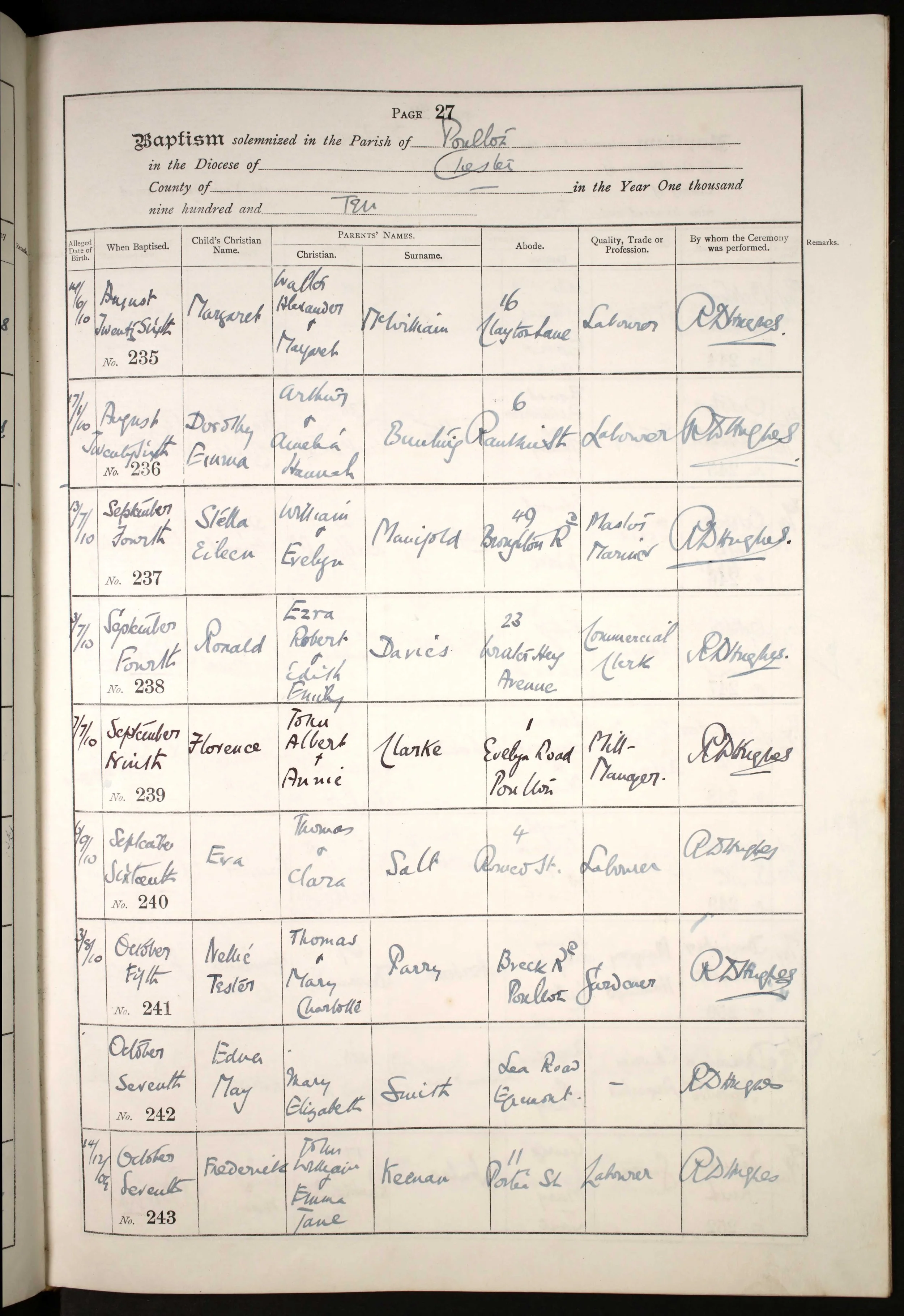
I had my grandma’s birth certificate, but it took a couple of years to find her baptism record at St Luke’s Church in Poulton. It hadn’t been digitised (like Ethel’s had) so I’d been ringing round churches. St Luke’s was not the closest to where Mary was living which is why it took me a while to find it.
You’ll see that the mother’s house number was not known (unlike in all other entries). To me, this meant that someone else took my grandma to be baptised. Perhaps the Welsh couple? Perhaps Mary had given up my grandma even before getting her baptised. It certainly painted a picture.
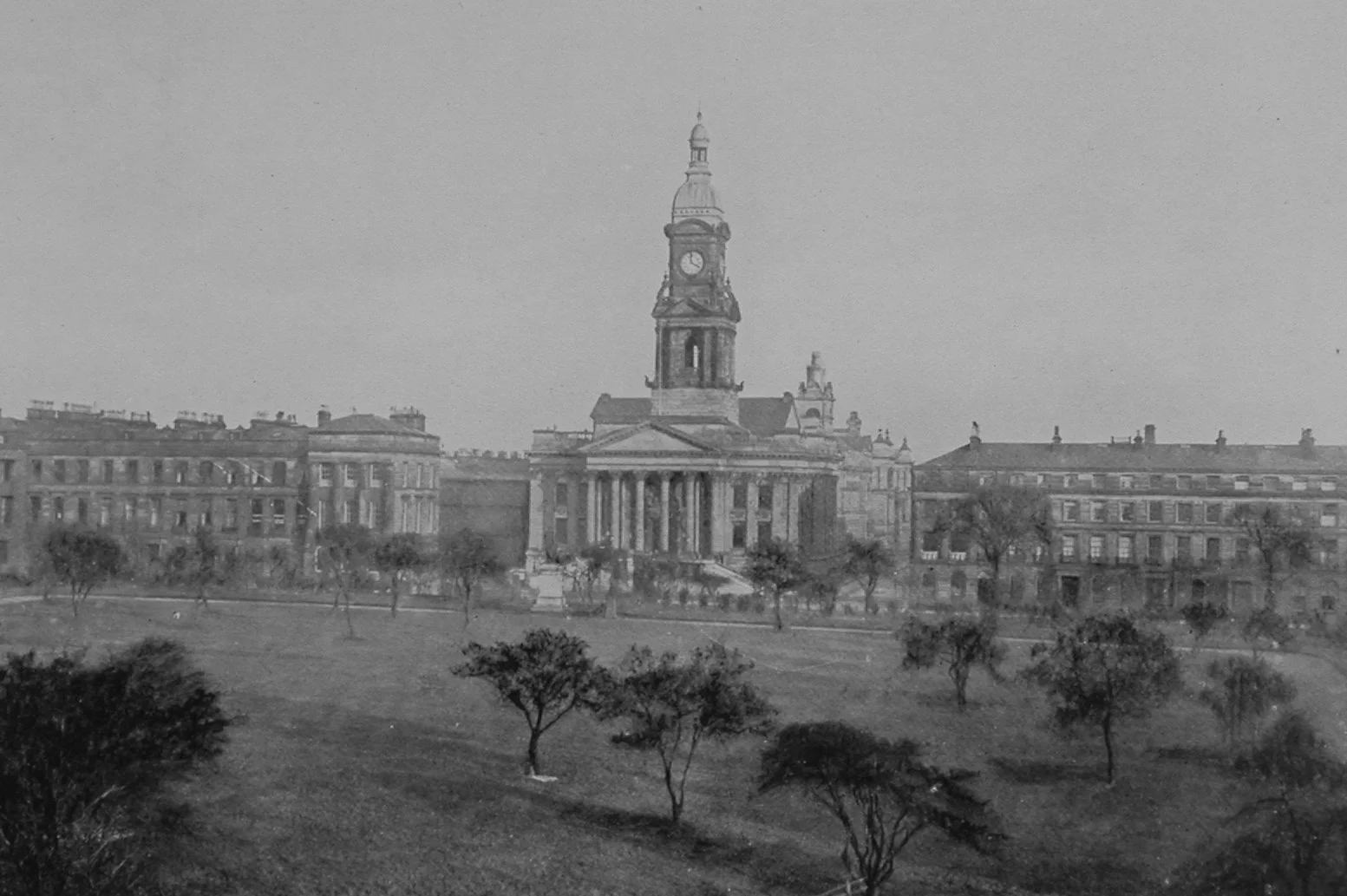
I found these photos of St Luke’s at around the time Mary was living there. The top photo was two months before my grandma’s baptism.
What happened next?
I spent a long time trying to find Mary in the 1921 census. I thought she might have died so I searched for Mary Elizabeth Smith deaths. I spent a lot of time on the Toxteth Park Cemetery Index. There were plenty of possibilities, but on further investigation none were ‘mine’.
That’s when I started looking for marriage certificates. For some reason, I really didn’t think she’d have married! I looked anyway, and ordered any that looked like potential matches. After several non-starters I found it.
I felt like Charlie Bucket finding the golden ticket.
She’d married a James Woods in the town hall in Birkenhead.
It was a nice moment discovering that James (who was a Flour Miller/Journeyman) lived a few minutes from the cake shop where Mary was working (see image). Had he come in to buy a cake? Or had he been delivering flour? I like to think it was one of these.
James Woods himself had lived a very difficult life, his father in the workhouse, he was brought up by an aunt. I connected with Wendy, a descendant of one of James’s aunties, and she helped with some of his family background.

My great grandma’s ‘second’ family
Basic research uncovered what happened next: three more children.
Ailsa Georgina (middle name to honour Mary’s brother/dad)
James Edward (named after her husband) - sadly James died as a baby
Ivy Milne (middle name to honour her dad and Scottish roots)
Ailsa emigrated to Saskatchewn, Ivy stayed in Wallasey.
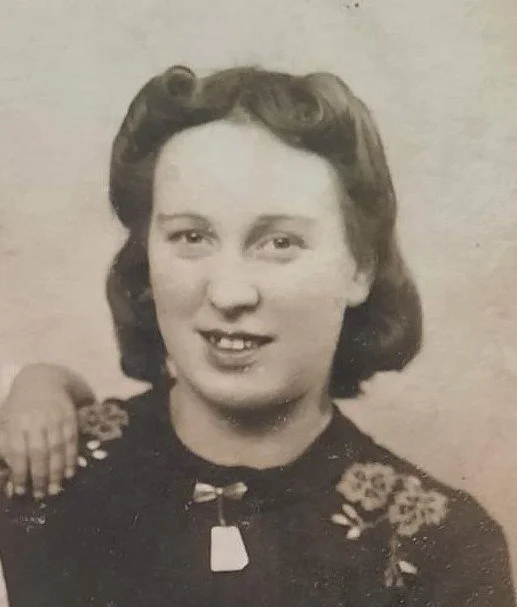
I found their children on Ancestry, and they sent me these lovely photos of James, Ailsa and Ivy (with daughters).
Sadly they knew nothing about Mary Elizabeth, only that she’d died young and Ailsa and Ivy had been brought up by their stepmother, James’s second wife.
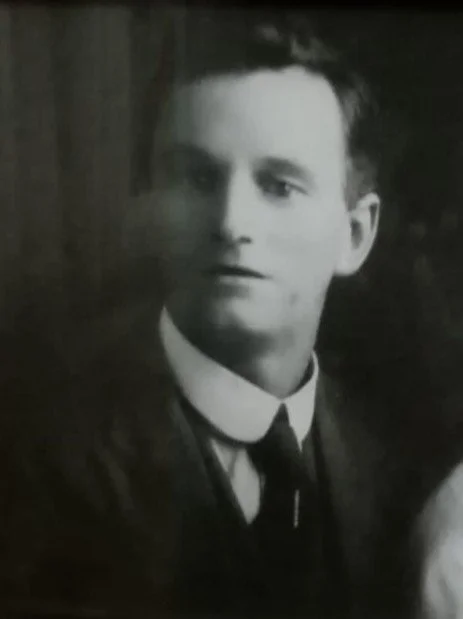
The tragic end
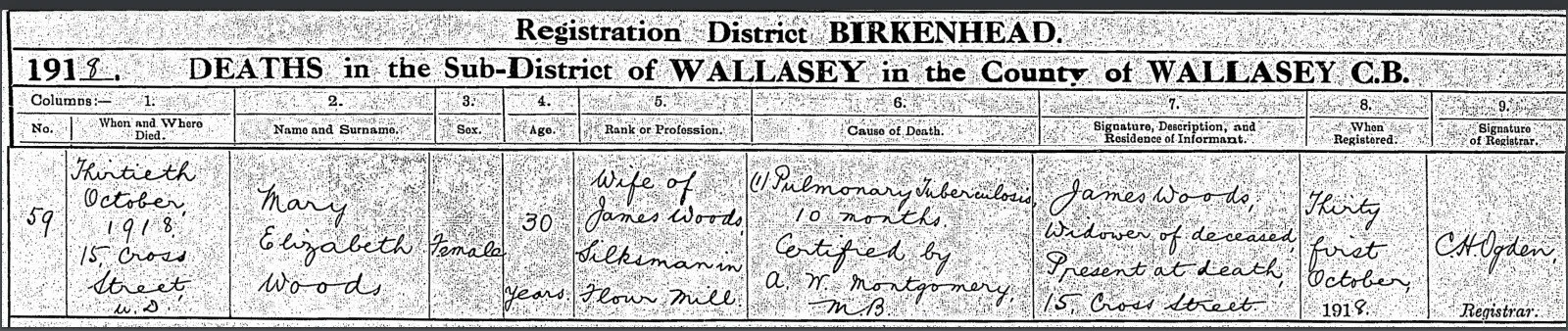
As soon as I had my great grandma’s married name I tried to find her in the 1921 census - no sign.
What I DID find however, was her first daughter, Ethel, living with a family next door to James Woods as an ‘adopted daughter’. So Mary had kept her first baby close.
I then searched deaths and was devastated to find out that Mary died from TB at just 30 in 1918. It was why I’d been unable to find her in the 1921 census. Her second daughter with James, Ailsa, had just been born, she may never have even been able to hold her. It was October 1918, just weeks before the Armistice. Mary’s brother had died earlier that year of the same disease. Research showed that sanitoriums were a) full b) very expensive.
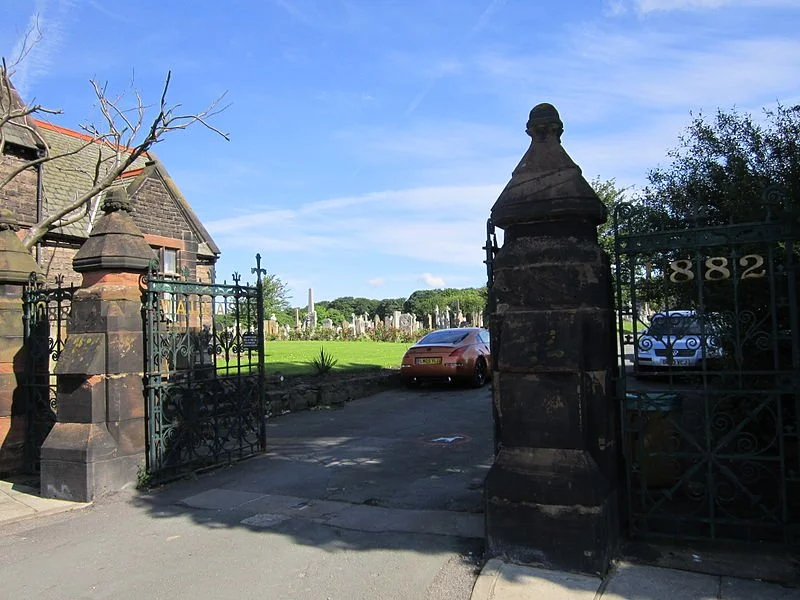
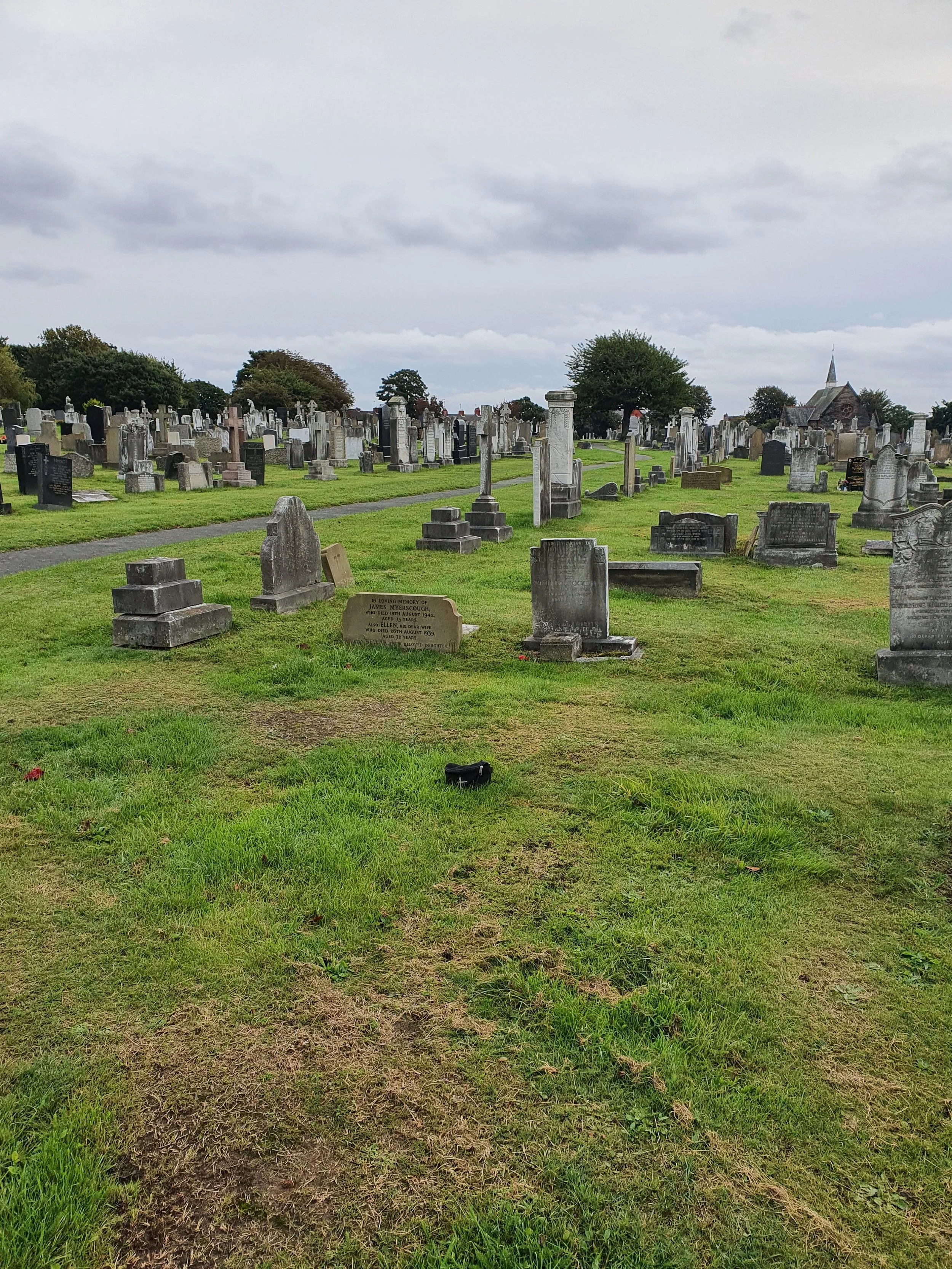
I searched FindAGrave, and found her buried at Rake Lane Cemetery. I asked one of the volunteers for a photograph of her (unmarked) grave. I found it really sad that nobody else knew she was there, not even her grandchildren from James. One lived in Canada, but the other now goes to lay flowers.
The fact that she was not buried at Toxteth Park with her Smith family may suggest that she was estranged from them.
Why wasn’t she buried on the same plot as her mother and grandparents in Toxteth Park?
But it was still wartime and there was a TB epidemic who knows.
When I spend so much time researching an ancestor, and fall in love with them as I always do, if I can’t find a death record a little part of me ludicrously clings on to the hope that they’re still alive. It’s always so upsetting when I find the hard evidence that they’re not.
RIP Mary. What a secret you took to the grave.