Finding my great grandad, John (Jack) Charles Rouse
My grandma carried the maiden name of my great grandma and there was no father’s name on her birth certificate. So I knew that my great grandad woud have been someone who was just passing through her life.
Or was he?!
Research highlights
Finding the entries for his school days (I rarely find these)
Discovering the Banns for a marriage that never happened
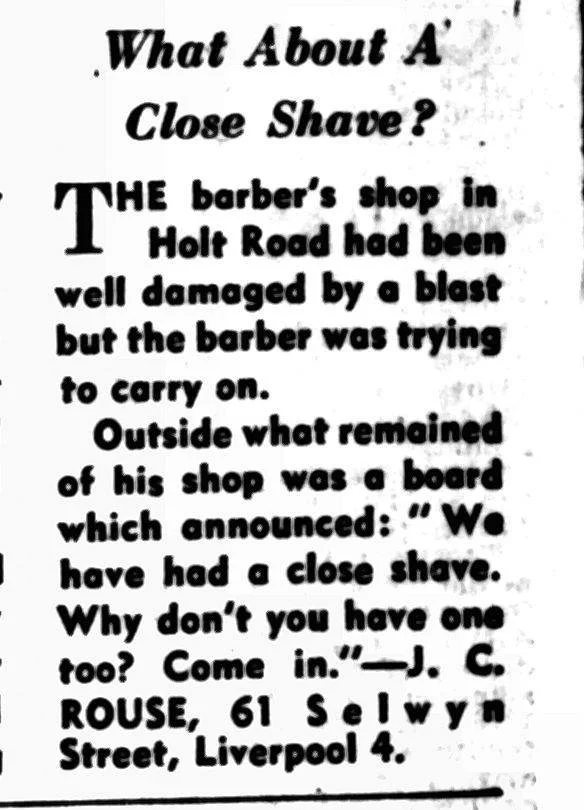
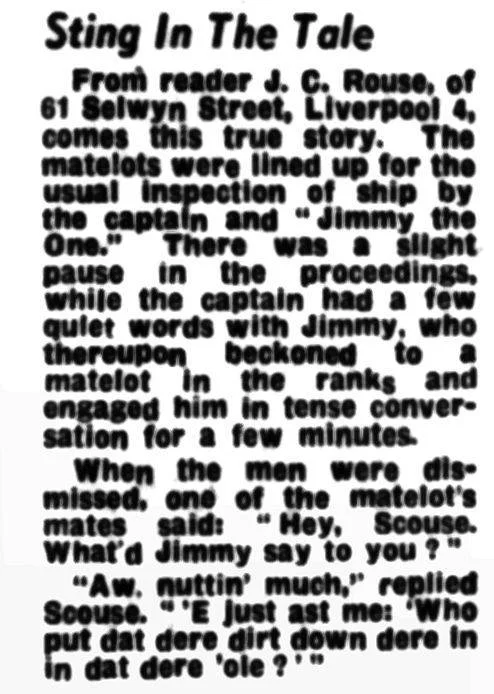
Finding letters my grandad had written to the paper
Discovering that one of his great nephews was the famous mountaineer Alan Rouse
Discovering (through a DNA match) that he’d had another daughter with my great grandmother as well as my grandma
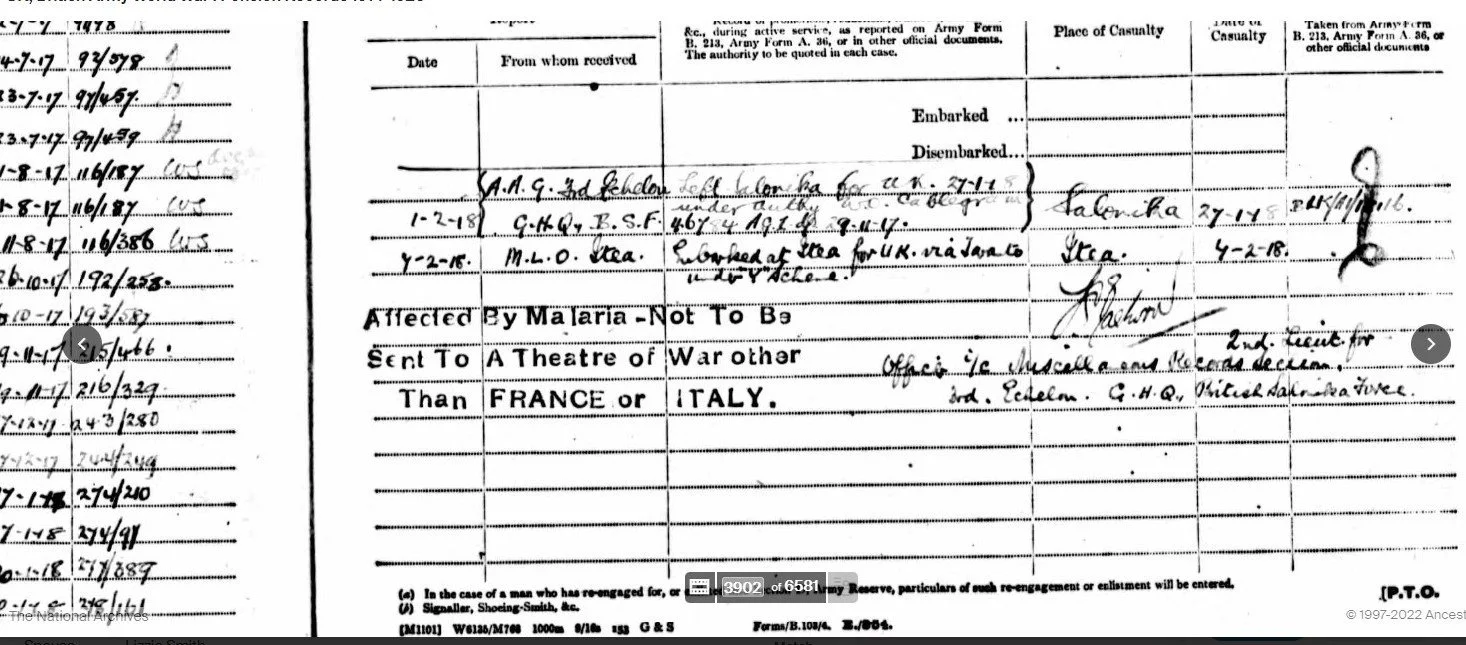
The detail in his military records; that he’d had diarrhea in Feb 1917 in Marseilles!
How I found him
When I was researching my great grandmother (once I finally knew her name), I stumbled across a Banns entry from the parish of St Bedes in Toxteth, Liverpool, from 1908 that was in her name. It had been struck out (see image). It was mysterious because the first two Banns had been read, but the third never happened.
The names of the couple were my great grandma - Mary Elizabeth Smith - and a man called John Charles Rouse. Since my great grandmother’s name was fairly common, I needed to be sure that she was ‘mine’. So I put the record in my ‘shoebox’ on the Ancestry platform while I investigated further.
I then found a baptism record for an illegitimate baby (Ethel Smith) whose mother was Mary Elizabeth Smith, living at the family home that I already knew about from previous research.
She gave the baby ‘Rouse’ as an extra middle name.
This suggested that the Mary Elizabeth on the Banns record was indeed ‘mine’. However, it raised another question. Just because she nearly married Jack Rouse, and had another child with him (Ethel), didn’t mean he was my great grandad too. My grandma had been born two years later, surely she would have been over Jack by then?!
So how could I find out?
DNA to the rescue
It didn’t take long on the Ancestry platform before I’d found some distant Rouse matches. There was one that was closer than the others, and it turned out that she was the great grandaughter of one of Jack’s sisters.
So I’m definitely Rouse.
Jack had a brother about the same age, William. My conspirational mind wondered whether he might be the father of my grandma, and that’s why my great grandma didn’t marry Jack. Perhaps it was a love trist. It would still make me a Rouse after all.
I needed to be sure which brother
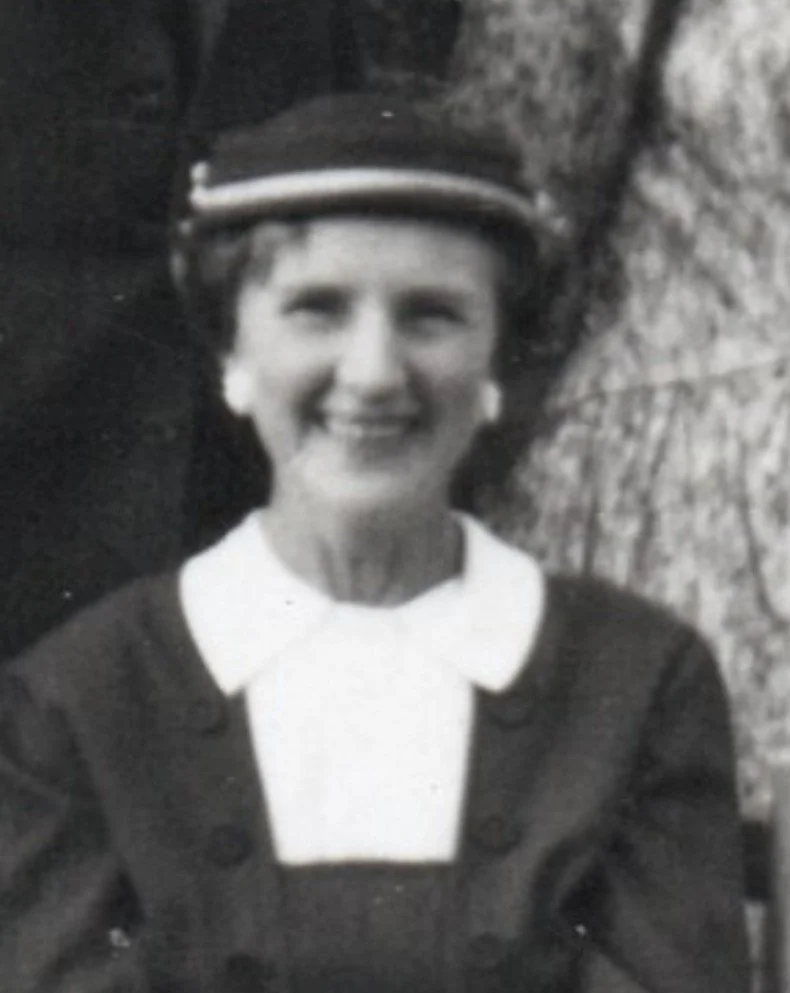
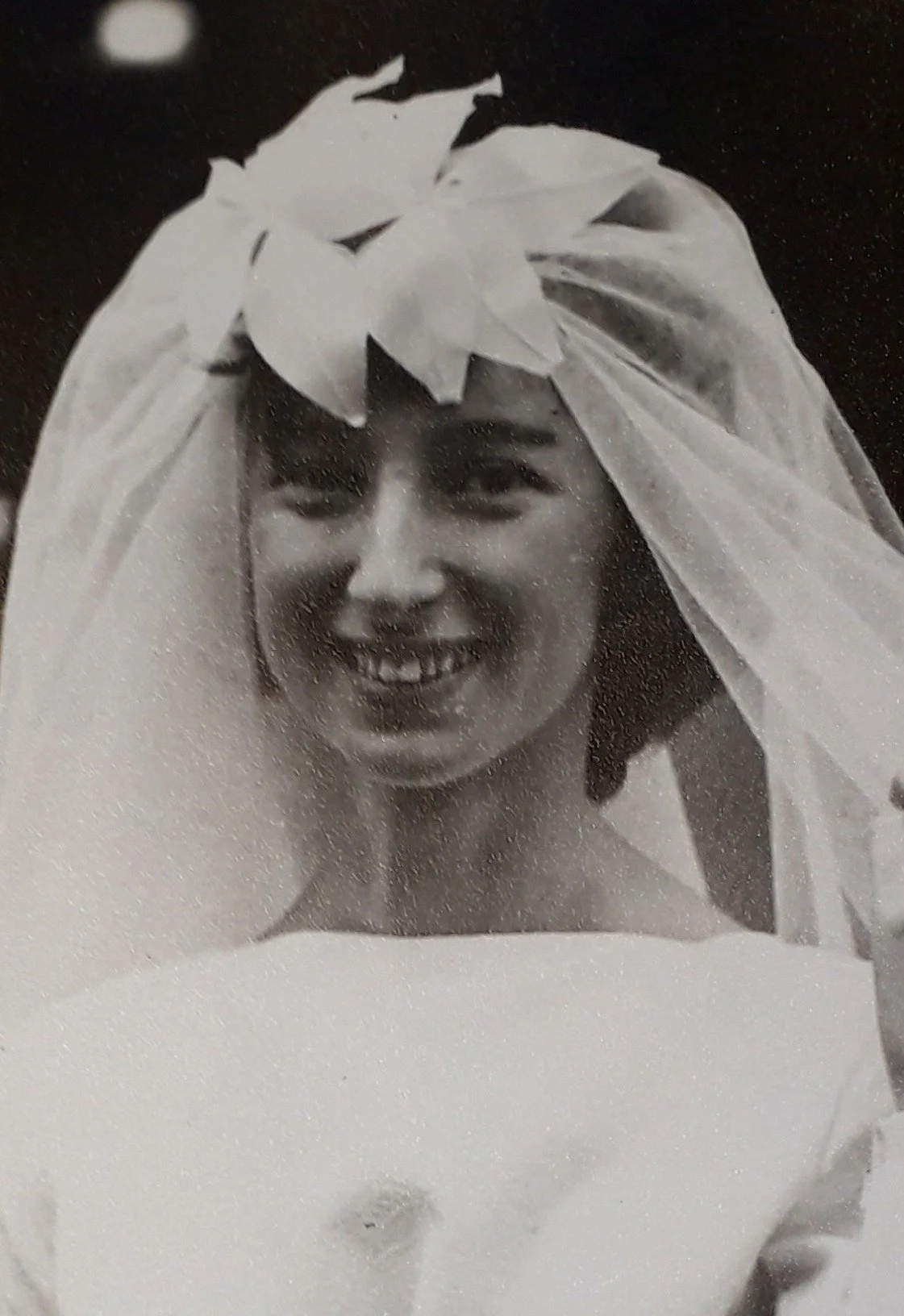
I did some desk-based research, looking for descendants of Ethel, Jack’s daughter, and I found that her grandaughter also had a family tree on Ancestry. She hadn’t submitted her DNA however. I contacted her and we had a little exchange. She told me what she knew about Ethel’s life and sent a photo . The likeness to my mum was remarkable (see photo).
I asked the grandaughter if she would be happy to submit her DNA to the site to confirm which of the brothers was my great grandad, and she was agreed.
The result (205cM) confirmed that we shared a great grandad: Jack Charles Rouse. Ethel was my mum’s full-blood auntie but they knew nothing about each other.
But who was he? And what was he like?
Jack’s family
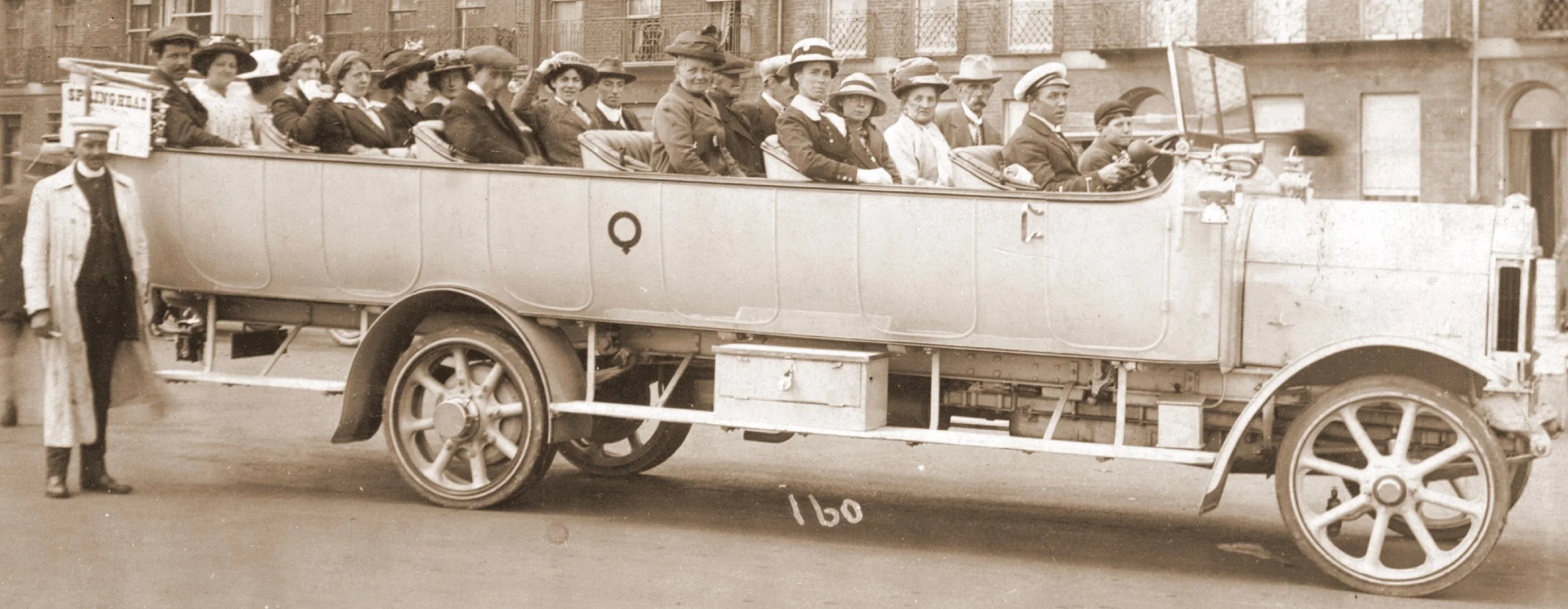
Thankfully a guy called Stephen Paterson (one of Jack’s nephews) had already done a phenomemal amount of work on the Rouse family tree (including finding this fabulous photo of a ‘work outing’, with the Rouse family sitting immediatey behind the driver. With Stephen’s work as a strong foundation, I was able to easily build a picture of their lives.
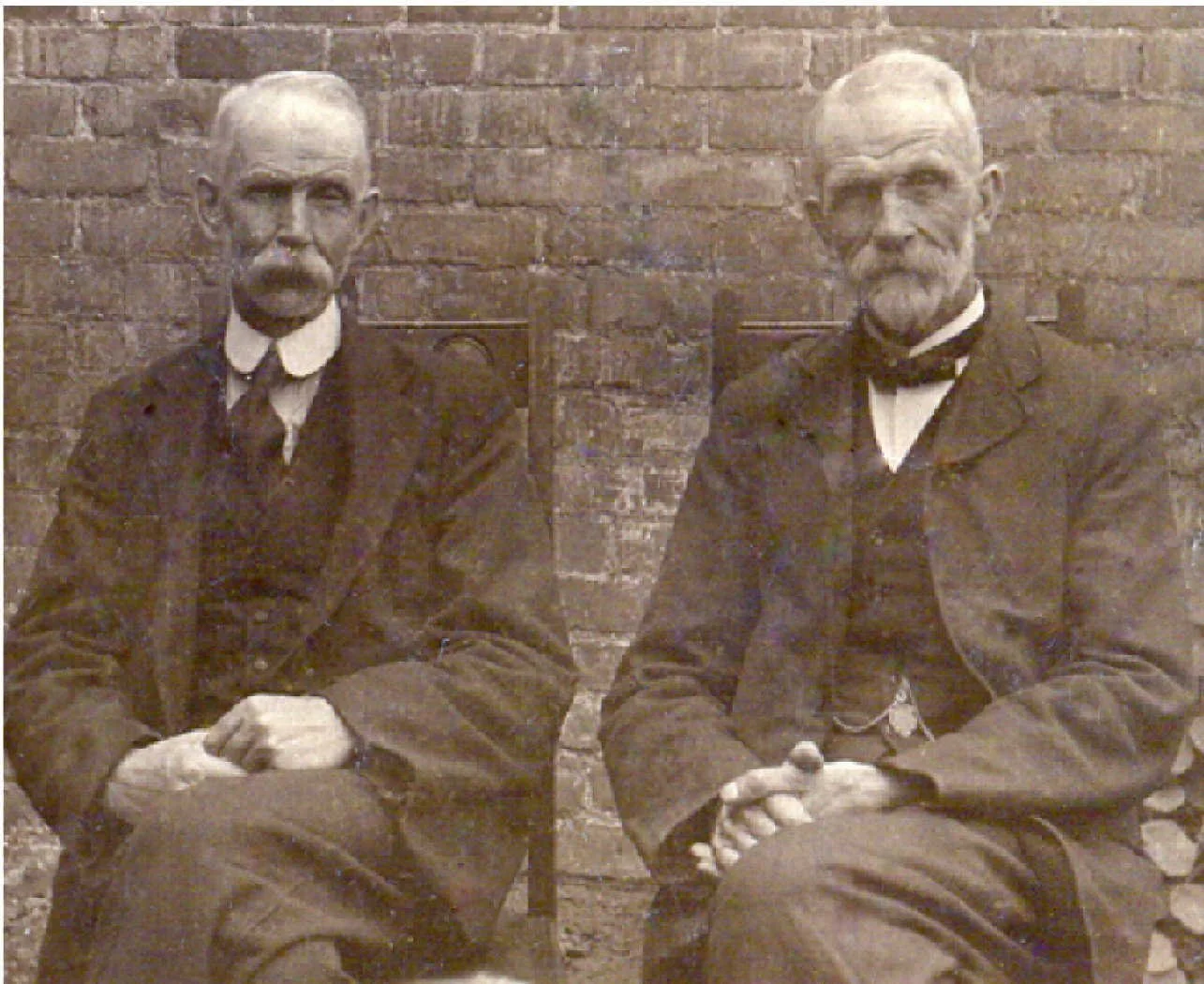
Father - George (pictured with Jack’s uncle, a Police Constable) - Supervisor at warehouse that processed African goods
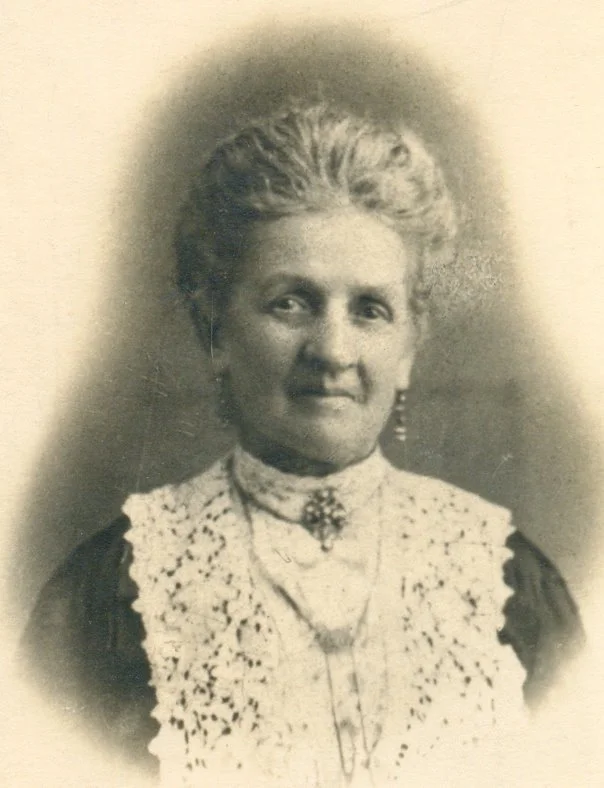
Mother - Jane Tinsley (older lady pictured)
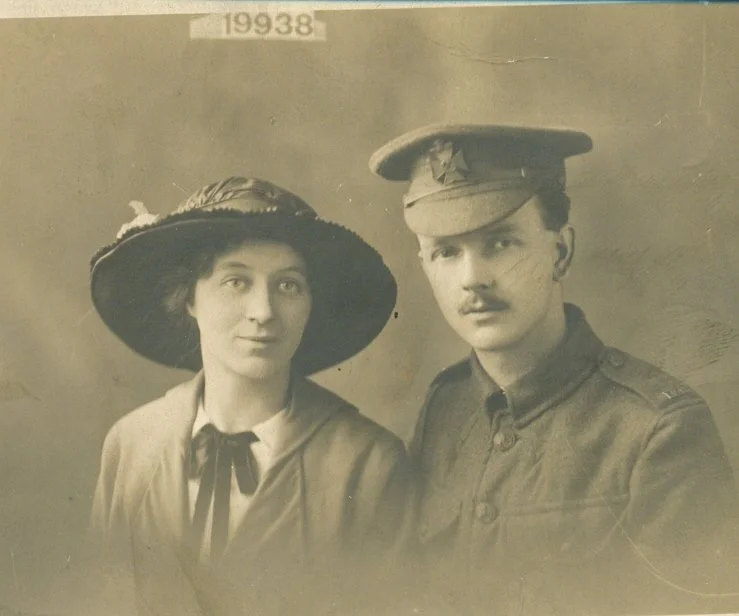
Brother William - he joined the army and was a Gunner with the Royal Garrison Artillery (the big guns!) in France/Flanders. He stayed with the army and became a Sergeant then a Military Clerk. Pictured here with his wife.
Brother Tommy - Apprentice Cooper, then a mariner. Tragically he had a fatal accident when loading coal onto a ship in Russia, aged just 21
Sisters Edith, Maude and Gertrude - worked as shop assistants. Maude married a Police Constable (like her uncle). Gertrude had an illegitimate son (born between Jack’s two illegitimate daughters) and she took her fiance to court for misleading her about his finances. It was in the papers! Edith met her husband through a letter-writing scheme during WW1 (photo of their wedding here, with Jack’s parents on far right).
In addition to the siblings above, there were five others who died as babies.
They were a respectable family from Sefton Park, a nice area although there was clearly some scandal.
Stephen had vague memories of his uncle Jack from when he was very young. He said he was a character, a ‘Jack the lad’. None of the siblings’ descendants knew anything about my great grandma, or the calling off of the marriage between her and Jack, so I can only speculate. I got the impression the Rouse family were fairly strict, perhaps Jack’s parents weren’t happy that she became pregnant. Perhaps the church simply didn’t allow it. Jack was only 18 at the time, and in those days you had to be 21 before you could marry without permission from your parents. I discovered later that Mary Elizabeth’s mother (my 2nd great grandma) was admitted to the workhouse with ‘insanity’. Perhaps that too much scandal?

Jack’s school days
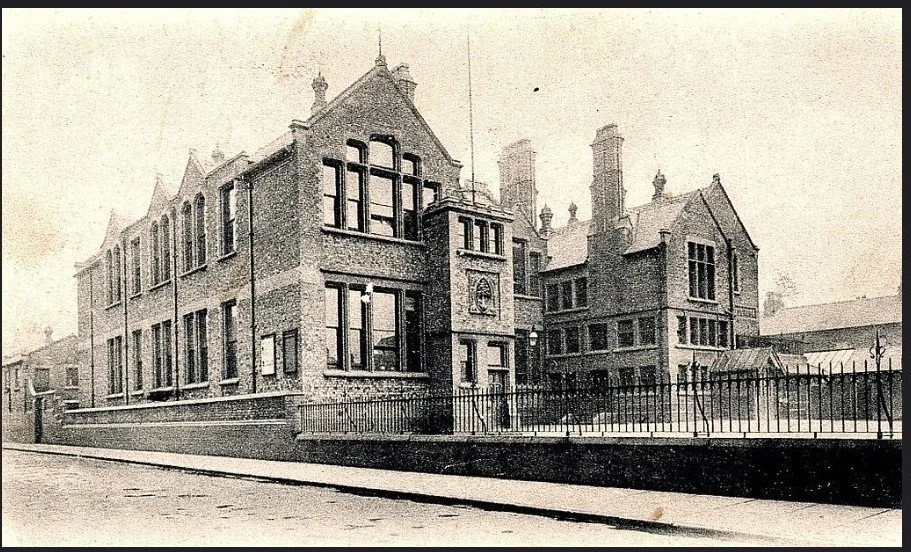
FindMyPast records showed that he attended Sefton Park School (pictured at about the same time - who knows, he night be in this photo!). When the school opened in 1894 there were seventeen pupils and he joined five years later in 1899. They also told me that before that, he’d attended Windsor Street Wesleyan Infant School which was attached to the Methodist church. He got a ‘Pass’.
A night in the workhouse aged 11!
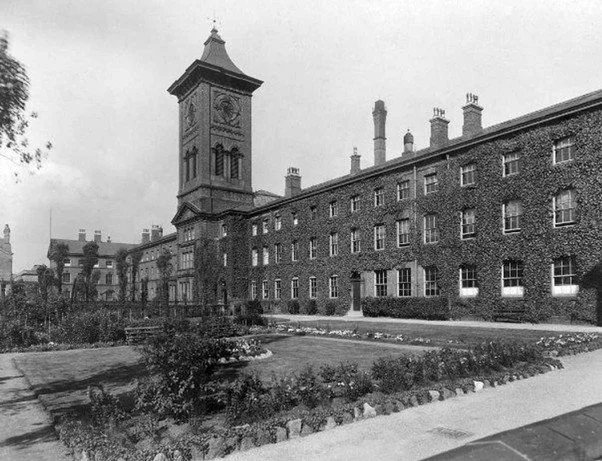
The entry in the workhouse ledger (pictured) doesn’t say why Jack was there, but he was only eleven years old, on his own and brought in by police. I’m imagining it was for something like throwing stones or nicking something and this was to teach him a lesson. Or maybe it was something to do with the big dockers’ strike that took place that summer. Jack’s uncle was a police detective in London so this wouldn’t have gone down well! Liverpool library holds police records, I might investigate further one day.
Employment
Assistant Warehouseman
As soon as he could, Jack started working at the same warehouse as his dad (for African Produce) at the docks. This occupation is recorded for him in the 1911 census. The warehouse would have processed palm oil, bananas etc.
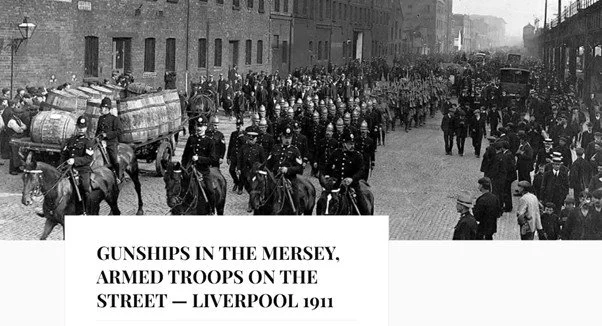
1911 General Transport Strike
Jack’s entire family would have been affected by the big strike in 1911 when they had to bring in the armed troops to keep the peace. All the dockers were involved. I wonder if Jack and his dad went on strike. I wonder whether the night in the workhouse was something to do with this? The strike was for most of the sunner, and Jack was arrested in the August.
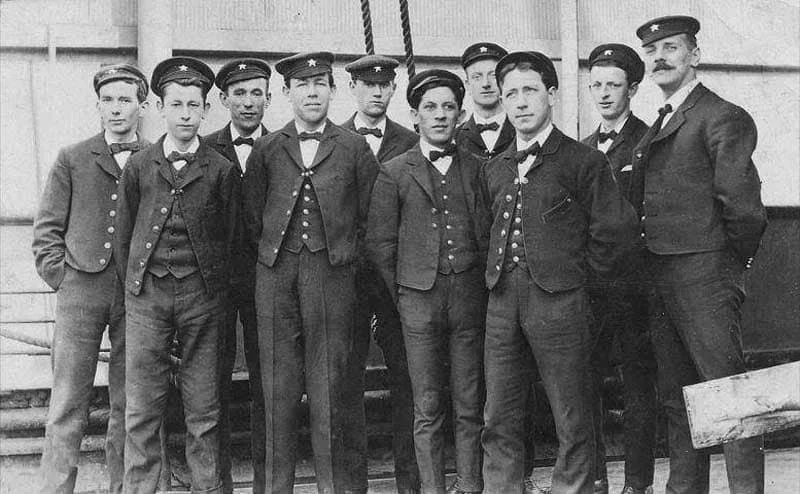
Ship Steward
His Army records say that, before enlisting (1915) he was a Ship Steward, like these on a Liverpool-docked ship in 1913. Interesting that Jack broke aware from his dad. Maybe he wanted something less hard work. Maybe he was annoyed with his dad for not letting him marry my great grandma!
Conscription - Jack’s war
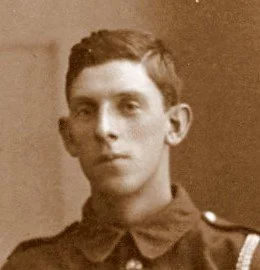
In 1914 Jack was conscripted and served with the XV1 Corps Cyclist Battalion. Their role was to coordinate troops, reconnaissance, and deliver messages. He served for four years. This is the fantastic photo that Steven Paterson gave me of my great grandad in his uniform, how lucky are we to have this Proud Mother Moment!
I sent off for his army records which offered up a wealth of information. I’m not sure what he did first (I’m trying to find out) but in December 1916 he was sent to the Salonica Front where he served until March 1918.
He was part of 43rd Remount Squadron, and 5th Entrenching Battalion. The Salonica Campaign Society, and its monthly newsletter, The New Mosquito - that I subscribe to - have been instrumental in me learning about the role of cyclists in the Salonica Campaign, in particularly a member who helped transcribe his records. Also the Great War Forum and The Long Trail
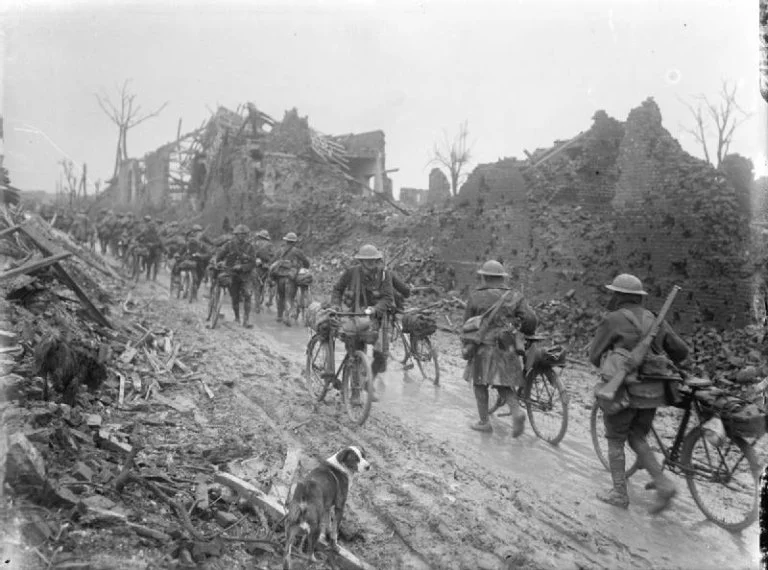
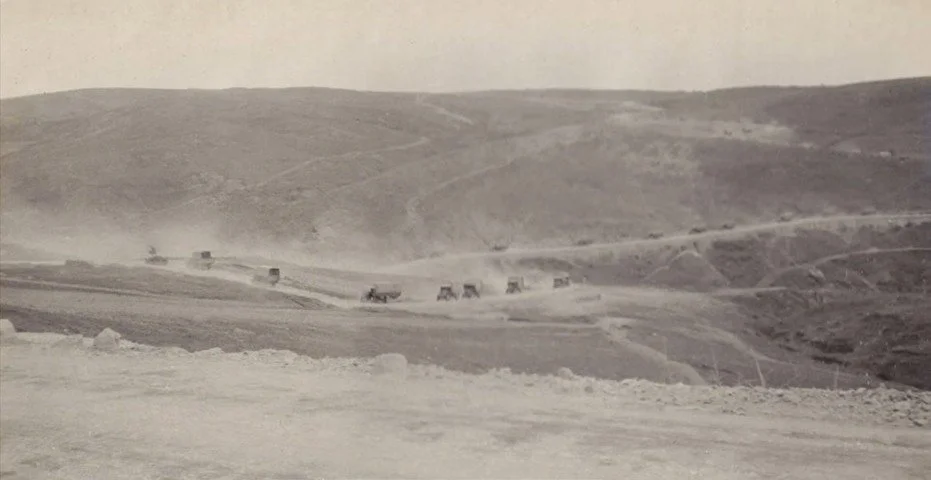

Overview of my great grandad’s experience:
Stationed in mountains and malaria-ridden marshes in extremes of heat/ cold
Patrolled the Struma Valley and help dominate no man’s land (pictured).
There was a long, exposed supply line back to the port, and Jack guarded bridges, roads from raids, and launched ambushes
Maybe helped strengthen roads or build trenches
Slept in a bivouac (canvas 2-man tent)
He was probably never closer to enemy lines than five hundred yards
Malaria
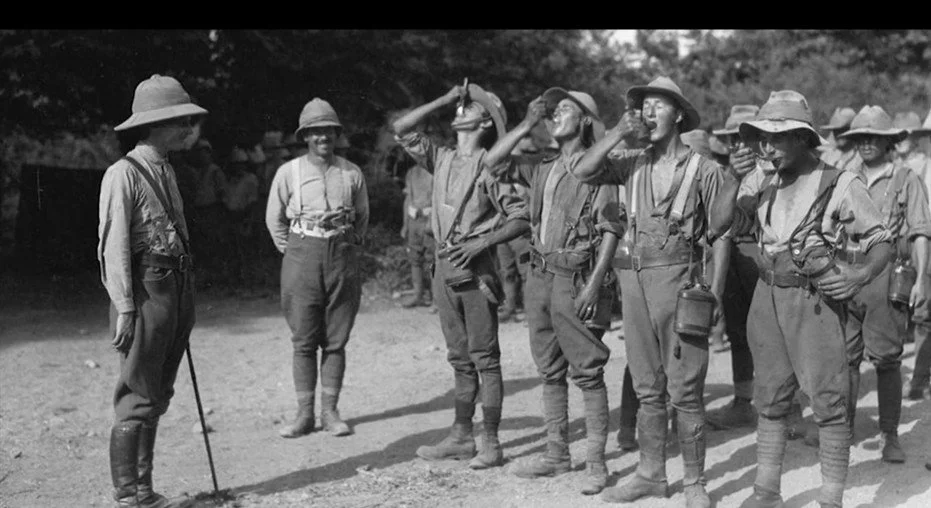
Jack spent a lot of time in the ‘casualty evacuation chain’ (to hospitals in Salonica, back up through convalesence camps, then back to his unit - on a loop). He had repeat bouts of the disease, as well as dysentery and sandfly fever, all of which were debilitating. This was very common. In 1918 around 67,000 men were in field hospitals. ‘Practically everybody in the Army had malaria’ (from The New Mosquito). They had to take preventative quinnine (pictured), and be sent to higher ground for fresh air when they had relapses. At one point, Jack was picked up by 82nd Field Ambulance.
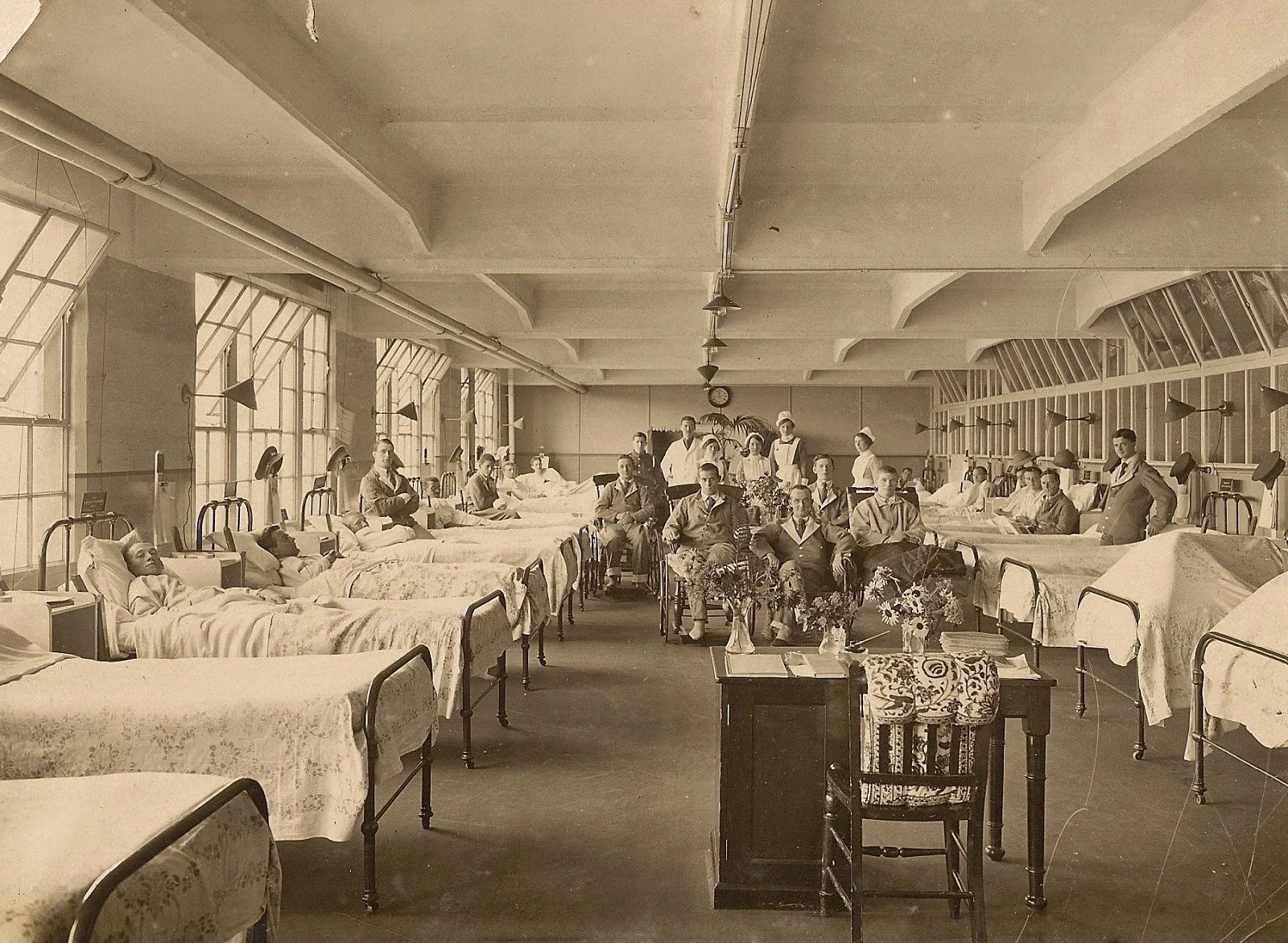
His records show that he went back to the UK in January 1918 and he spent a month in the King George Military Hospital in London (pictured). He was still sick with malaria in a hospital in Norwich in July 1918. At that point, his military records instructed that he was not to be sent anywhere but France and Italy.
In September 1918 he was sent to France to the Western Front, but got Malaria again. I don’t know what he did in France (other than get malaria!), I’d love to find out.
I don’t think he had much of a war, although he was very lucky the war ended just as he arrived at the Western Front.
He continued serving after the end of the war, finally arriving back in England in January 1919.
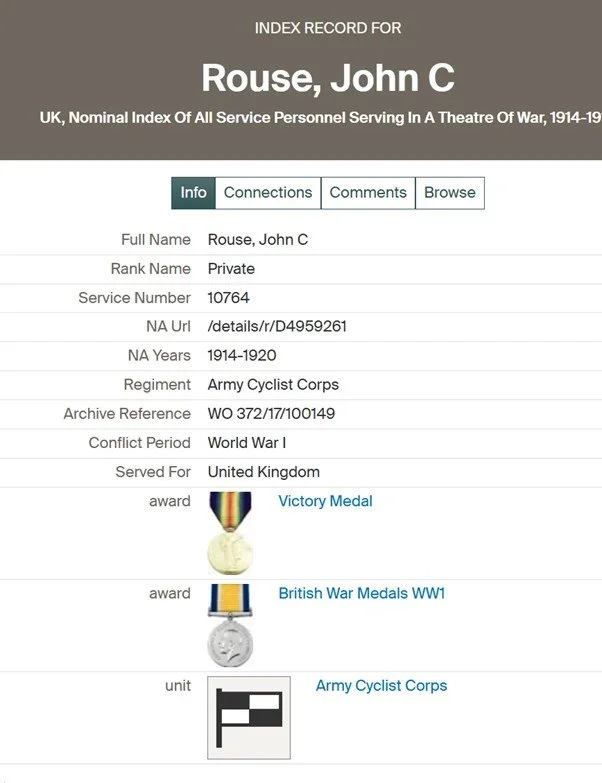
He was awarded the Victory Medal and British War Medal, although I’ve no idea who has them. He had no other children other than Ethel and my grandma.
After the war
Jack returned to Liverpool and worked in a warehouse by the docks - this time a Cotton Warehouse.
He married Gertrude Griffin in 1924. He moved in with her family on Cawdor street and after that he seemed to have some troubles.
I found a newspaper article from 1926 about him being arrested for being drunk in charge of a bicycle. Oh Jack.
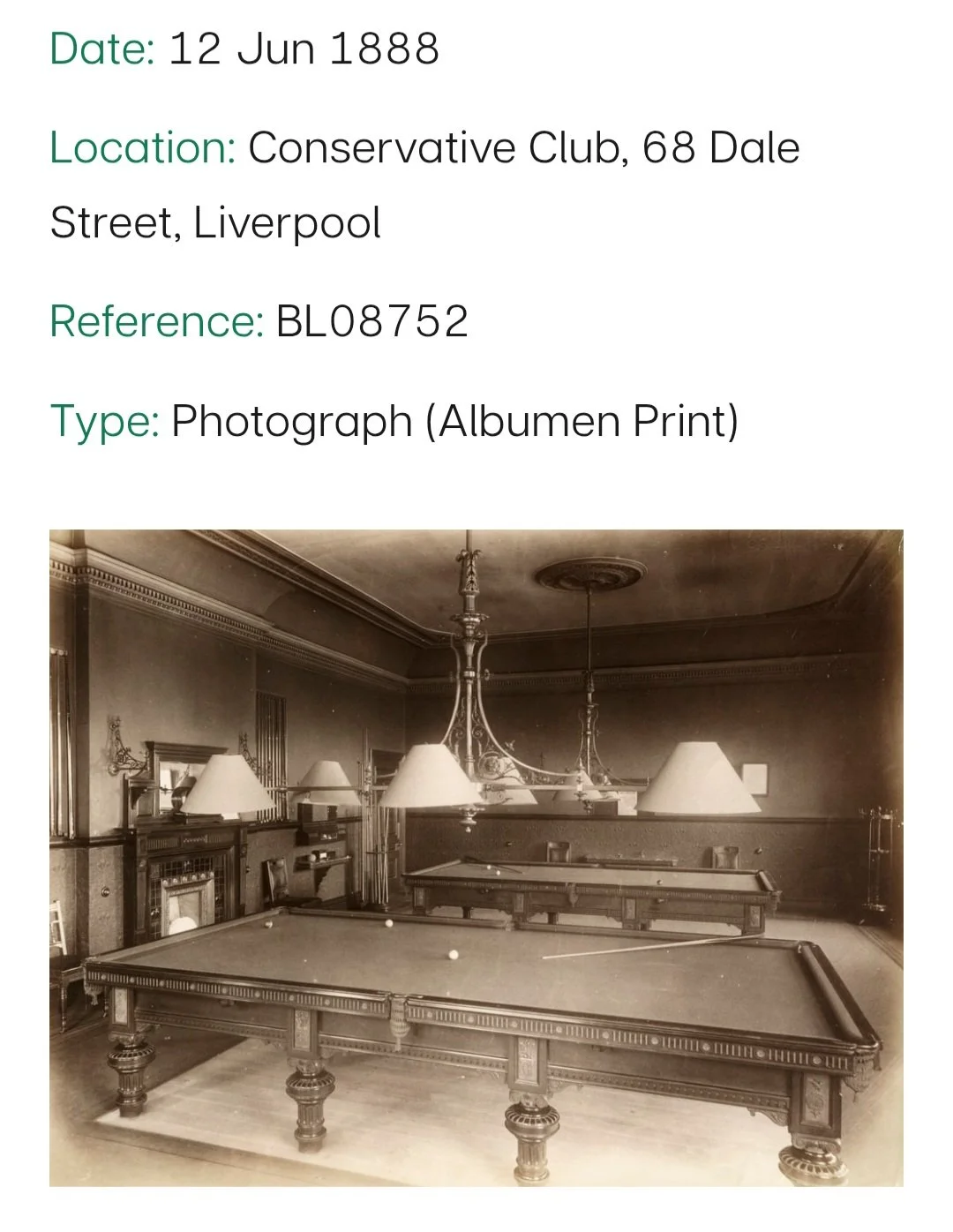
The article said that he was working as a Billiard Marker (keeping the scores on the scoreboard) at the Conservative Club. Perhaps there was less work at the docks due to the great depression. This photograph shows what the club was like in late 1800s. I’d thought that it was only a temporary job because in the 1939 Register he’s working as an Arrears Inspector Credit Draper (debt collector for drapery business), but on his death certificate his last job had been Billard Marker so he obviously returned to that job at some point.
He and Gertrude living in Fern Grove, Toxteth. Very close to where my great grandma had grown up.
Wife killed in Blitz
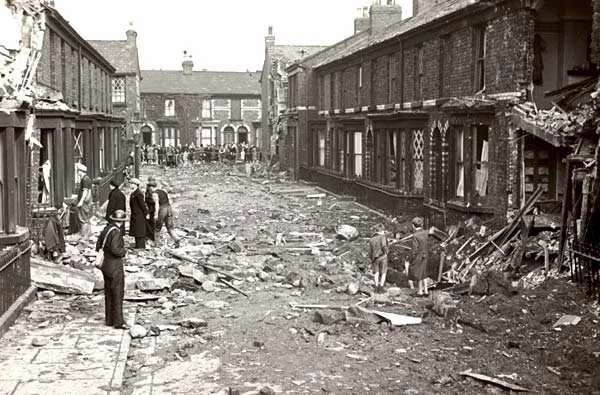
This was a tragic discovery. I found the certificate on someone else’s tree on the Ancestry platform. I’d never seen a ‘Due to War Operations’ stamp on a death certificate before. There was a direct hit on their house in Fern Grove, Toxteth, when she’d been at home.
Last word
After Gertrude died, he moved to Selwyn Street, a terraced house he shared with two other lodgers.
A member of the Liverpool Genealogy Facebook group found these two articles when I’d exhausted my search. It taught me about searching with addresses as well as names. Anyway, I love them. They show my great grandad had a sense of humour and enjoyed telling the odd story. (Matelot was another word for sailor).
They’re the next best thing to hand-written letters. I read them with a Scouse accent and it helps to bring my great grandad to life.
Jack died from lung cancer in 1972 when I was six. Crazy to think I could have known him.
RIP Jack.